
Baroque pearl jewelry is my top recommendation for beginners who want to start collecting pearls wisely.
Compared to perfectly round pearls, baroque pearls often offer stronger luster, better value, and far more individuality — without the inflated price.
This article explains how to choose baroque pearls that feel modern, expressive, and truly worth your money.
What Exactly Are Baroque Pearls? (Quick, No-Fluff Version)
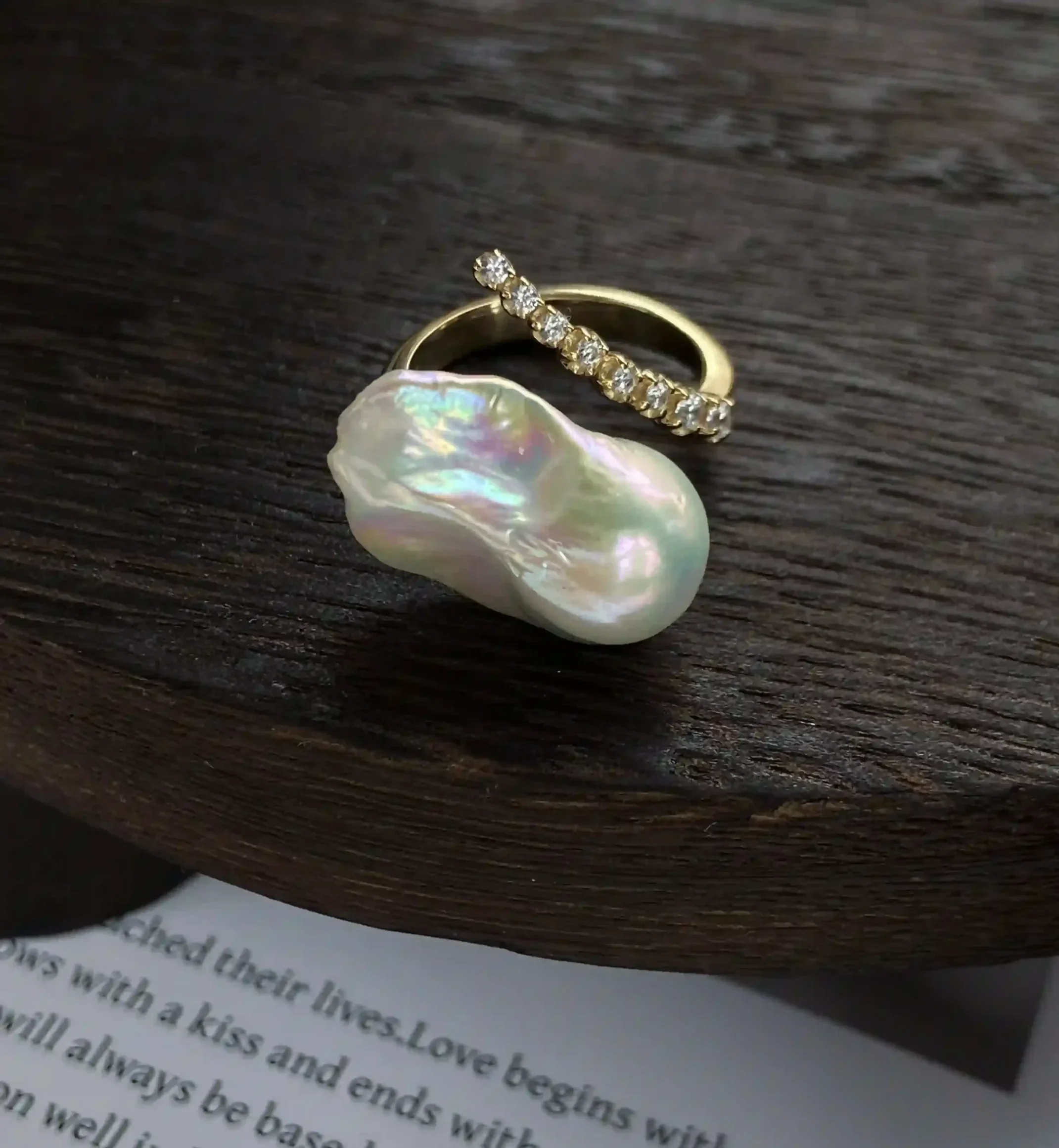
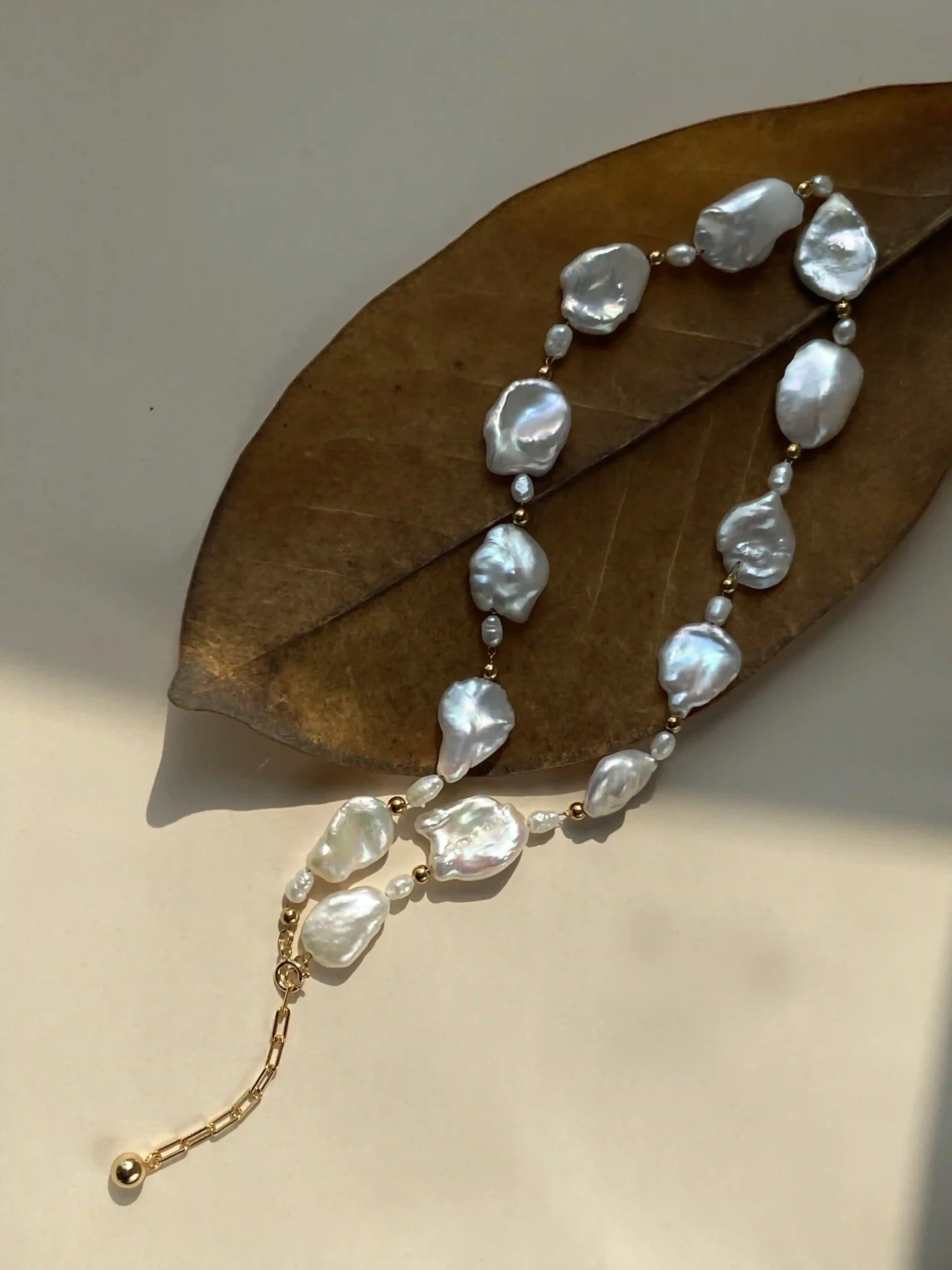
Baroque pearls are natural pearls formed in irregular, organic shapes.
The word baroque comes from the Portuguese “barroco”, originally used to describe pearls that were elaborate rather than round.
They can appear as:
- fireball shapes
- teardrops
- petals
- stars
- abstract, sculptural forms
- examples in pictures below.
These are not defects.
They are nature’s design language.

Why Baroque Pearls Often Look Better Than Round Pearls
Here’s something many people don’t know:
Irregular shapes often enhance a pearl’s beauty rather than diminish it.
Because of their ridges, curves, and natural texture:
- light reflects from multiple angles
- luster appears more dynamic and “alive”
- colors shift as the pearl moves
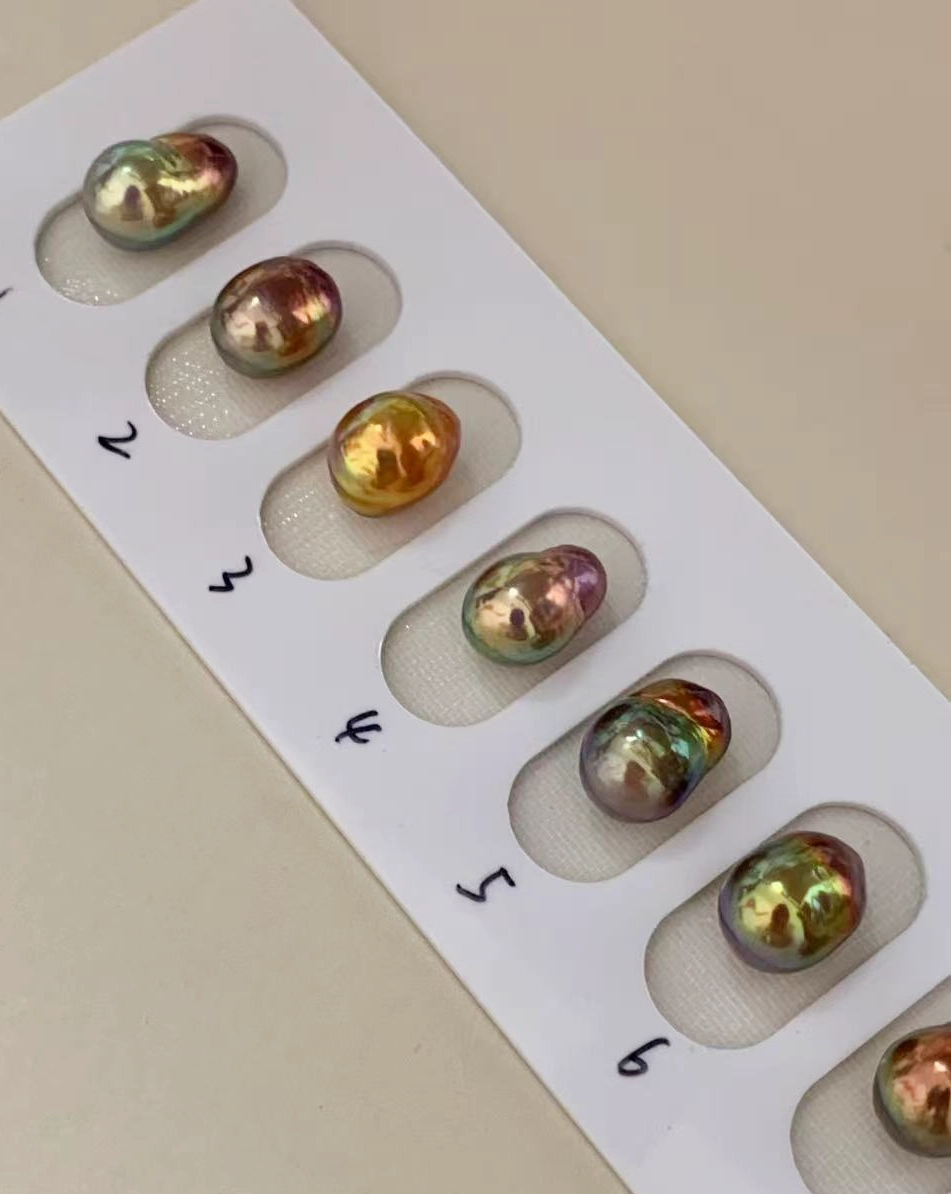
Especially in baroque pearls, the glow is often:
jelly-like, bouncy, and glazed — not flat mirror shine.
Like the ones in the pictures.
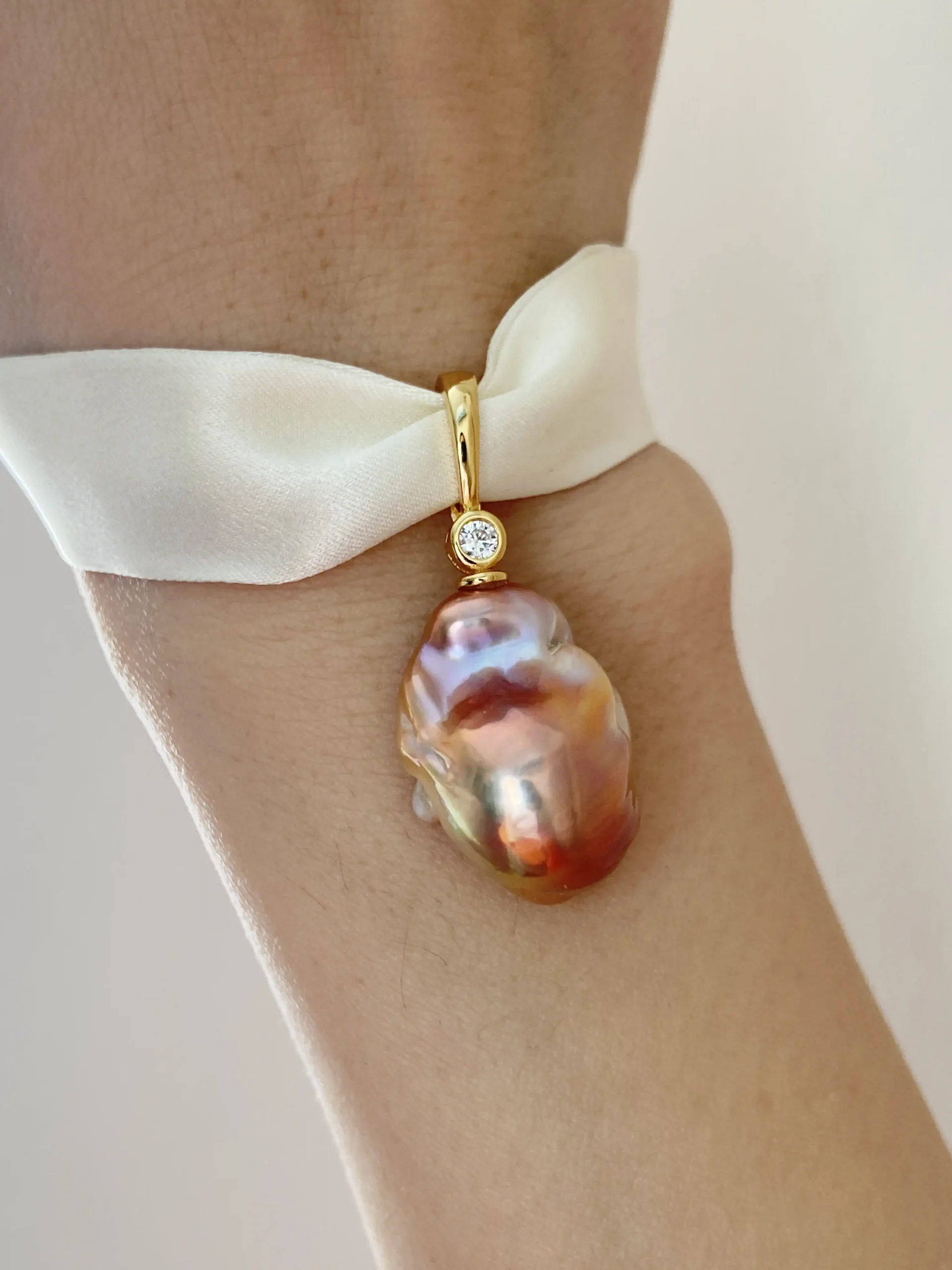
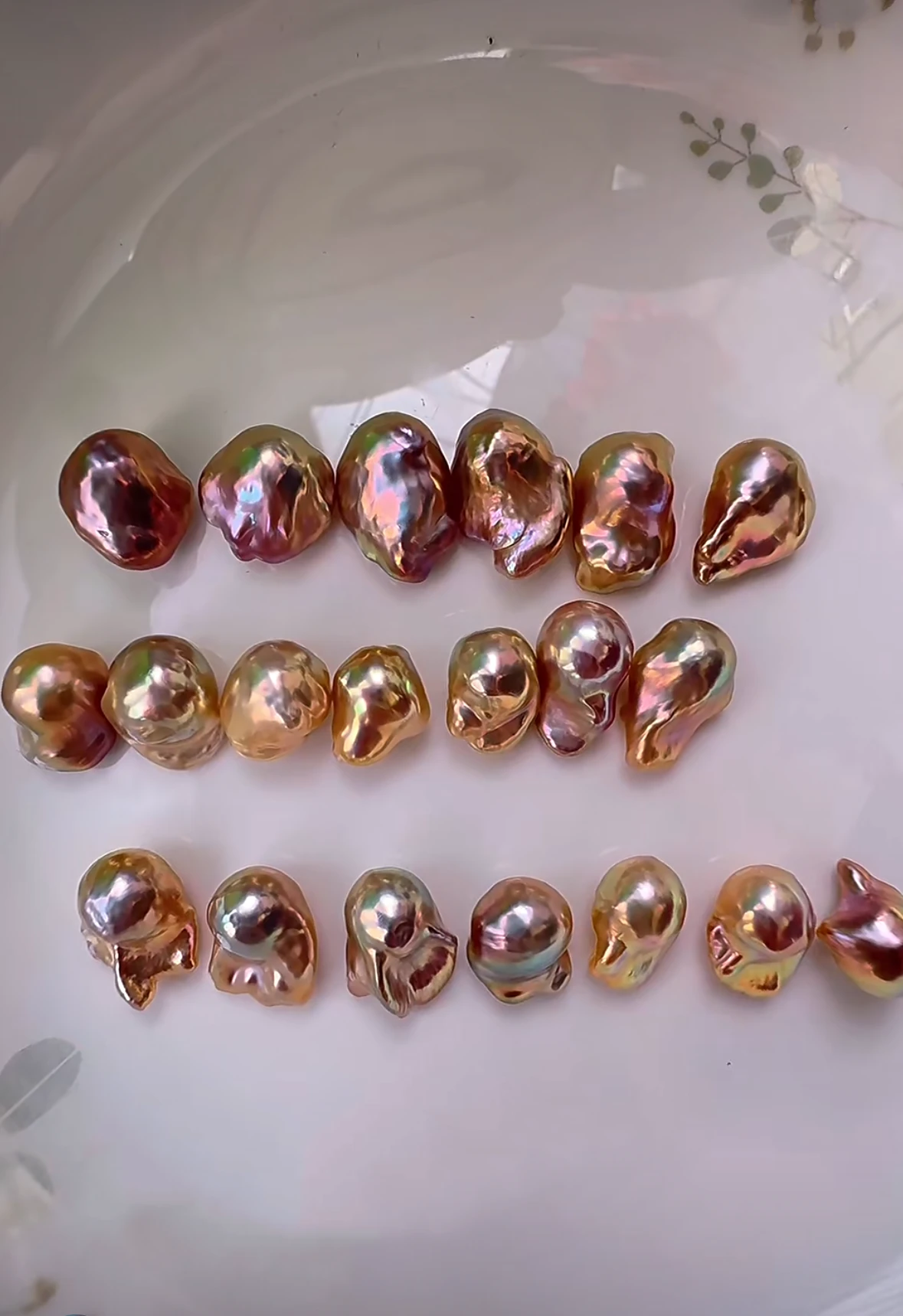
A single baroque pearl can show gold on one side, purple on another, and blue-green underneath, depending on the angle.
Change the angle, and suddenly — your pearl becomes a completely different beauty.
That’s the magic.
Baroque Pearl Jewelry vs Round Pearls: A Lifestyle Difference
Round pearls are elegant. No debate.
But they also carry:
- a sense of restraint
- formality
- and sometimes… predictability
Many pearl lovers (myself included) feel that perfectly matched round pearls can look:
beautiful — but a little uptight for everyday life.
Baroque pearl jewelry, on the other hand, feels relaxed, expressive, and unmistakably modern.
It works with:
- sculptural earrings
- asymmetrical necklaces
- lariats and statement pendants
And yes — no one will ever call them “grandma pearls.”
Why I Always Recommend Baroque Pearl Jewelry to Beginners
This is where the real buying logic comes in.
At the same price range:
- baroque pearls are usually larger
- have stronger visual presence
- and often display better color play
In general, baroque pearls cost about 1/2–1/3 less than round pearls of similar luster and size.
Some baroque pearls can reach 4–5 cm in length.
When size, color, and luster all align — that’s what collectors call a “super baroque.”

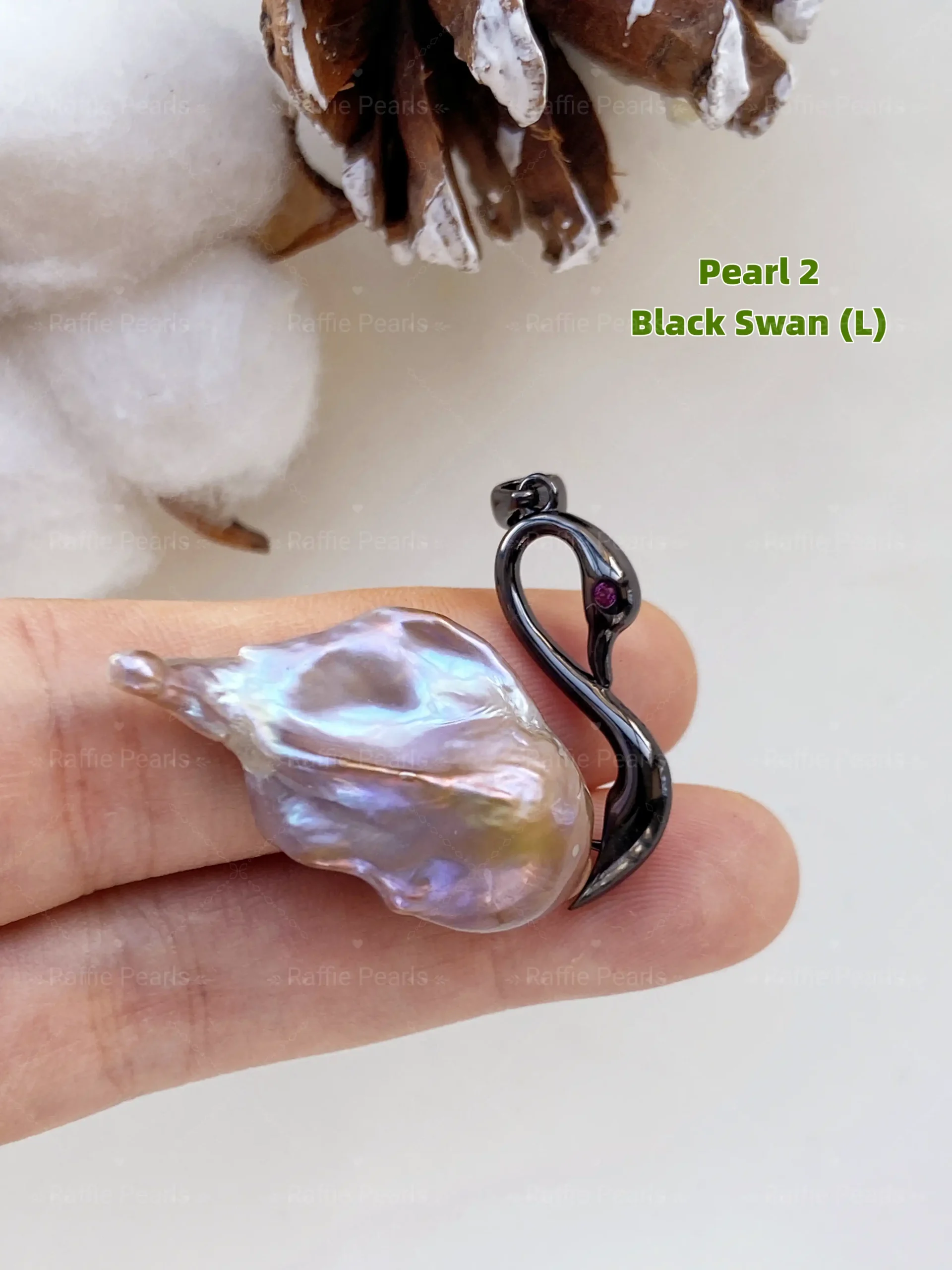
If you ever encounter one, don’t hesitate.
Freshwater vs Saltwater Baroque Pearls
Baroque pearls exist in both freshwater and saltwater varieties.
- Freshwater baroque pearls
- white and richly colored
- near-round to fireball, petal, star shapes
- Saltwater baroque pearls
- Baroque Akoya: often in drop shapes
- South Sea: often teardrop or elongated
- Tahitian: oval, peanut, drop shapes
- Examples in the pictures:


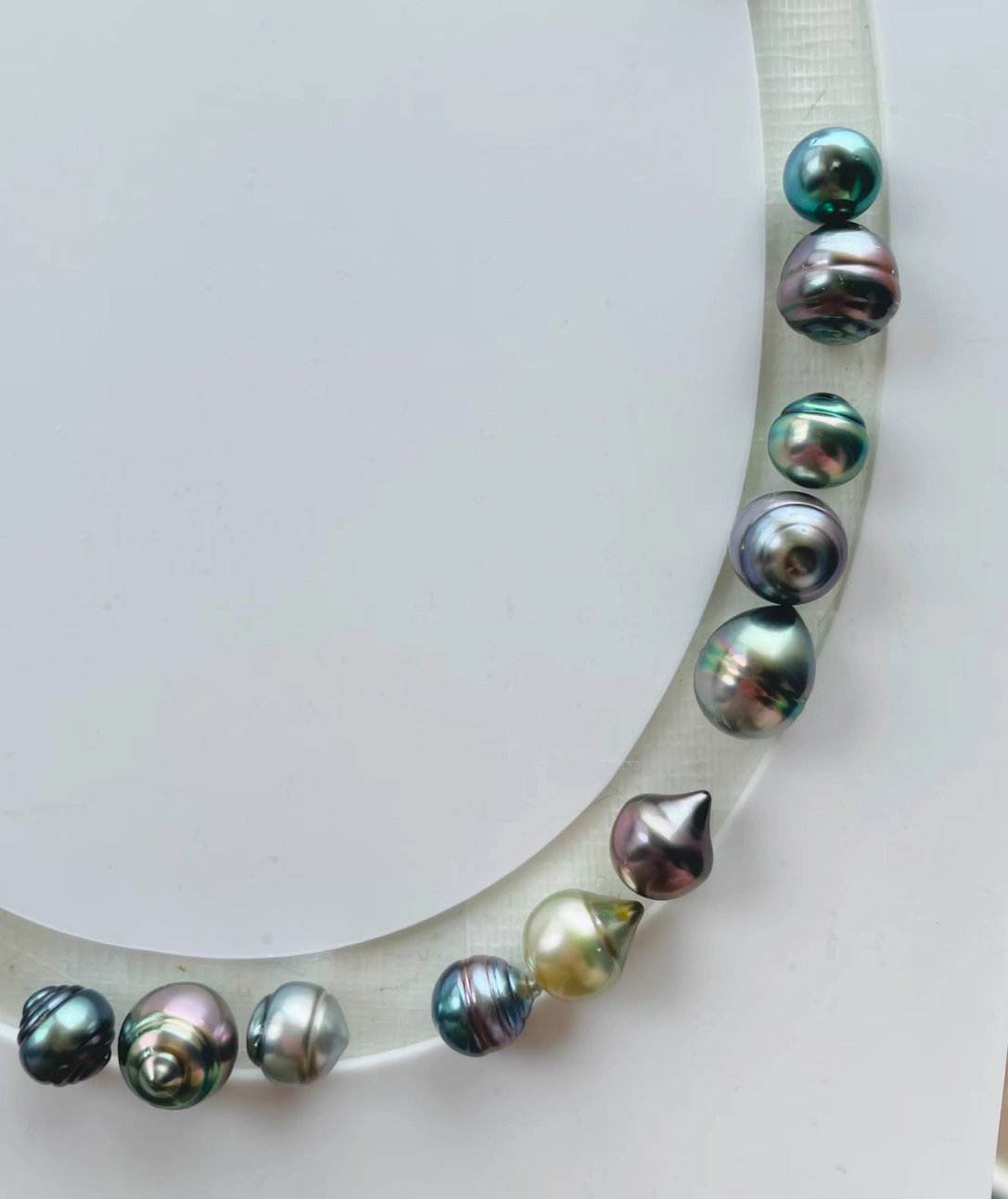
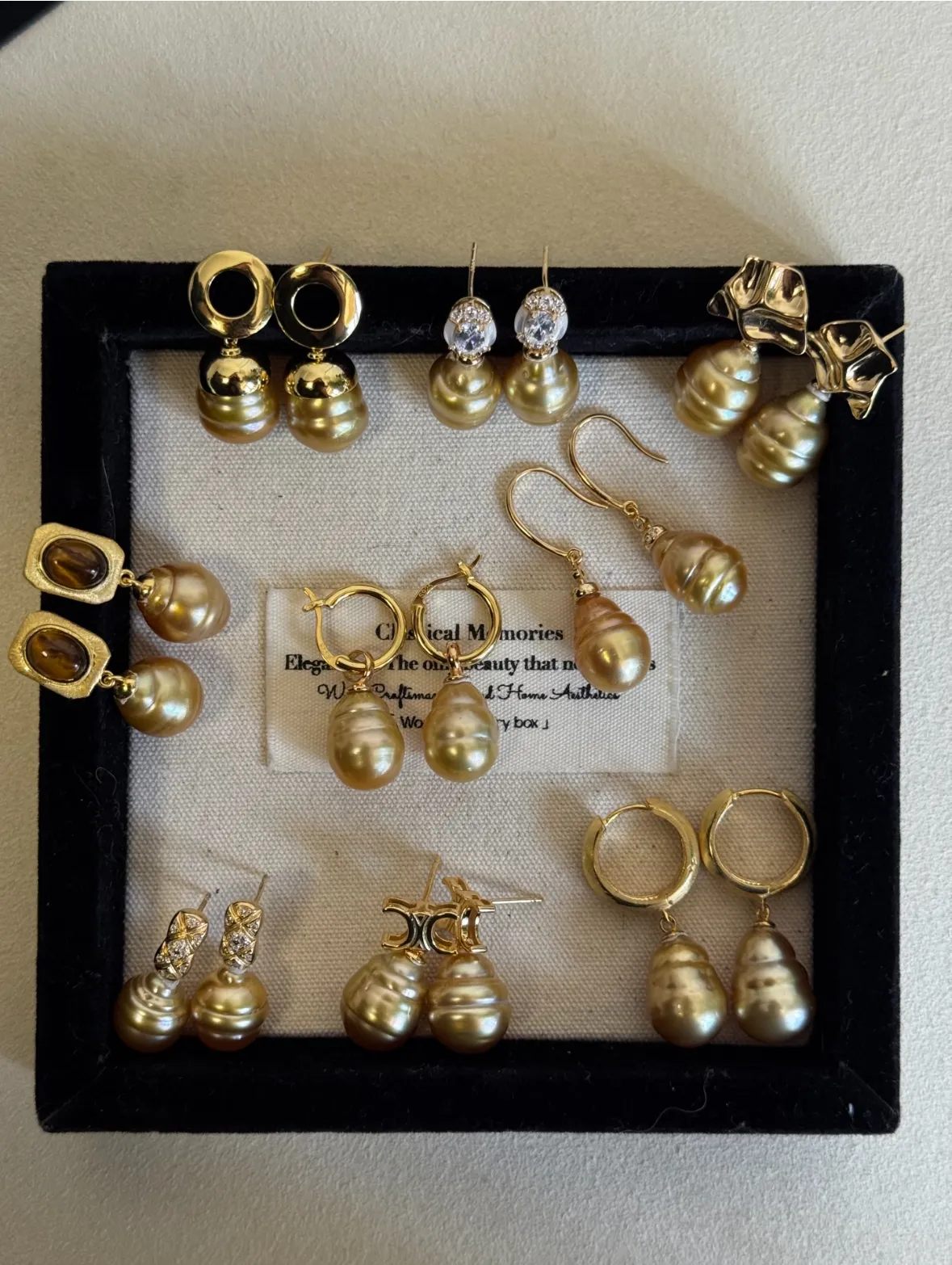
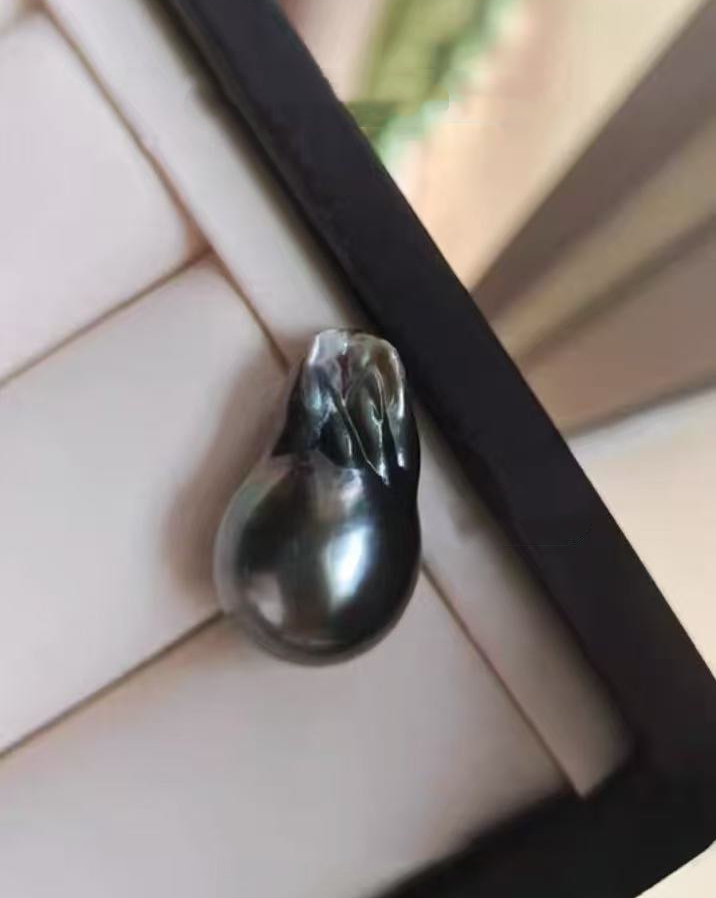
True fireball-shaped saltwater pearls like in the picture below are very rare.
If you see one, always verify it’s not a dyed freshwater pearl.
Fashion Has Already Chosen Baroque Pearl Jewelry
If round pearls represent tradition, baroque pearls represent individuality.
Designers like Dior, Simone Rocha, and Vivienne Westwood consistently use baroque pearls for their sculptural quality.
Celebrities including Rihanna, Zoë Kravitz, and Sarah Jessica Parker wear them not as accents — but as statements.
Can you ID the designer brand from these photos?

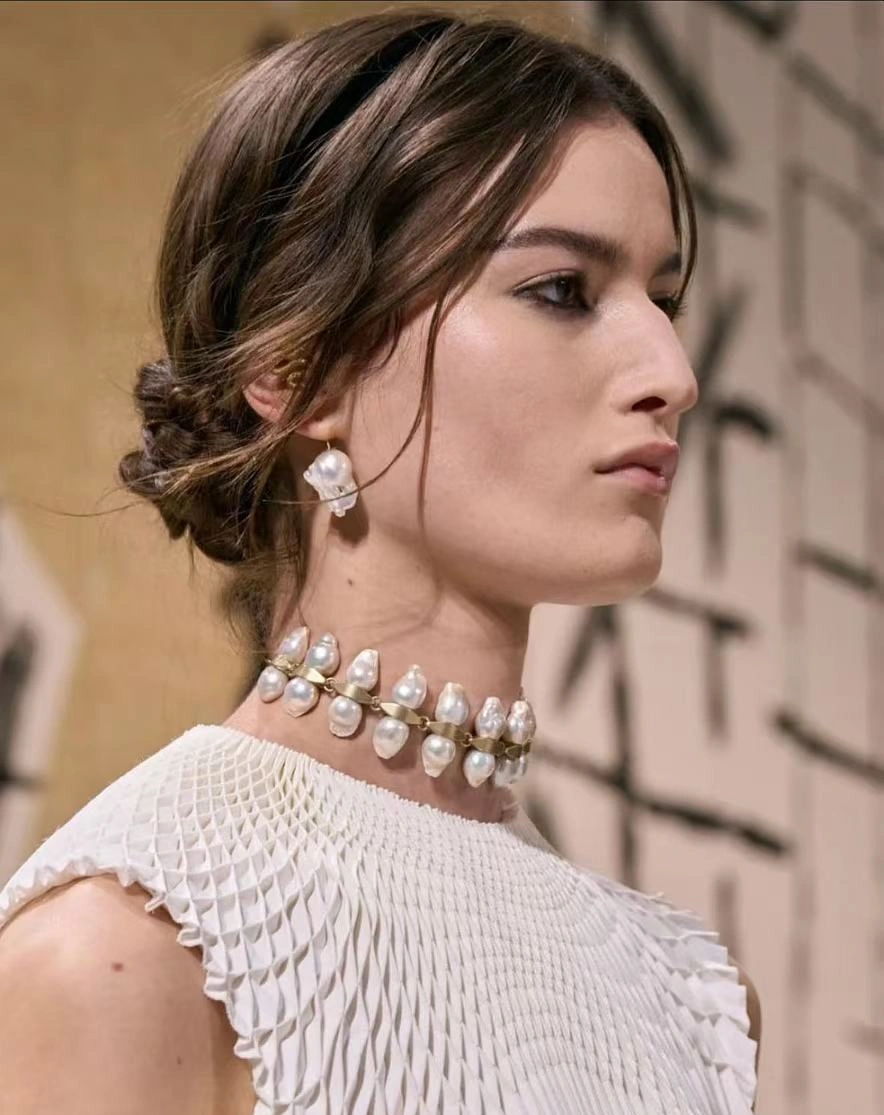

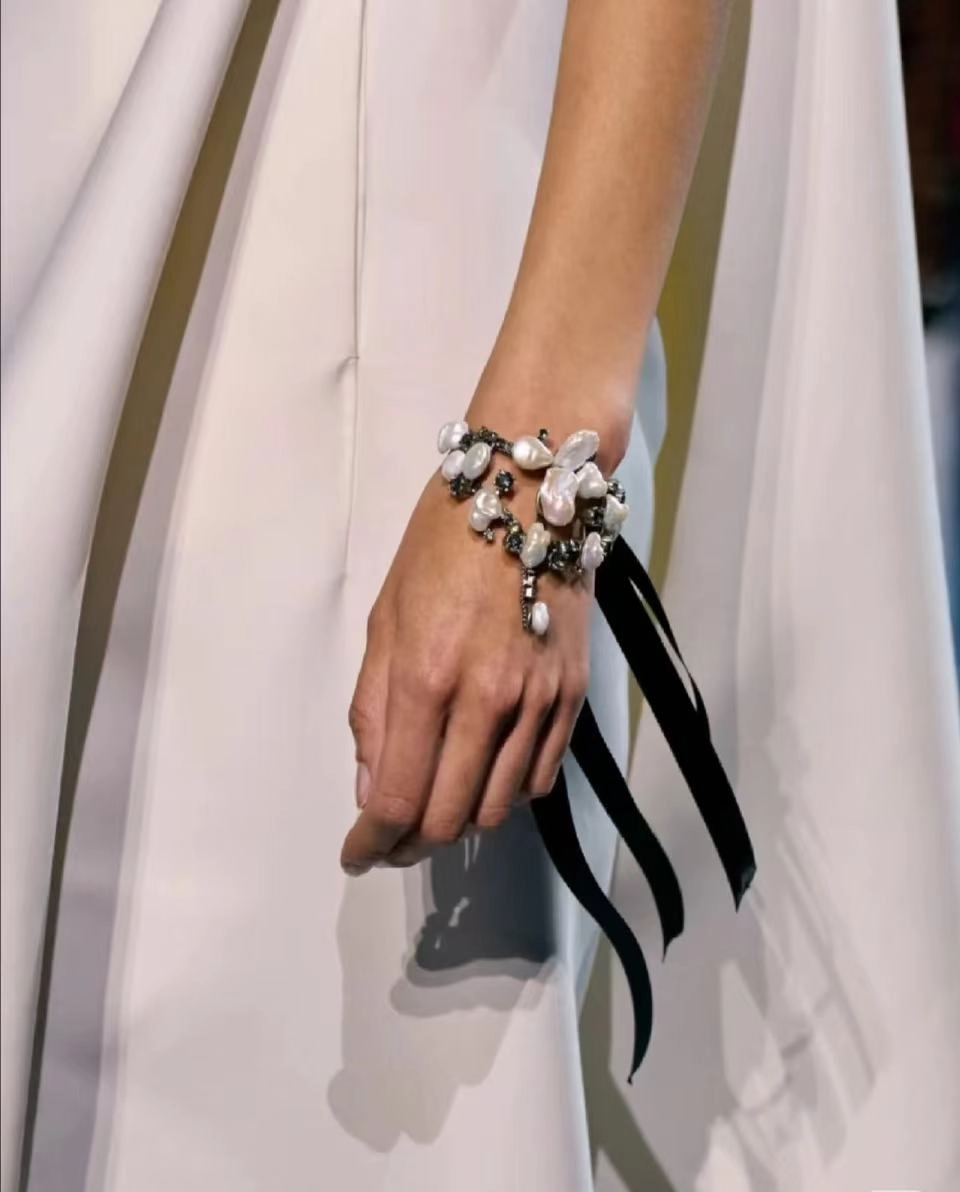
This is from Christian Dior — one of the brands that consistently uses baroque pearls for their sculptural designs.
Baroque pearls are no longer “alternative.”
They are fashion-forward by default.
“Avocado Pearls” & Modern Color Trends
Some metallic freshwater baroque pearls display rich golden overtones with flashes of:
- green
- pink
- burgundy
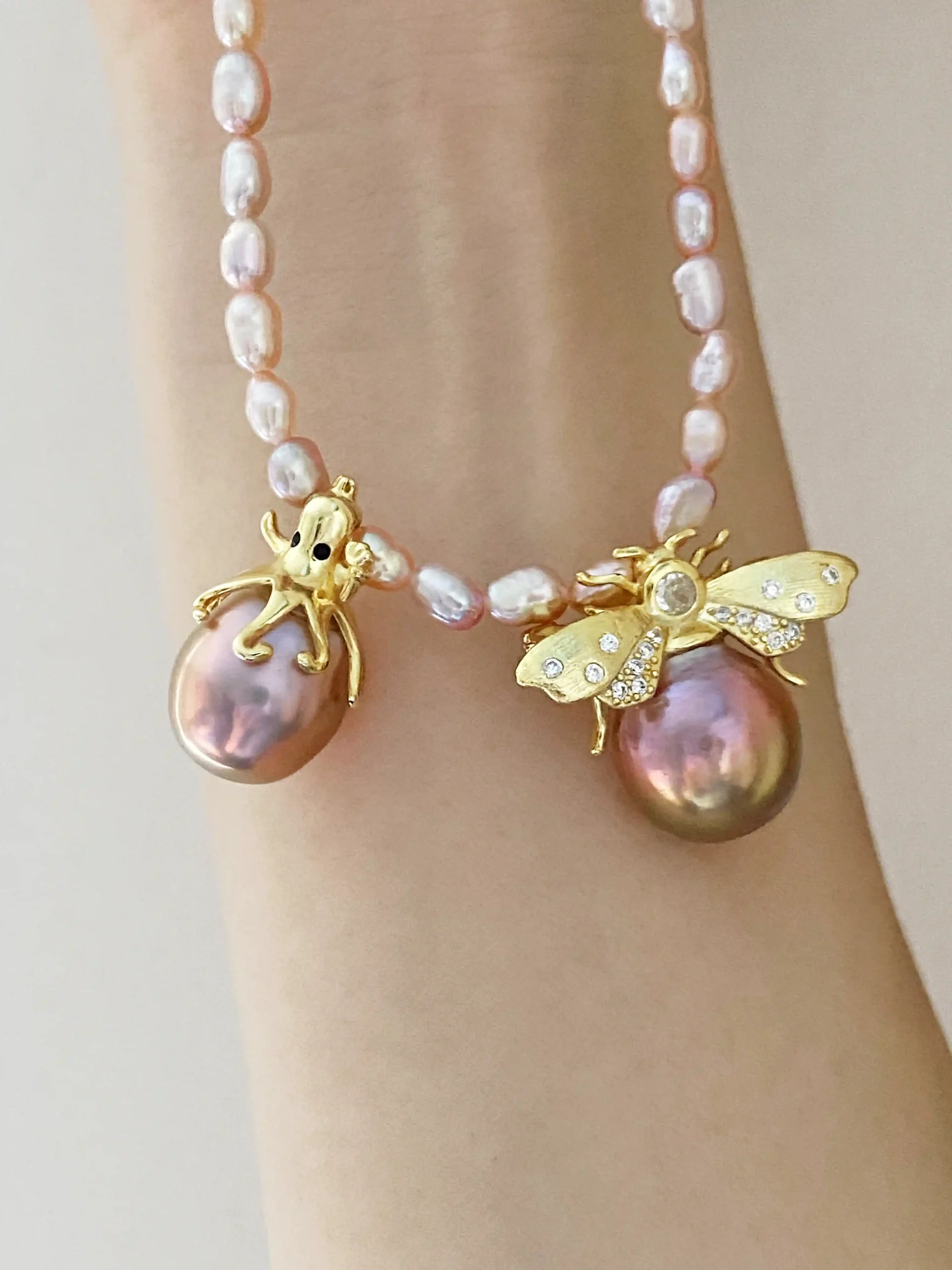
We often call them “Avocado Pearls.”
Collectors love them because:
- their iridescence rivals Tahitian pearls
- their colors don’t exist in any other pearl category
These unique tones have become centerpieces in modern designs — like our octopus and bee pendants (picture as below).
From a Designer’s Perspective: Why Baroque Pearls Are Irreplaceable
As a designer, baroque pearls give me something round pearls never can: conversation.
Some look like fish.
Some like swan wings.
Others resemble little animals — chicks, ducks, elephants, pigs.
Each one feels alive.
Each one deserves its own design — not a standardized setting.
That’s why my One-of-A-Kind Jewelry Collection exists.

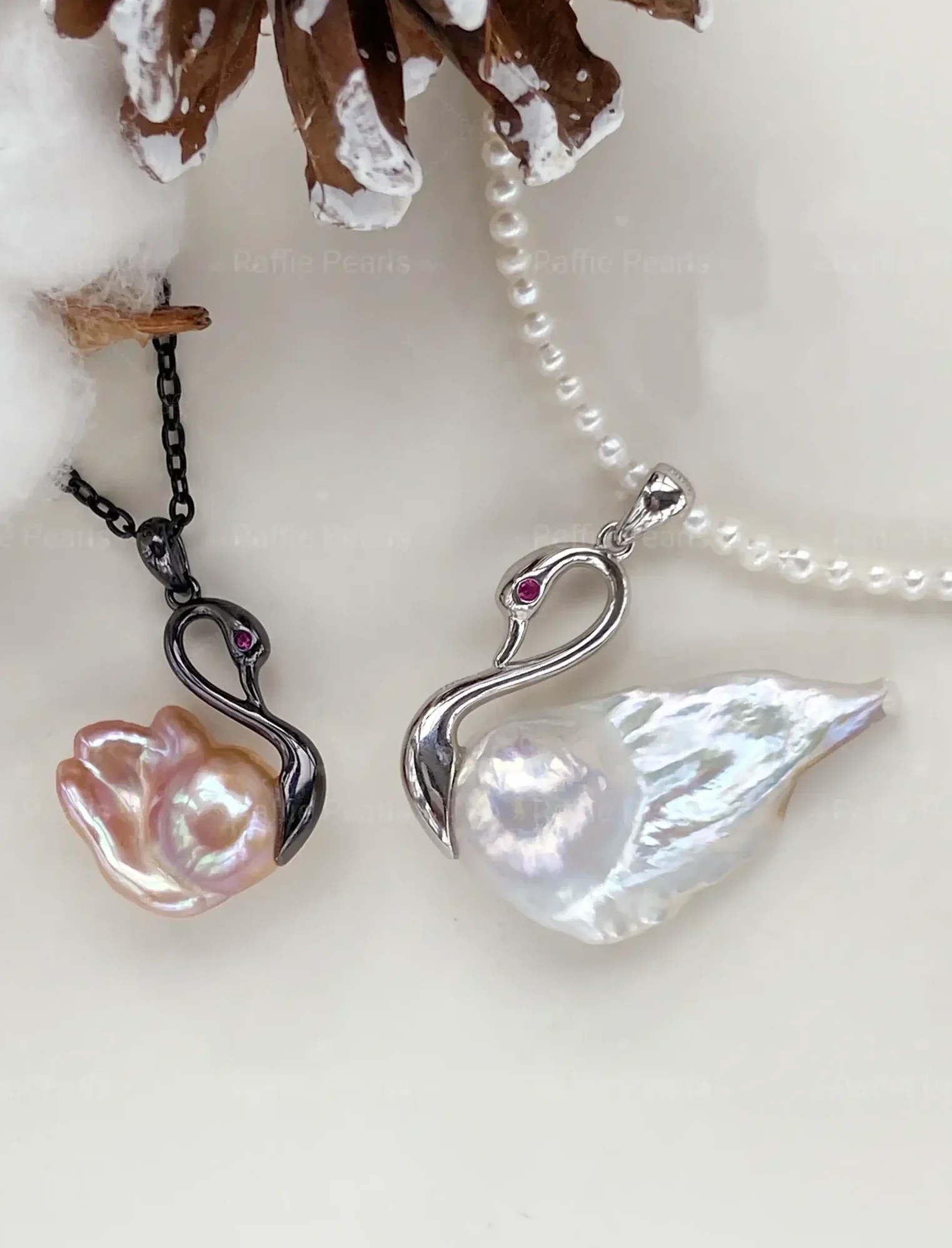


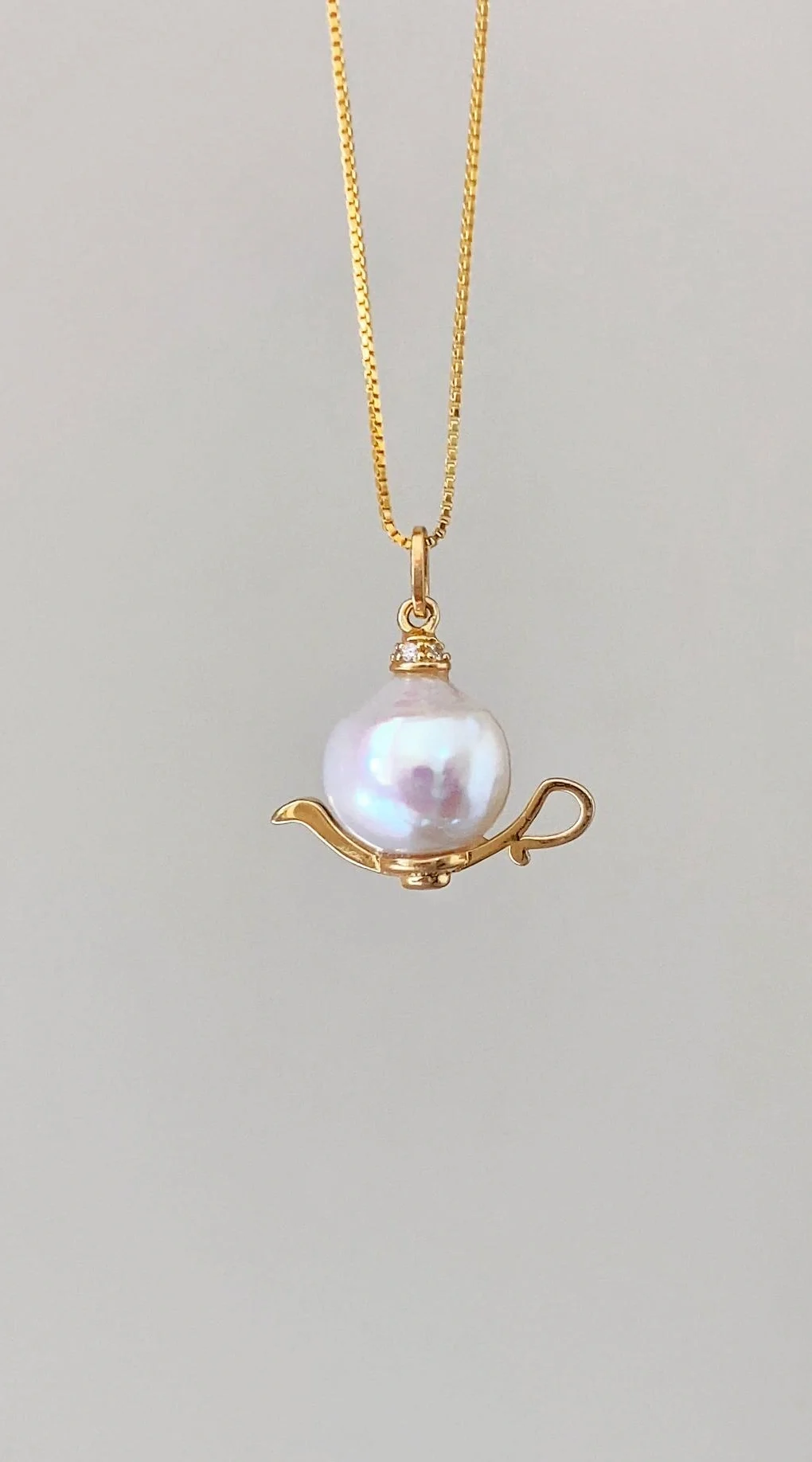
People often tell me:
“You turned imperfect pearls into something beautiful.”
But in my mind — they were never imperfect.
They were perfect in a different way.
Pearl Sourcing: How I Choose Baroque Pearls
I personally handpick each pearl from Zhuji Pearl Town, the world’s largest pearl hub.
I prioritize:
- luster
- play-of-colors
- thickness of nacre
Minor imperfections often exist, usually on the back or underside, and stay hidden when worn.
This sourcing approach ensures:
maximum beauty, honest pricing, and real value.
Are Baroque Pearls Valuable? Absolutely — If You Know What to Look For
Baroque pearls are valued by:
- luster
- size
- nacre thickness
- shape depth
- color richness
Unlike round pearls:
- surface texture is not a flaw
- originality adds value
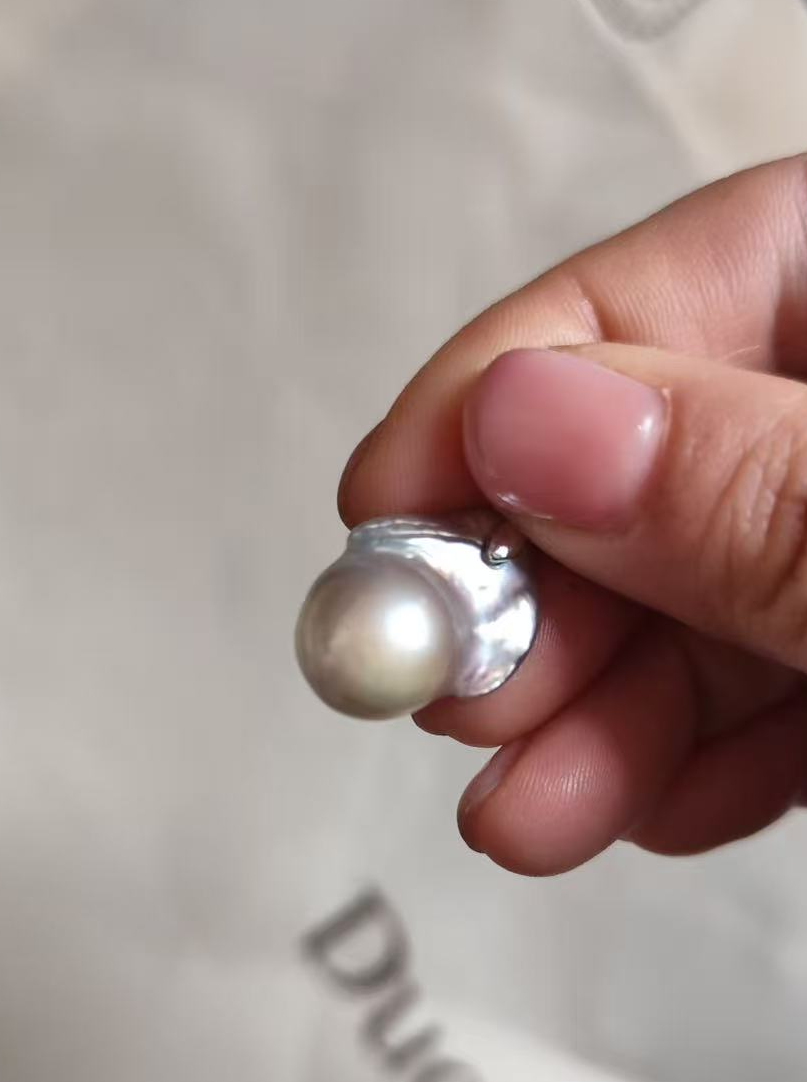
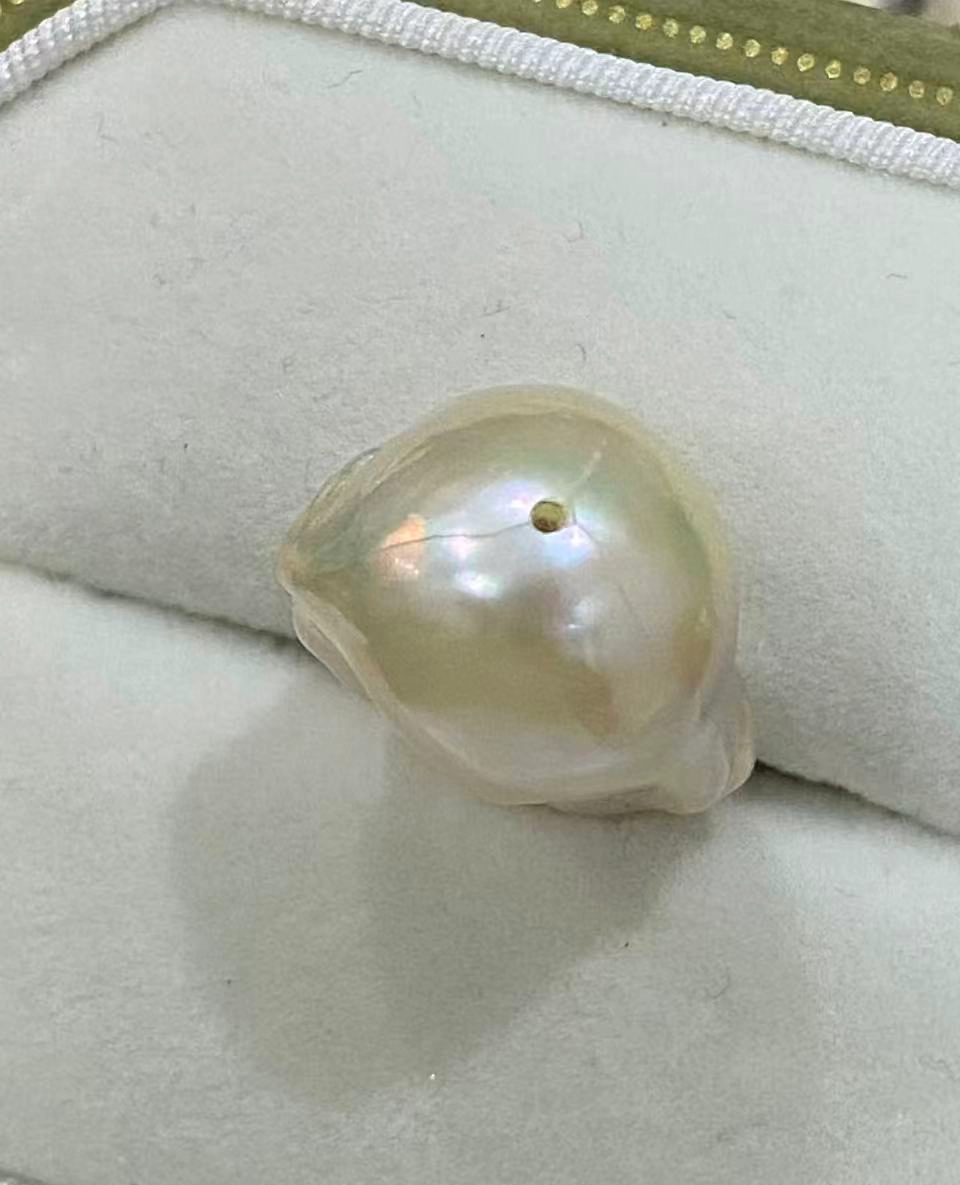
Watch the pearl’s “head” area:
- thin nacre may reveal the nucleus
- weaker luster
- higher risk of cracking over time
Thickness matters.
One Last Tip: Baroque Pearls Are the Easiest to Authenticate
Natural baroque pearls are never identical.
If you see a strand where:
- there’s no obvious shape difference between every 2 pearls
- or ridges look intentional
They’re likely fake.
For beginners, baroque pearls are the safest and most rewarding entry point into pearls.
Can you tell which of the following baroque pearl jewelry is real? See if your guess is correct-> How Can I Tell Real Pearls from Fake? Real Baroque Examples + Video Guide
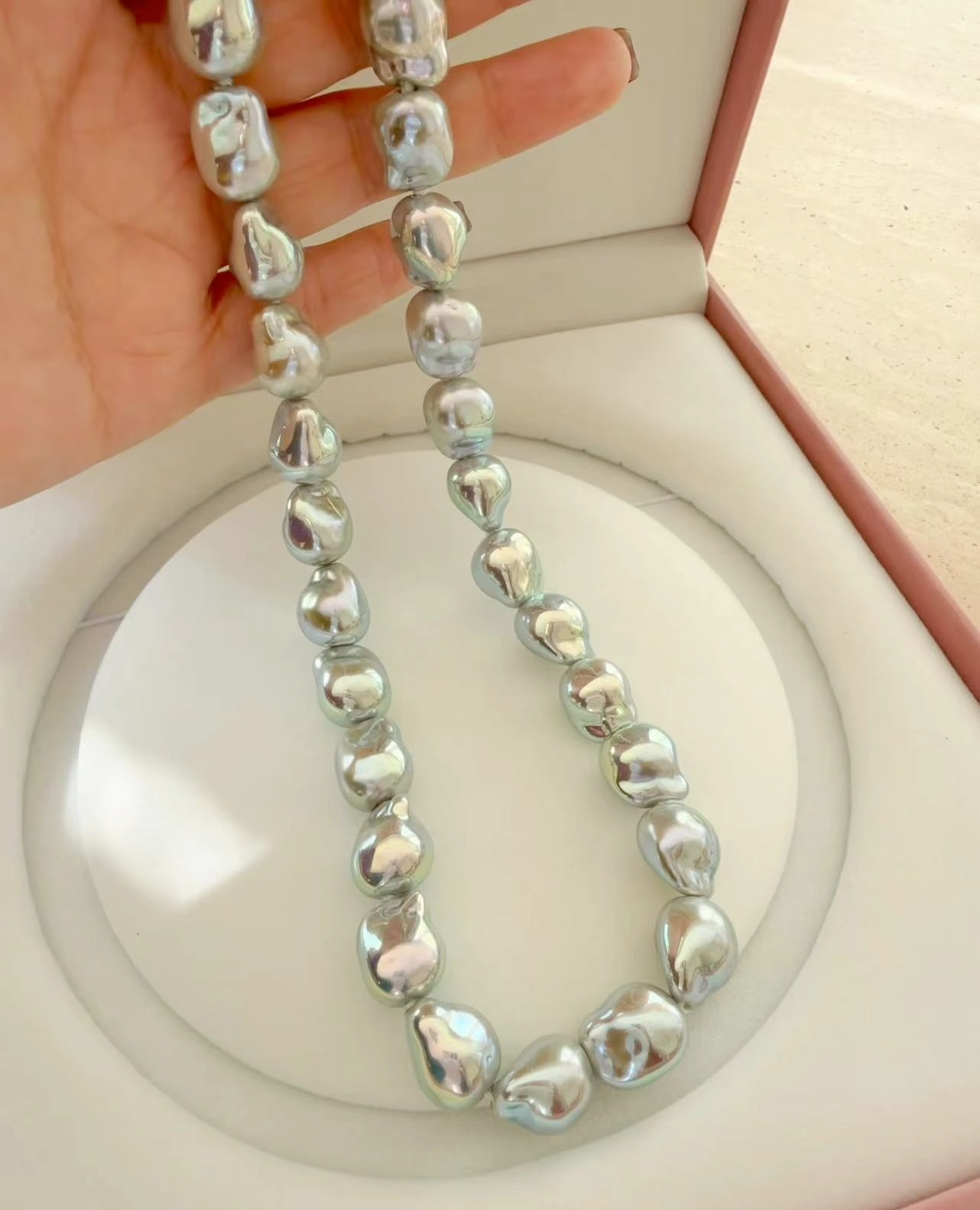
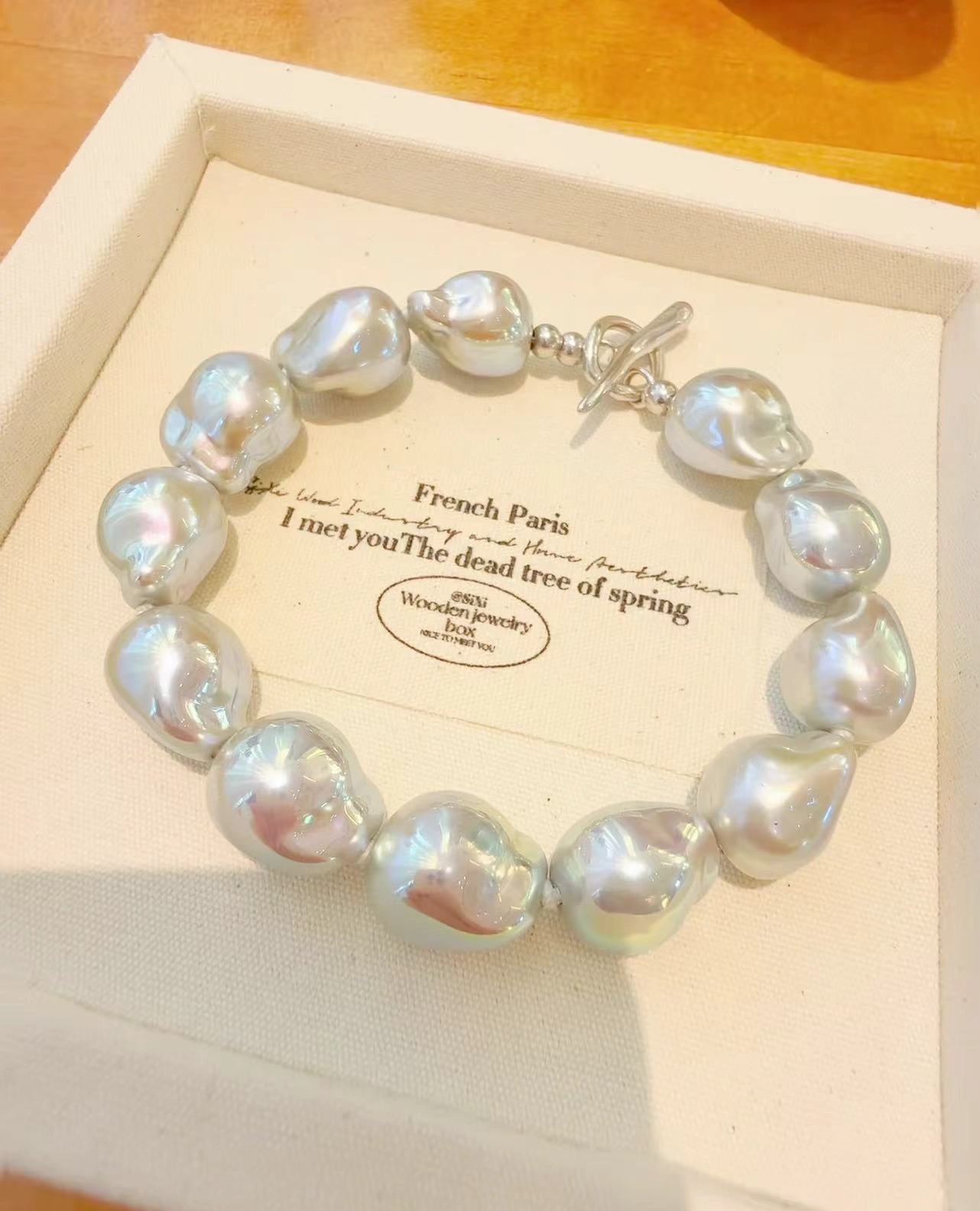
Imperfect Is Perfect
In baroque pearl jewelry, imperfection isn’t something to hide.
It’s the whole point.
Discover our Baroque Pearl Jewelry Collection.
FAQ
Many people don’t realize this, but baroque pearls often have equal or even stronger luster than round pearls.
Luster depends on nacre quality, not shape. In fact, some of the brightest pearls I’ve seen are baroque.
Freshwater baroque pearls are more likely to form dramatic fireball shapes and reach very large sizes.
Saltwater baroque pearls tend to be teardrop or oval. True fireball-shaped saltwater pearls are extremely rare—if you see one, always verify it isn’t a dyed freshwater pearl sold as Tahitian or golden South Sea.
They’re absolutely valuable. Like round pearls, baroque pearls are valued by luster, size, color, and nacre thickness.
Unlike round pearls, perfect symmetry and surface smoothness don’t matter—what matters is whether the shape feels balanced, sculptural, and has strong design language.
Always check the pearl’s head.
Some large baroque pearls have good nacre at the tail but thinner nacre at the head, which may reveal the nucleus, crack during drilling, or lose luster over time.
Because the shape and luster differences between two baroque pearls are far greater than between two round pearls.
If every pearl on a strand looks almost identical in shape and glow, it’s very likely not real.