
If you’ve ever wondered how can I tell real pearls from fake, I’m using real comparison photos, baroque pearl case studies, and live video demonstrations, so you can see the difference instead of guessing. Baroque pearls are one of the easiest pearls for beginners to authenticate, because nature cannot copy their shapes perfectly.
(If you’re new to baroque pearls, you can read my full guide here → Baroque Pearl Jewelry: Why Irregular Pearls Are the Smart First Choice)
Let’s look at real cases.
How Can I Tell Real Pearls from Fake – Photo Examples
Example 1: The Plastic Imitation Pearls
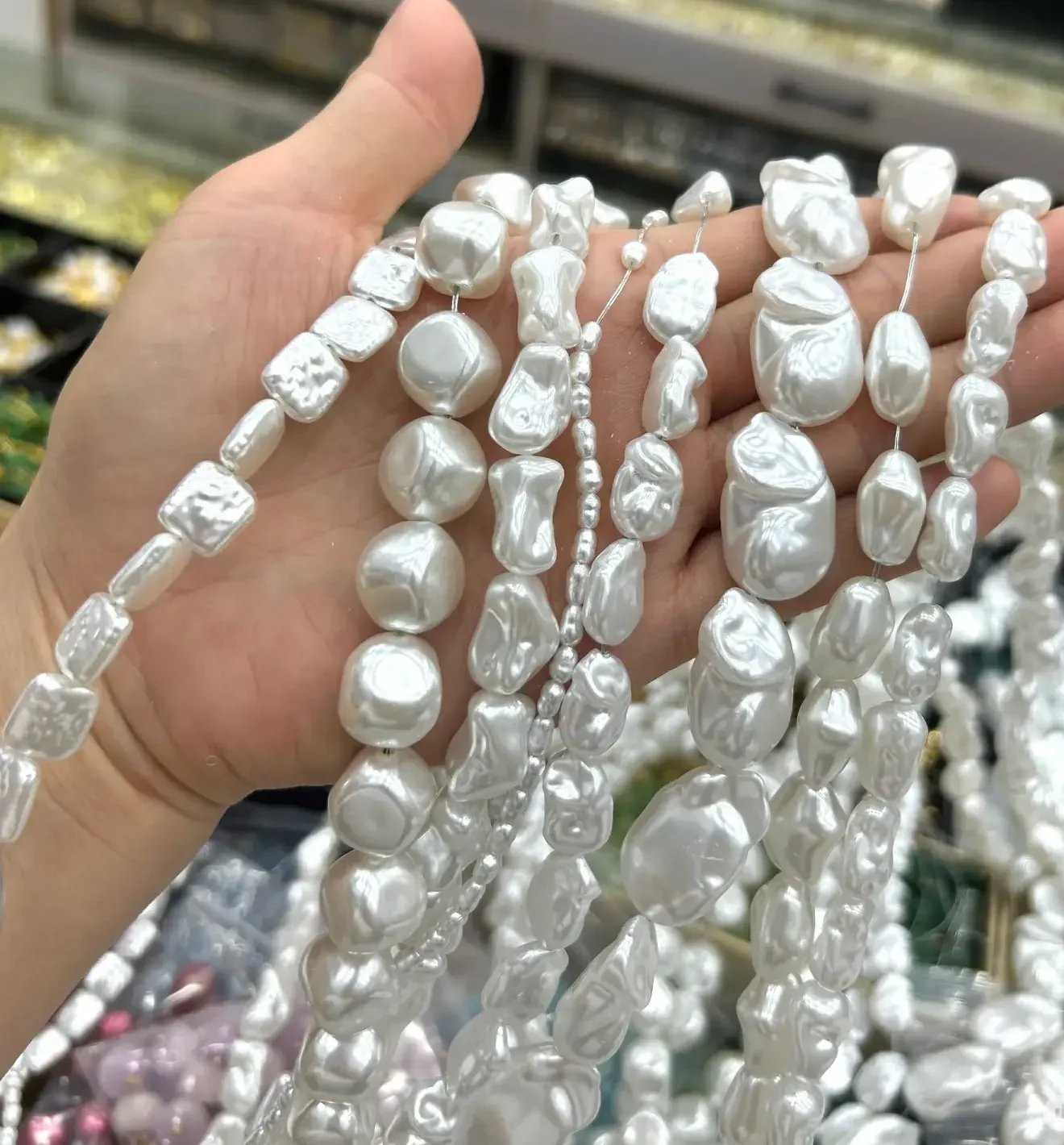
The first image shows faux pearls made from plastic.
At first glance they look bright white and shiny. But the shine is flat and uniform. Real pearls display multiple overtone colors that shift when you move them. This imitation pearl reflects a single chalky white tone from every angle.
There is no depth. No layered glow. They look coated, almost like polished plastic.
Real pearls never look like this under natural light.
Example 2 & 3: High-End Glass Baroque Imitations
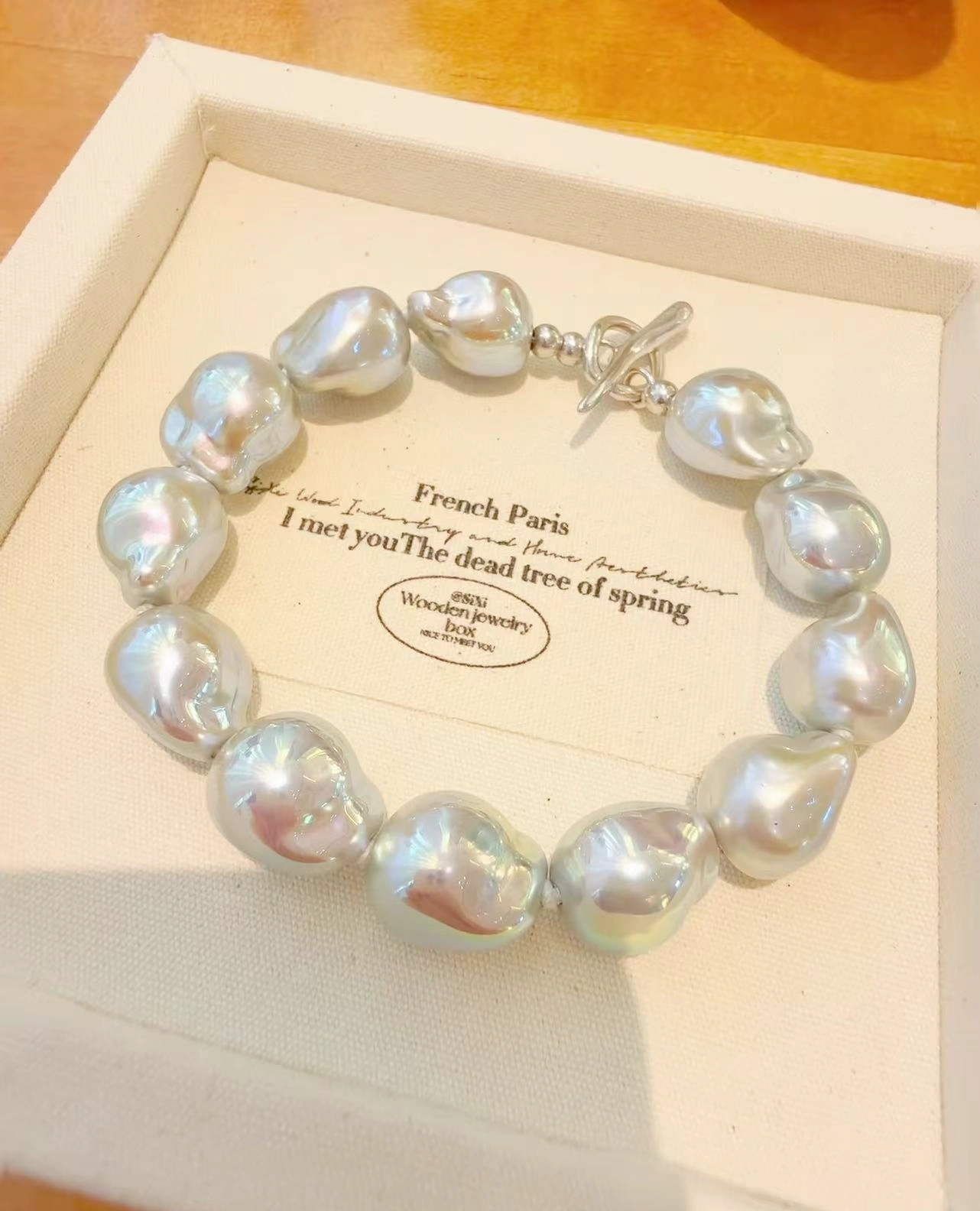
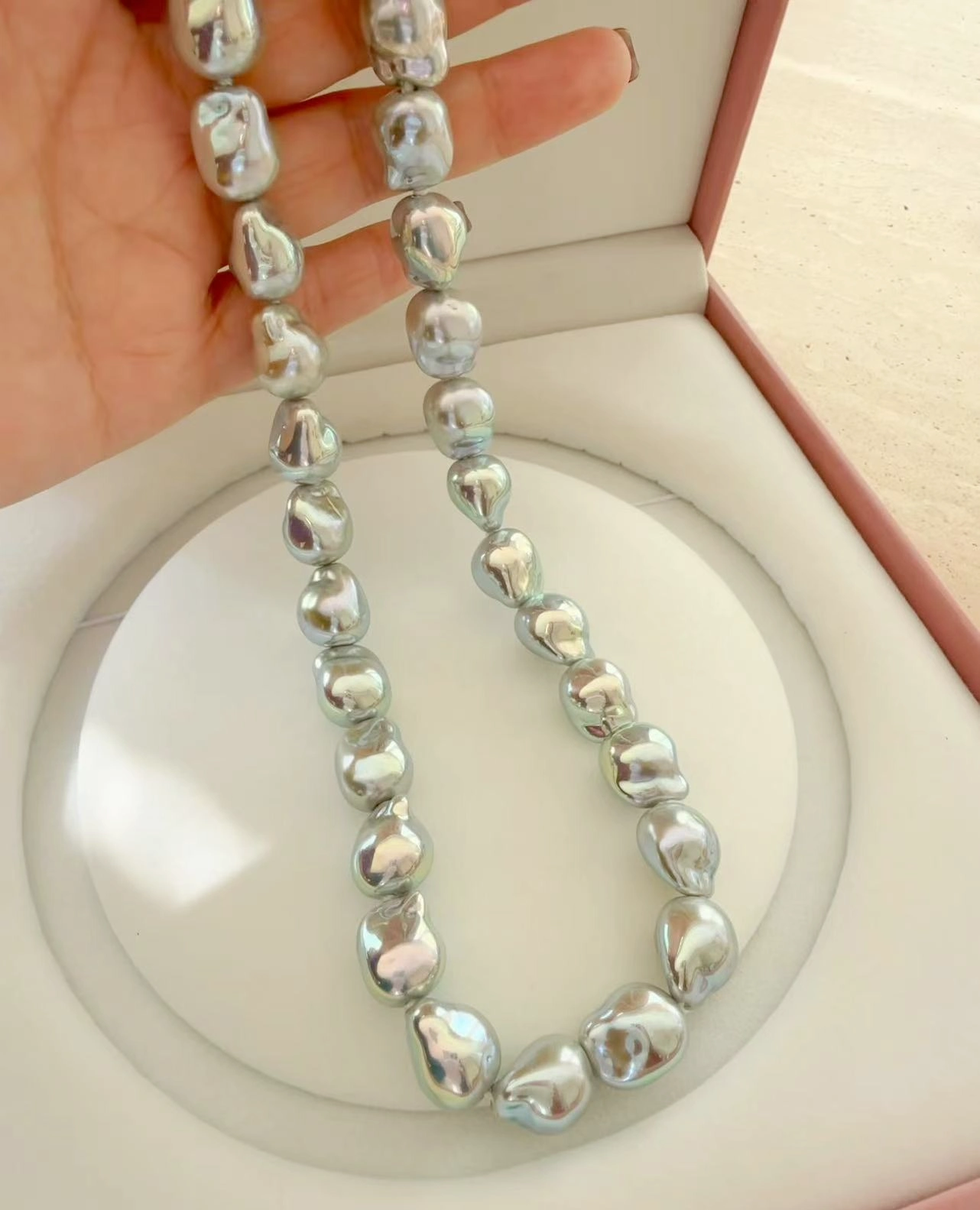
The next two images show something much more deceptive.
These are top-tier glass imitation baroque pearls. The surface coating is engineered to mimic the gray-blue overtone seen in fine pearls. The luster is extremely sharp, sometimes even brighter than genuine pearls.
At first glance, the shapes appear organic and varied.
But look carefully.
Each pearl is actually identical in size and shape. They are only rotated differently. Even the overtone appears in the same direction on every pearl. Nature does not repeat patterns this perfectly.
Lighting also plays a role. These photos were taken indoors under soft light, so nothing looks obviously suspicious. But the shine is too crisp. Glass pearls contain a transparent glass core covered by a thin coating. Light passes through them differently.
Real pearls are built from a nucleus and layers of nacre. The nucleus is opaque, and nacre is not fully transparent either. It’s formed from stacked microscopic layers. Even non-beaded pearls never glow like glass.
Example 4: Real Baroque Pearl Necklaces
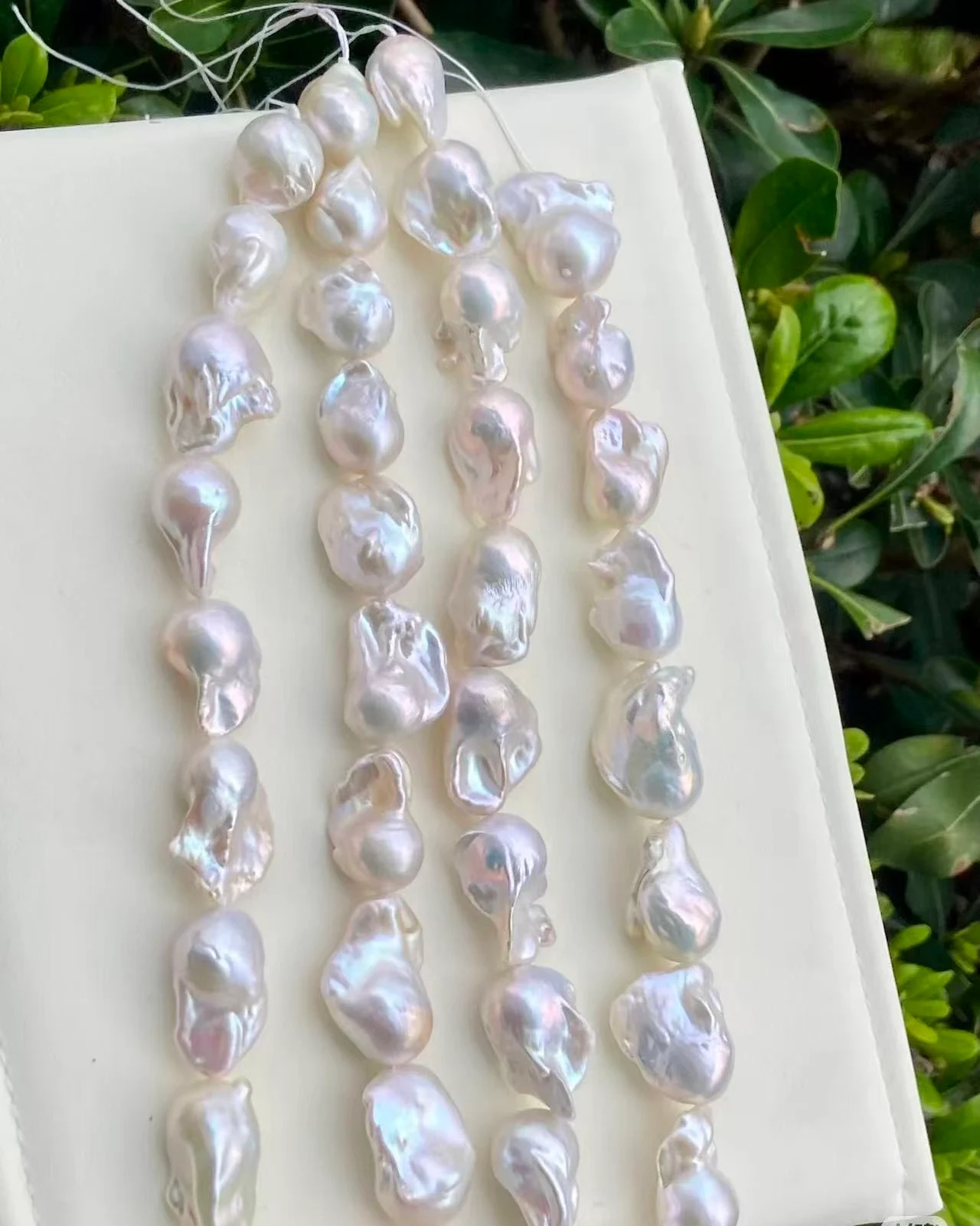
The fourth image shows genuine baroque pearls photographed in natural light.
Because these necklaces were carefully matched for quality, the pearls look surprisingly similar at first glance. But look at the tails. Each one ends differently. No two are the same.
That irregular individuality is a natural signature.
This is why baroque pearl necklaces are one of the safest entry choices for beginners. The differences between pearls are obvious. Even someone with no experience can see that nature does not copy-paste shapes.
With high-quality round pearls, especially when carefully size-matched and eye-clean, these differences become much harder to detect.
Baroque pearls make authenticity visible.
How Can I Tell Real Pearls From Fake – Three Additional Ways
Beyond visual comparison, here are three practical tests.
1. Flashlight Test
Shine your phone flashlight through the pearl.
Glass or plastic cores appear pale and almost transparent. Real pearls do not transmit light evenly. The inner structure blocks and diffuses light.
You’ll see this clearly in my video demonstration below.
2. Friction Test (Better Than the Tooth Test)
I don’t recommend rubbing pearls on your teeth.
Instead, rub two pearls gently together.
Real pearls create friction and produce a faint powder. Fake pearls feel smooth, like sliding glass on glass.
The difference is surprisingly obvious once you try it.
3. Drill Hole Inspection
If the drill hole is visible, examine it closely.
A real pearl will have a small hole with sharp, clean edges. Imitations often have larger holes, peeling edges, or visible coating layers.
This is one of the easiest confirmation checks.
A Funny Truth About “Obviously Real” Pearls
People often ask me if their pearls are real.
Sometimes I can tell instantly.
But here’s the twist: pearls that are instantly recognizable as real are often low quality. They may show heavy ridges, pits, dull luster, or obvious surface flaws.
Imitations only copy the most expensive pearls — perfectly round, mirror-bright, flawless ones.
So paradoxically, most real pearls are actually easy to identify.
Today, authenticity alone is no longer the main concern. Freshwater pearl farming has made genuine pearls affordable. The bigger risk is sellers misrepresenting quality — waxing surfaces, dyeing pearls, or passing freshwater pearls off as saltwater pearls.
I’ll cover pearl color authenticity in a future article.
Real Pearls Looking “Too Good” vs Fake Ones
I prioritize pearls with strong luster when selecting inventory. These pearls have minor imperfections, but in videos, those small surface details often disappear, and sometimes viewers assume the pearls must be fake because they look too perfect.
I’ve actually had to film proof videos to show they’re real. Don’t use the knife trick at home, as it might hurt your pearls.
And honestly, I take that as a compliment. It means the pearls are performing exactly like fine pearls should — bright, sharp, and alive under light.
True pearls don’t have to be dull. High-quality pearls are luminous.
Why Real Baroque Pearls Are Easier to Tell?
If you want pearls that are beautiful and easy to authenticate, baroque pearls are a smart place to start.
Their individuality is visible. Their natural variation is impossible to mass-replicate convincingly. That makes them one of the safest styles for new collectors.
(You can read my full baroque pearl guide here → Baroque Pearl Jewelry: Why Irregular Pearls Are the Smart First Choice)
If you’ve ever wondered how to tell if pearls are real, remember:
Nature never repeats itself perfectly.
Imitations try to.
And once you learn to see the difference, it becomes obvious.