
Freshwater pearls come from freshwater mussels cultivated in rivers, lakes, and ponds. Today, the vast majority of them are farmed in China, with Zhuji serving as the global center of freshwater pearl production.
What Are Freshwater Pearls and How Are They Formed?
Freshwater pearls form when a freshwater mussel coats an irritant with layers of nacre, gradually creating a pearl inside its shell. When a small irritant enters the shell, the mussel responds by layering nacre (a calcium carbonate substance) around it. Over time, this layering creates a pearl. This organic process gives these pearls their characteristic warm luster and soft glow.
Where Did Freshwater Pearls Originally Come From?
Today, freshwater pearls are primarily produced through large-scale farming, rather than wild river harvesting. In earlier times, they were found in natural rivers and lakes. For example, the Tennessee River once supported a local freshwater pearl industry. See the explaination by the Tennessee River Freshwater Pearl Museum. Such sources produced limited quantities and could not sustain growing global demand. Overharvesting and environmental limits eventually made these wild sources impractical for large-scale supply.
Where Do Most Freshwater Pearls Come From Today?
Zhuji Pearl City, China — World’s Pearl Capital
Today, China is far and away the leader in freshwater pearl production, supplying more than 95% of all globally. Behind it there’s extensive aquaculture infrastructure and decades of refinement in farming techniques.
Within China, Zhuji Pearl City in Zhejiang Province is the heart of freshwater pearl cultivation and trade. Statistics show that Zhuji produces approximately 70% of the world’s freshwater pearls and accounts for around 80% of China’s total output.
Zhuji Pearl City is a bustling global hub, where pearls are traded, processed, and distributed to buyers from dozens of countries.
(Percentage numbers are from Grokipedia. )

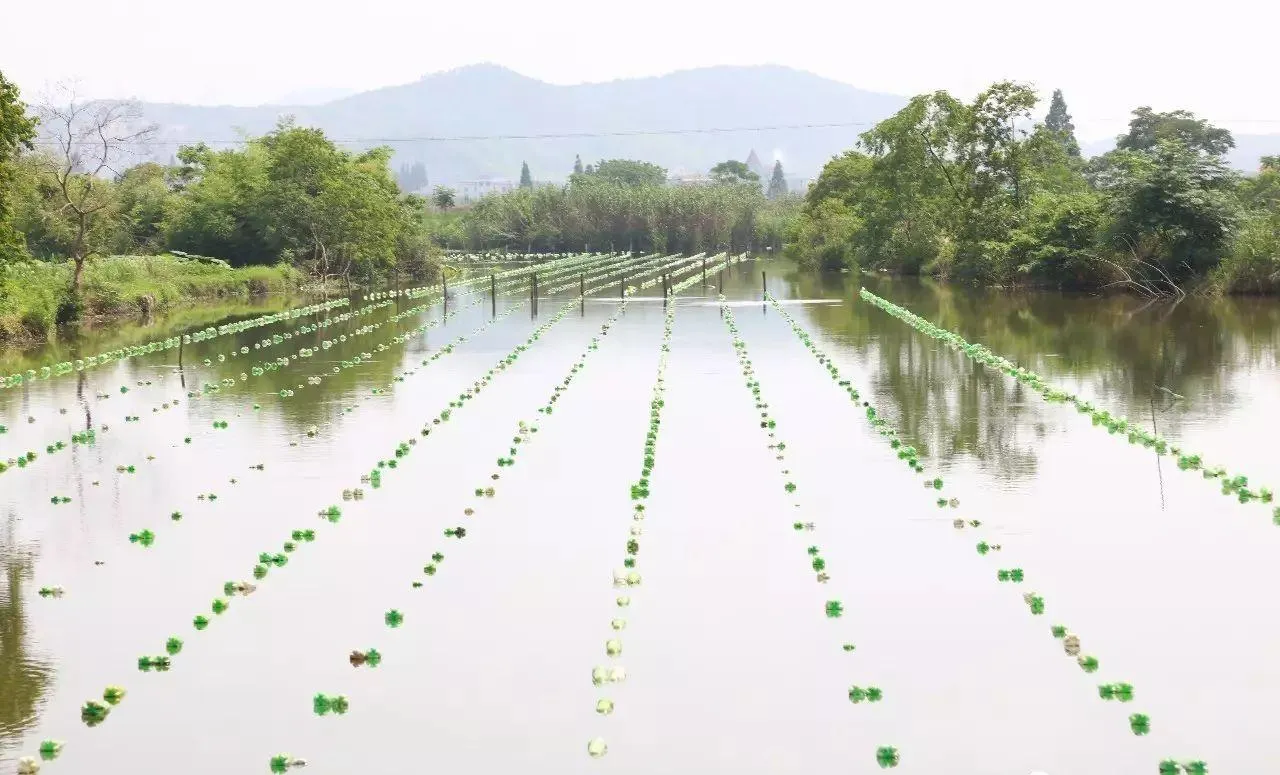
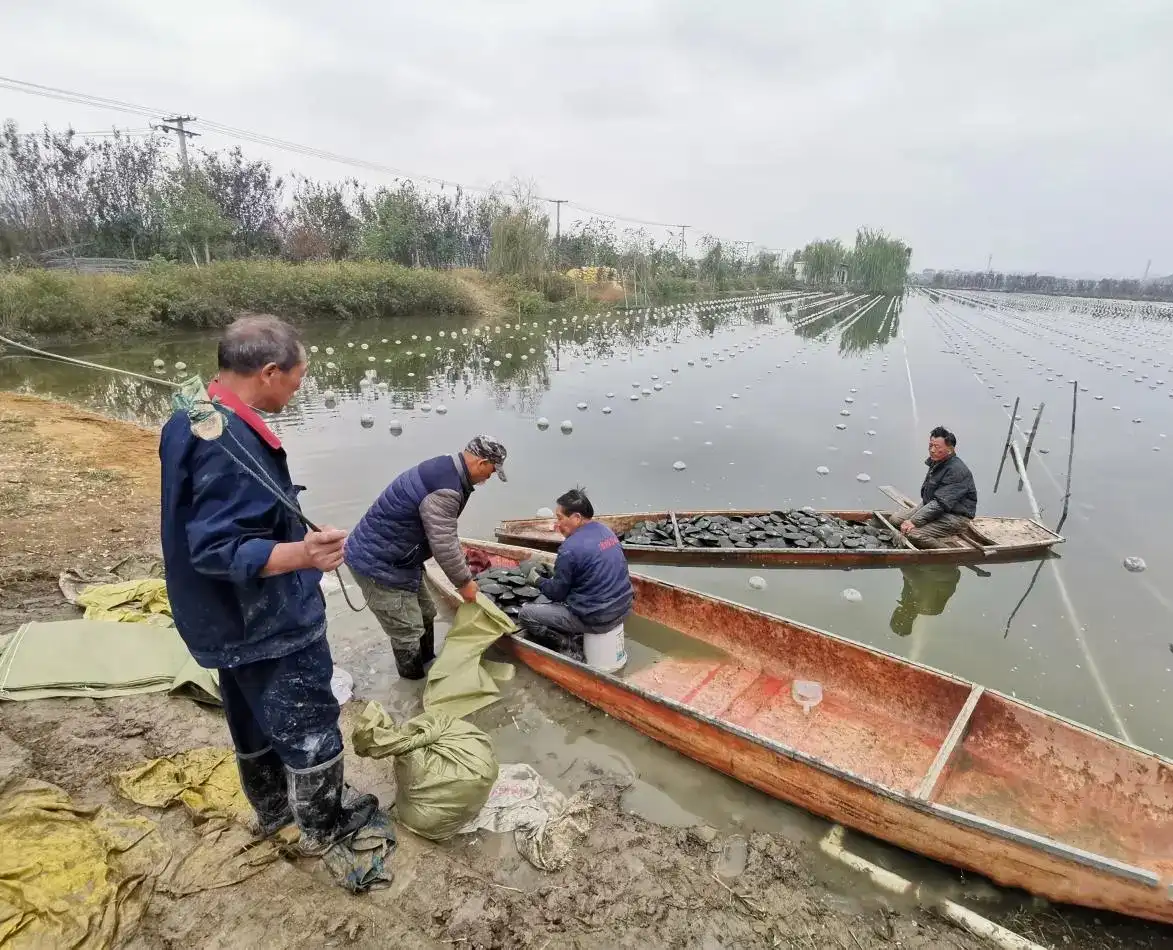
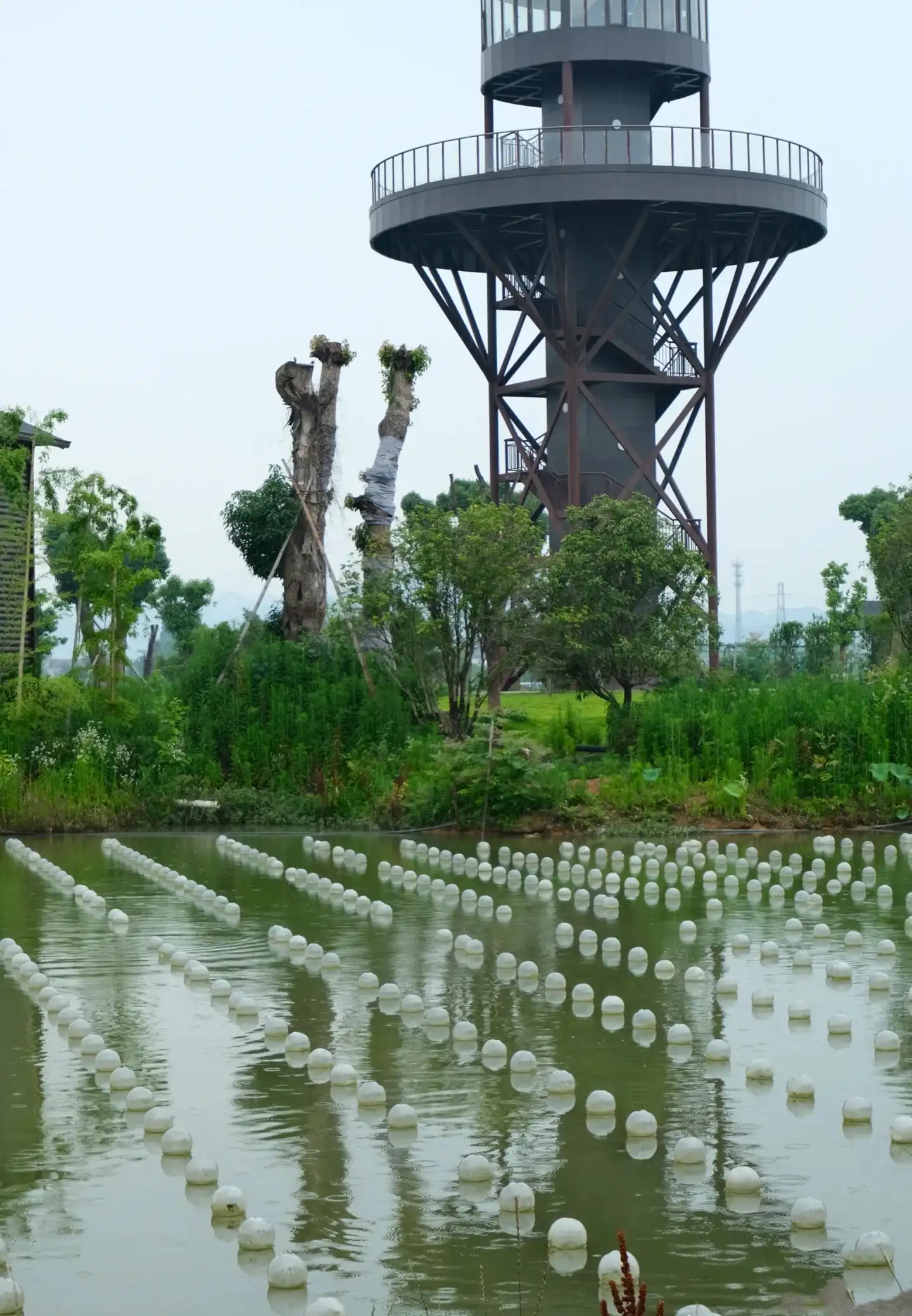
Edison Pearls: Innovation from the Pearl Capital
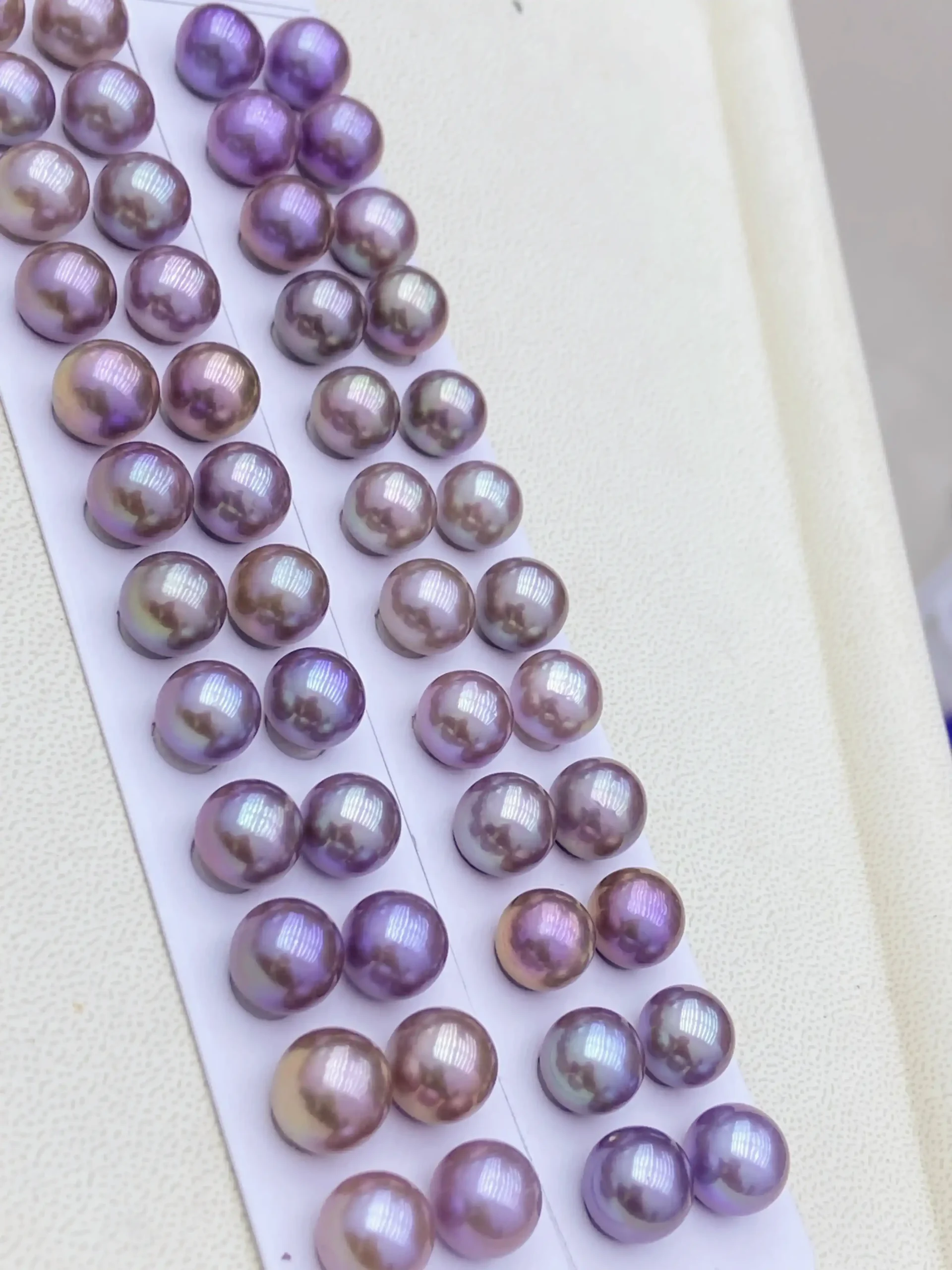
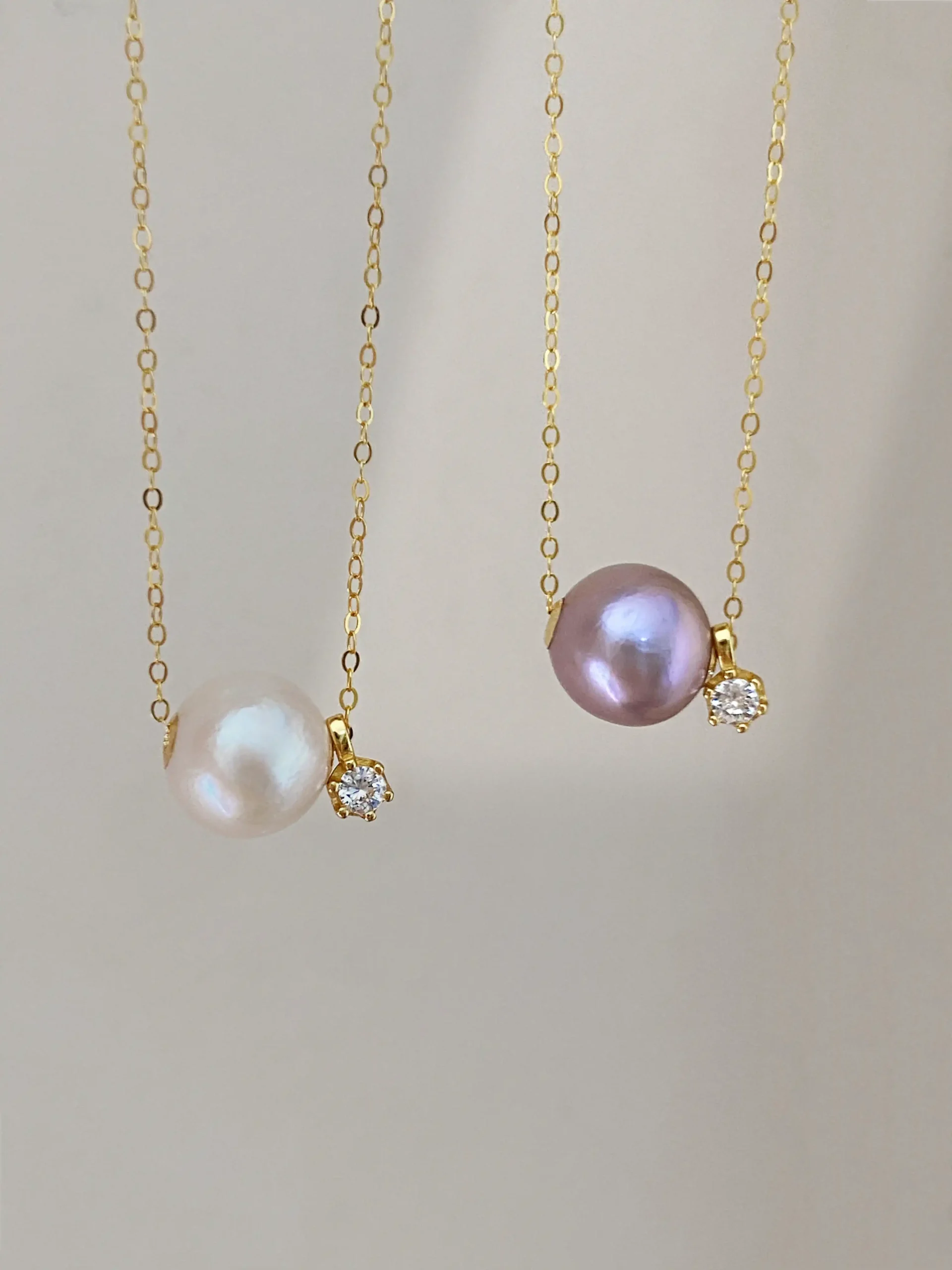
One hallmark of Zhuji’s innovation is Edison pearls. It’s a breakthrough in bead-nucleated freshwater pearl farming developed through extensive experimentation and over ¥100 million (~14 million USD) in R&D. Edison pearls deliver large, round shapes (11–20mm) with thick nacre often exceeding 5–12mm, rivaling quality standards once reserved for top-tier saltwater pearls.
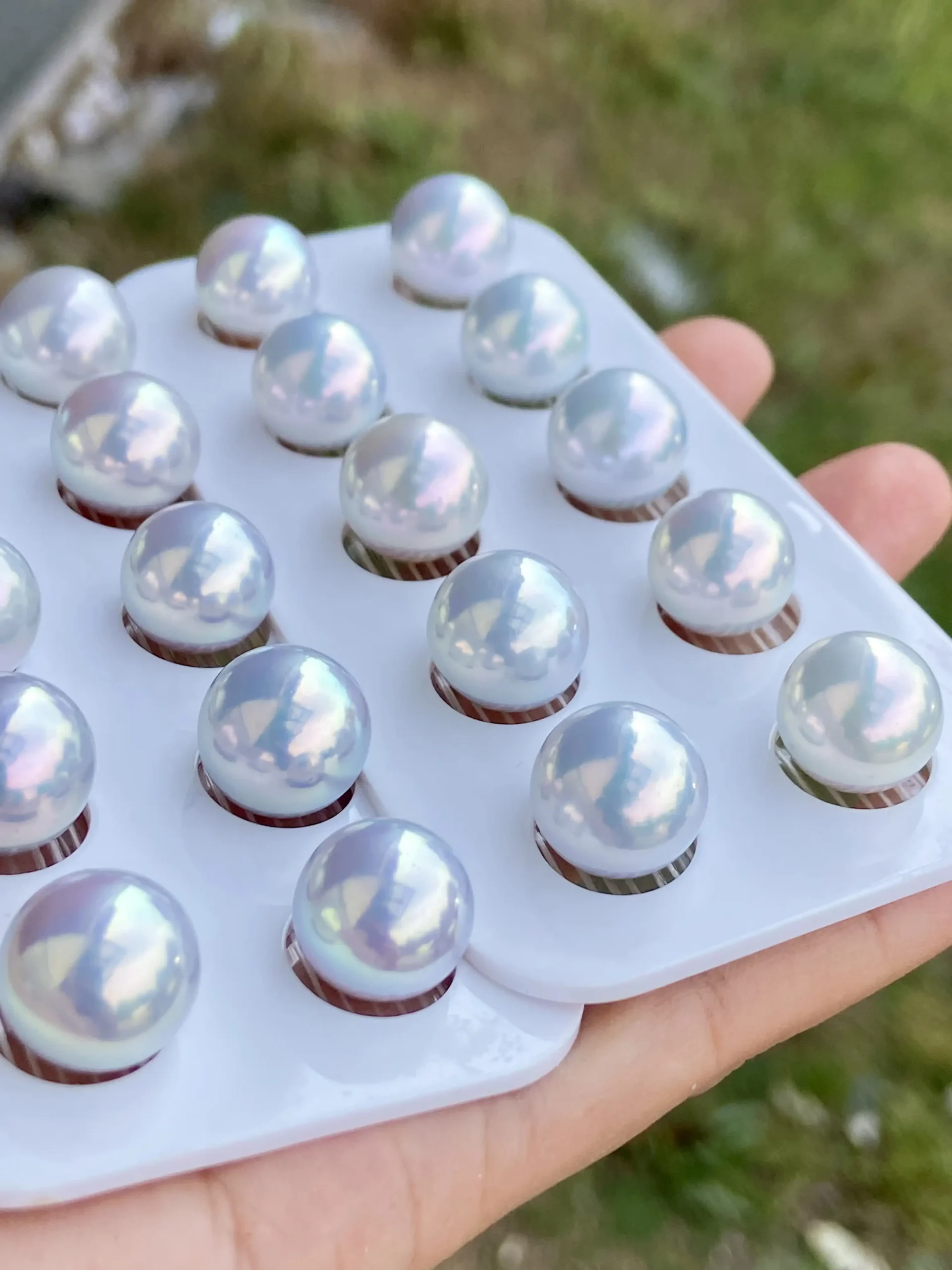
How Freshwater Pearls Are Cultivated on Pearl Farms
Freshwater pearl aquaculture begins with healthy mussels placed in carefully managed lakes and ponds. Technicians implant tiny pieces of mantle tissue into the mollusks—a form of nucleation that prompts nacre production. Over the next 2–7 years, the mussels secrete layer after layer of nacre, gradually forming a cluster of pearls inside each shell.
In competitive farming regions like Zhuji, farms continually experiment with techniques to improve nacre quality, color consistency, and shape control. Larger operations may invest tens of millions of yuan each year in research and sustainability practices, pushing the frontiers of what freshwater pearls can be.
Once harvested, pearls are cleaned and sorted for size, shape, color, and surface quality. Matched pearls are often sold as strands known as “hanks,” while others are sold individually.
Unlike some pearl treatments such as dyeing or irradiation (which can even extend color permanence), we choose to use untreated pearls. These pieces carry their natural color and shape—reflective of the living mollusk that produced them, giving each pearl a truly unique personality.
Why Freshwater Pearls Vary in Color, Shape, and Size
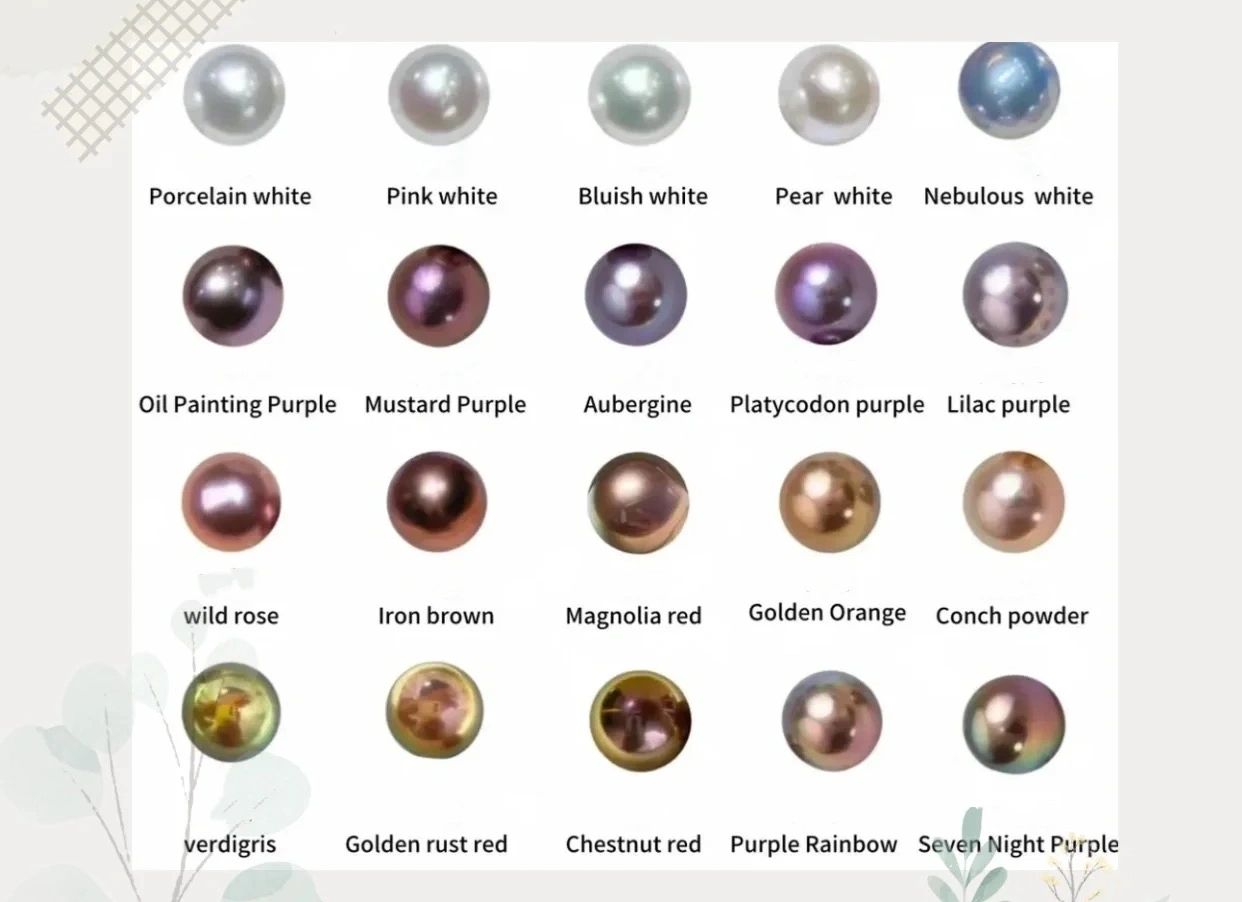
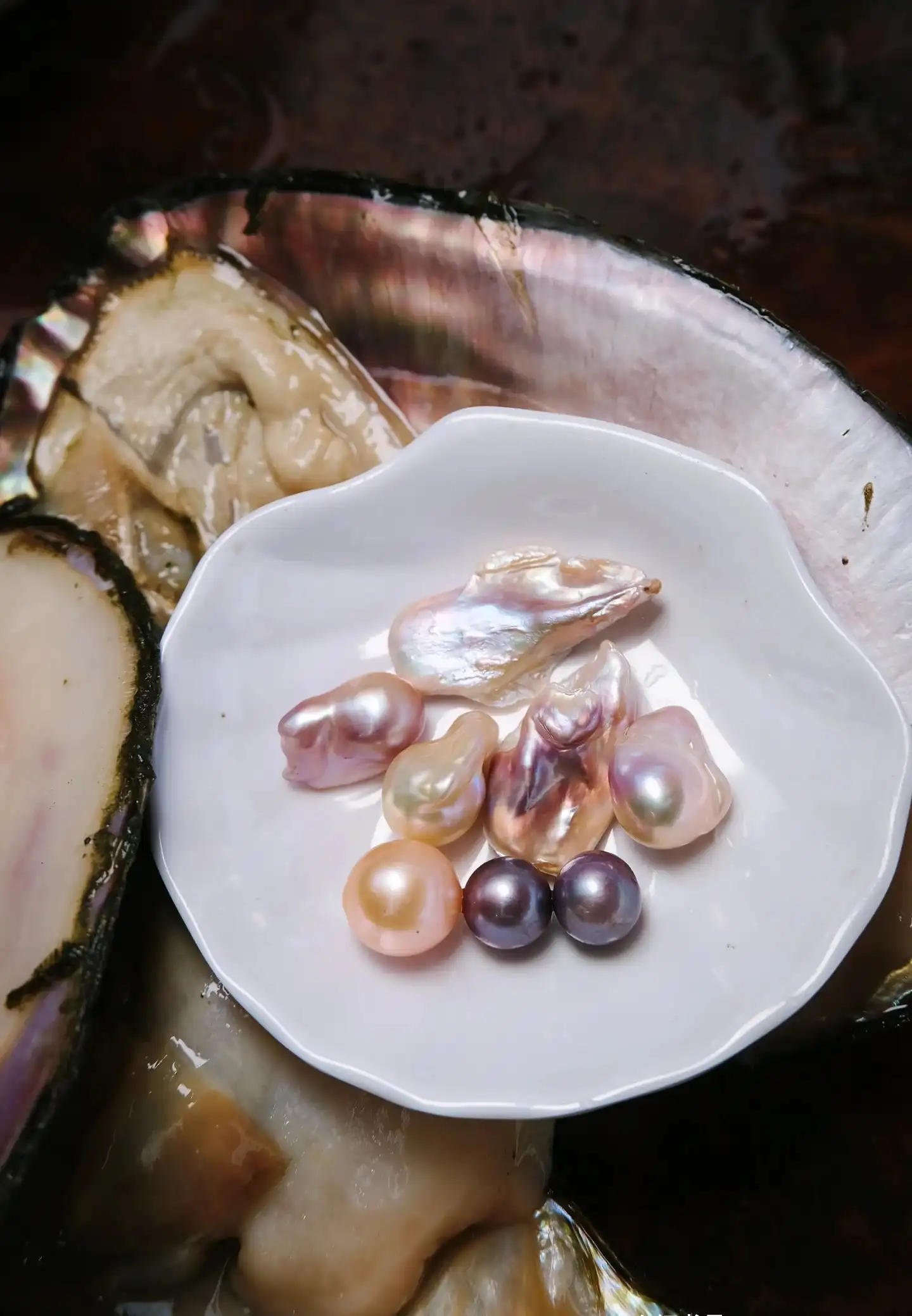
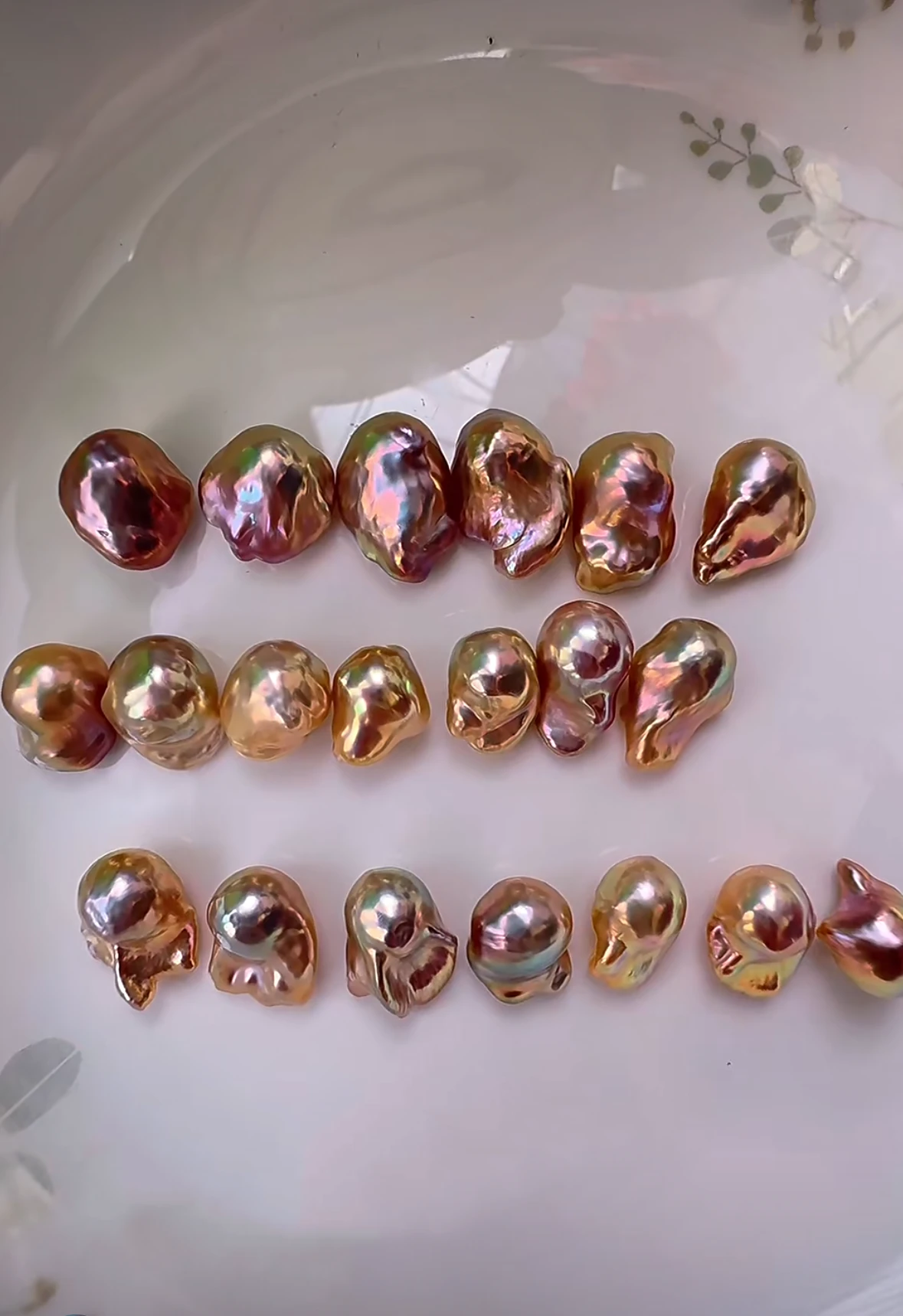
Freshwater pearls are celebrated for diversity. Natural shades range from white and soft pink to lavender, light gold, and even rare metallic tones. Shapes vary widely too—near-round, baroque, rice, coin, potato, and more.
Environmental factors such as water temperature, salinity, and farm conditions influence how nacre forms. Cooler waters often yield tighter, finer nacre layers and more intense luster, while warmer conditions can accelerate growth or produce larger pearls.
GUILD, one of the world’s respected authorities in gemstone identification and jewelry grading, has developed an official naming system for freshwater pearl colors. Names like Aurora, Stardust Purple, Sunrise, and Silver Blush capture the dreamy, romantic tones that natural pearls can exhibit. Explore the GUILD freshwater pearl colors description.
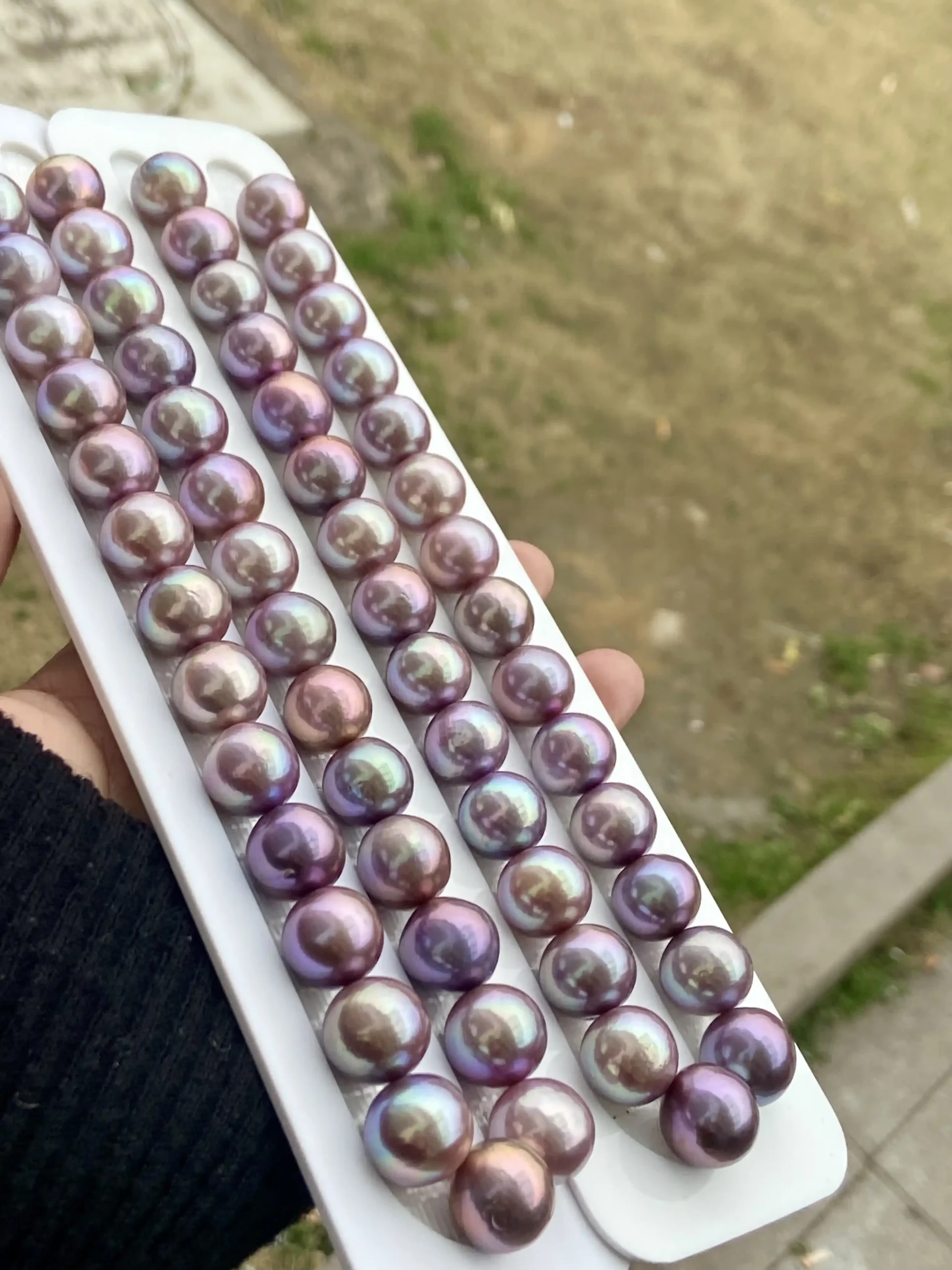
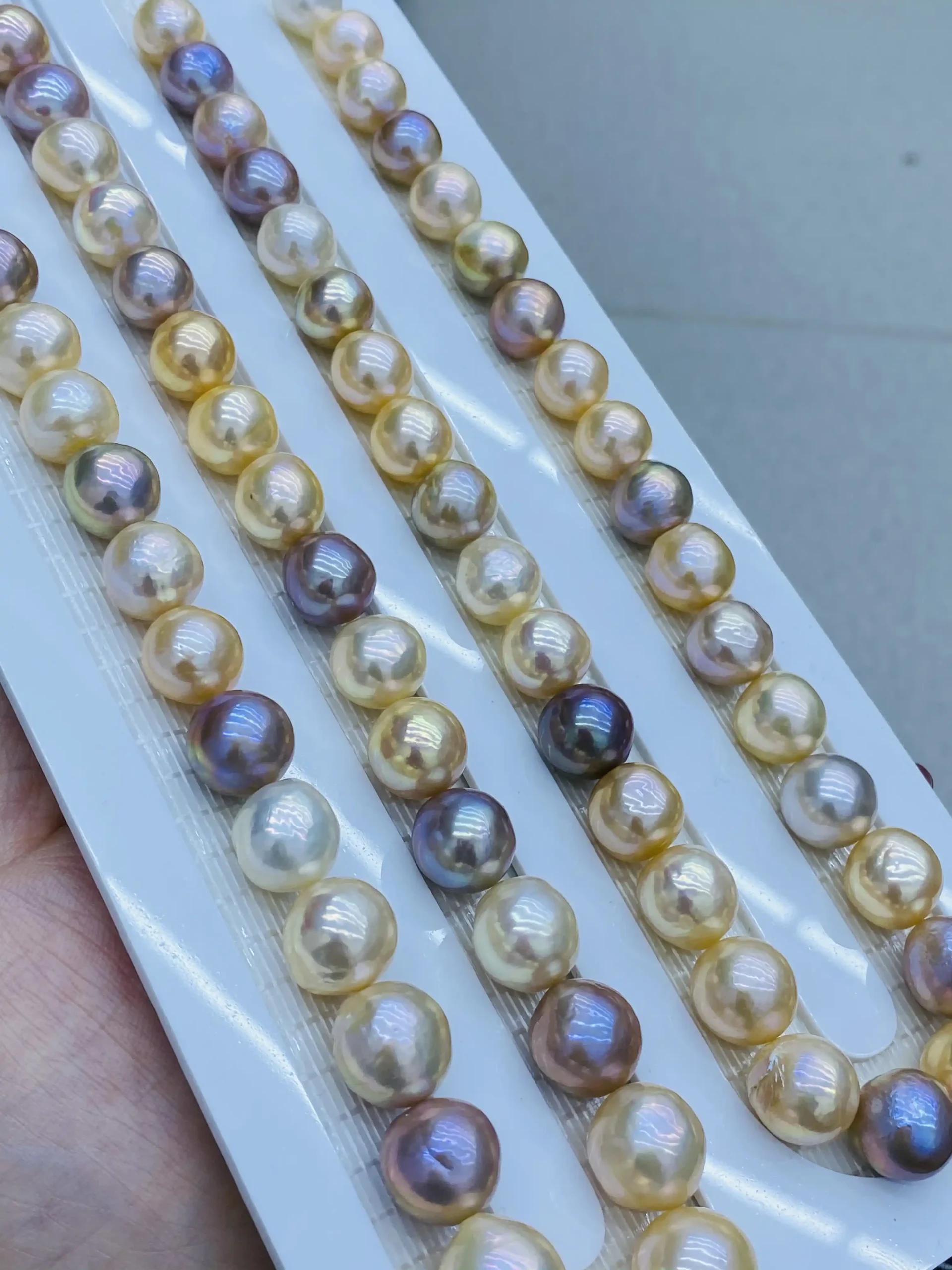
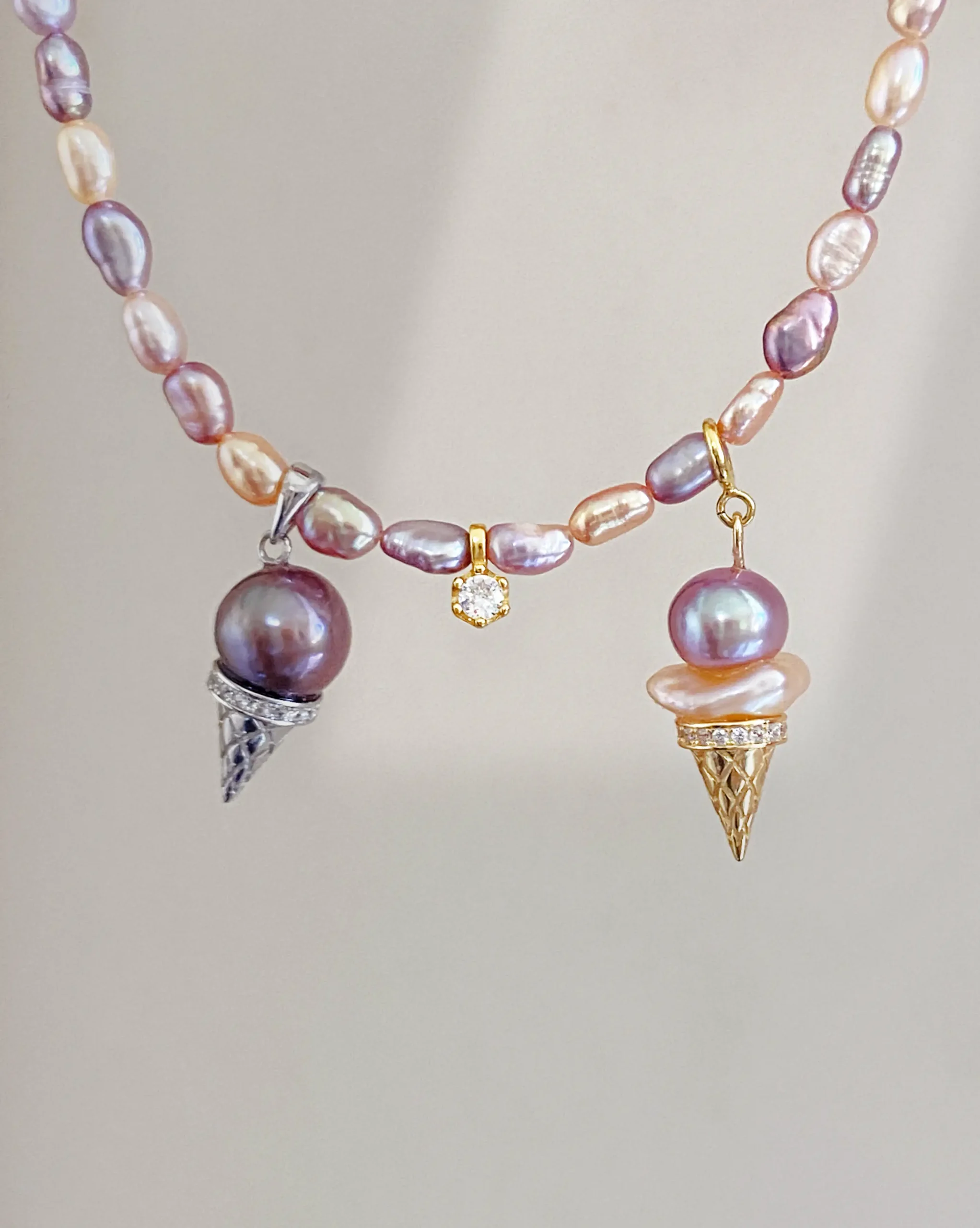
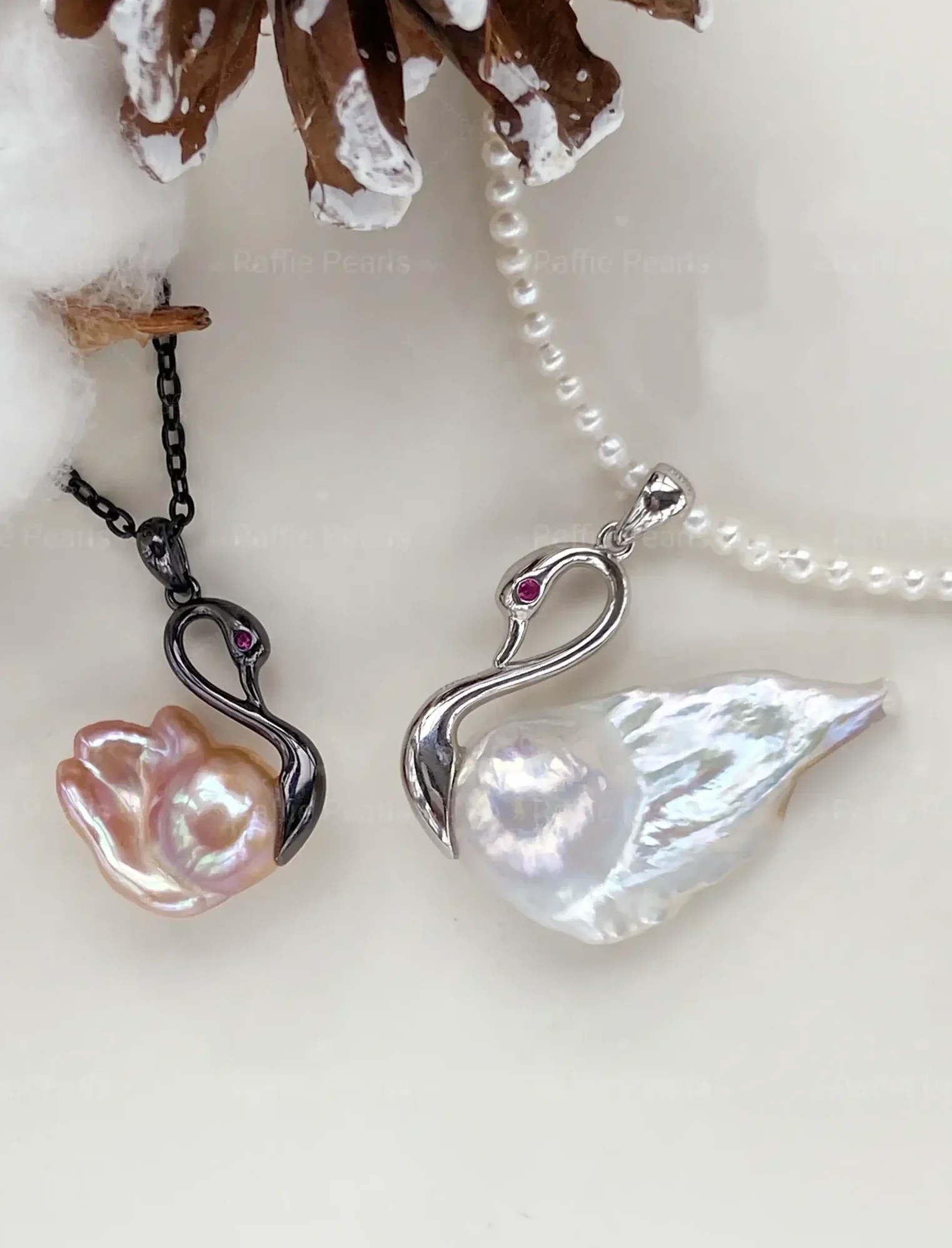
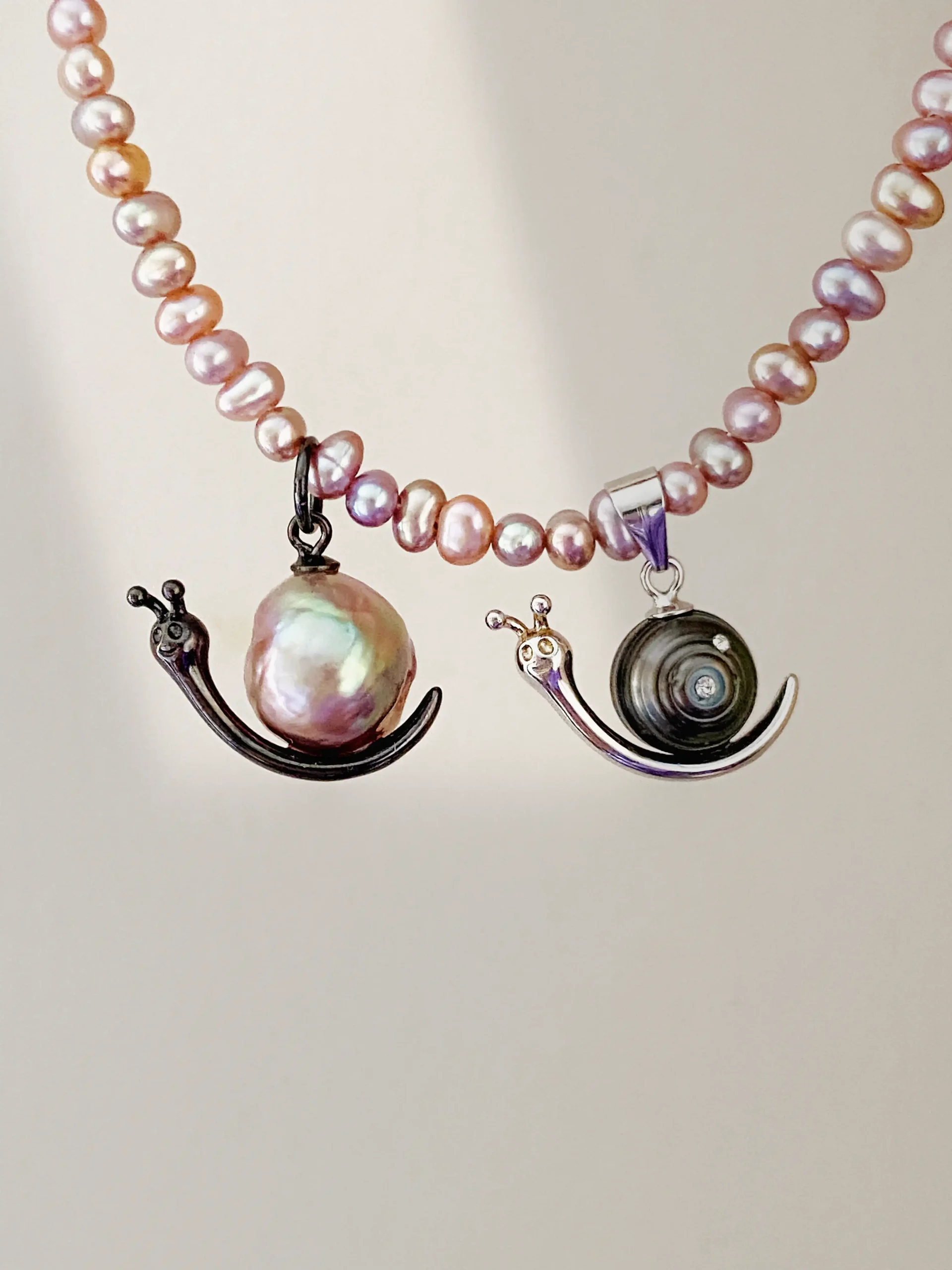
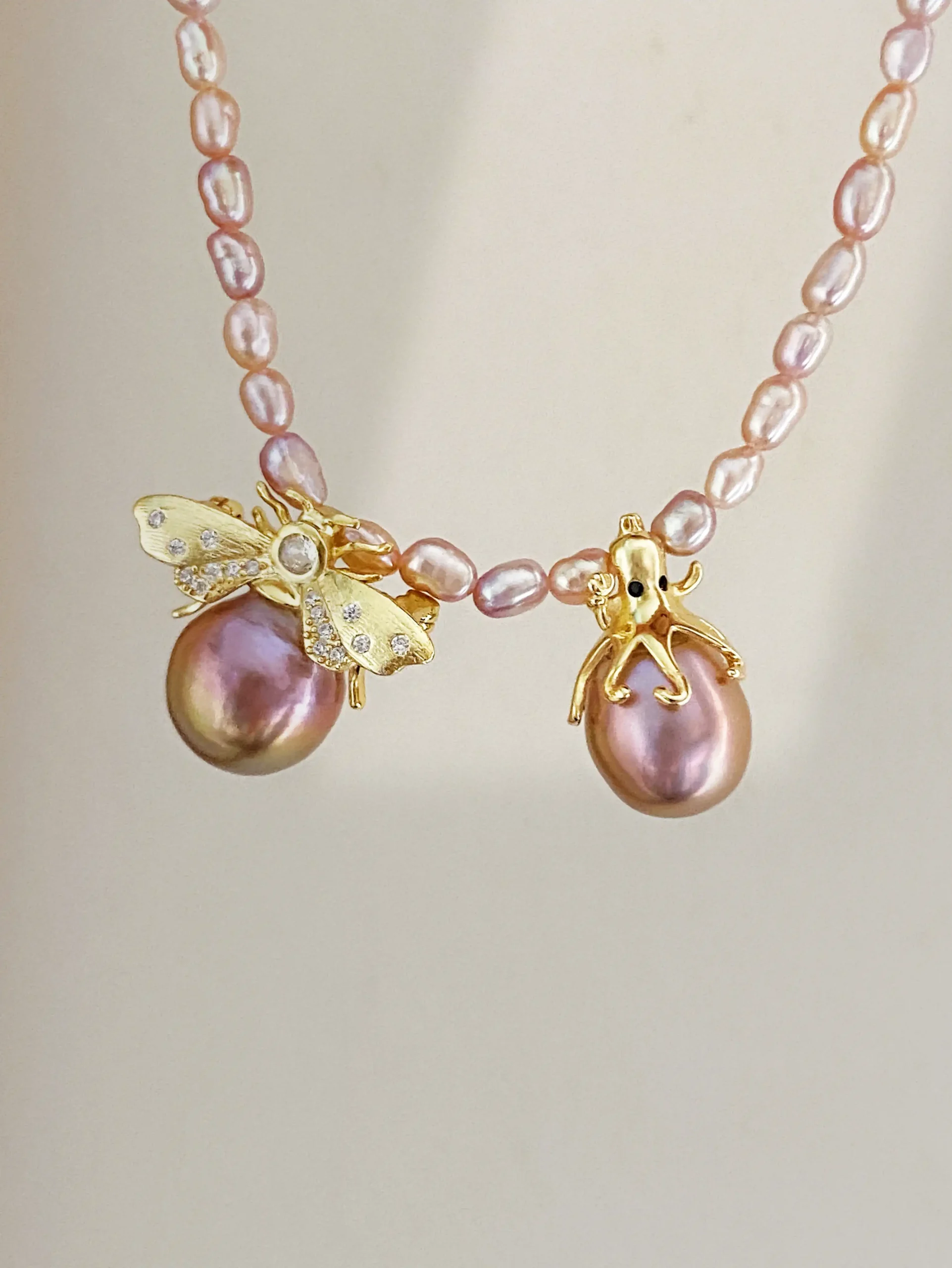
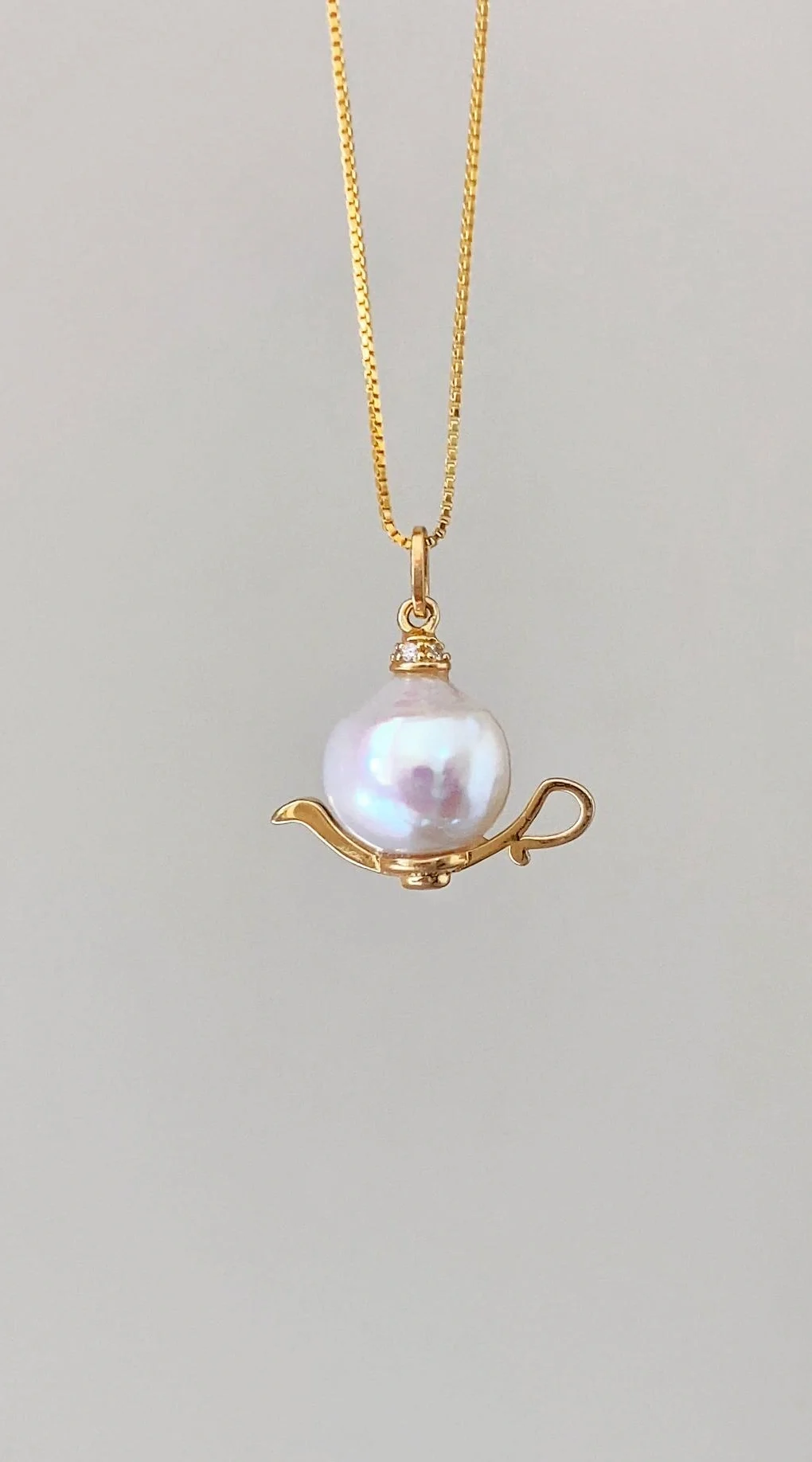
Because of this natural diversity, we also create One-of-a-Kind Freeform Designs, where each pearl is truly unique:

How Freshwater Pearls Compare to Other Types of Pearls
Freshwater pearls are proud of their varied shapes and wide range of natural hues. While freshwater pearls do not usually have the mirror-like metallic finish typical of classic saltwater pearls, advances in cultivation have led to freshwater varieties with metallic and intense luster close to that of saltwater counterparts. For a deeper comparison, see below an example. The answer is in my other blog Freshwater vs Saltwater Pearls – Follow-Up Insights on A Comparison.

Today, many freshwater pearls used in fine jewelry come from this new generation of cultivation. You can explore how these pearls are used in modern designs here – Freshwater Pearls Jewelry.
Why Sourcing Location Matters for Freshwater Pearl Quality
Pearls are not standard products. Even pearls from the same farm and grade can differ in luster, surface quality, and color. Proximity to the source enables hands-on selection that no certificate can fully replicate.
In real market observation, even farms’ grading standards differ. Two pearls labeled the same grade from different farms can vary noticeably in luster and color. While it is possible to send pearls to international laboratories like GUILD for certification, the time (often months) and cost make this impractical for budget-friendly freshwater pearls. Experienced buyers know that the most efficient way to get high-quality pearls is to be physically present in Zhuji and hand-select them yourself—saving money, time, and ensuring quality.
Living near Zhuji allows us direct access to farms and the markets where pearls of various grades, colors, and shapes are physically present. I can inspect thousands of pearls firsthand, selecting each one for its best possible luster, orient, and surface quality relative to its price point—something no remote grading report can replace. This hands-on process is the very soul of what makes a pearl special.
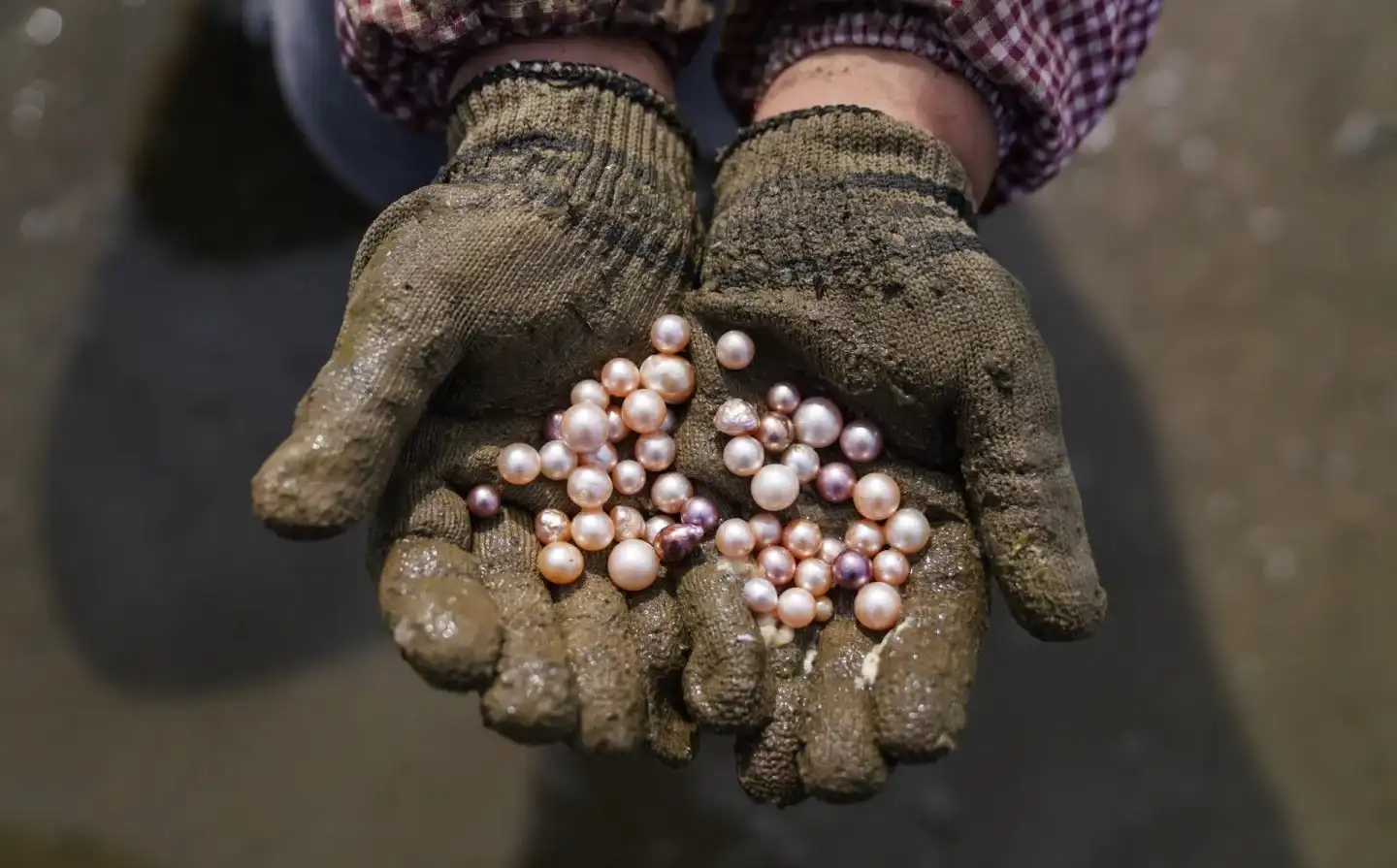
Sourcing at the origin also eliminates costs from multiple middlemen. In the Zhuji market, I often see well-known fashion brands purchasing pearls here. Many do not select for the absolute highest quality, yet their retail prices reflect markups of up to 90%, which can be startling. My mission is to leverage this supply chain advantage to bring high-quality, beautiful pearls to fellow pearl lovers worldwide—at a fair price.
So, Where Do Freshwater Pearls Really Come From?
Freshwater pearls form naturally within living mollusks, but their modern origin reflects a global industry shaped by cultivation, innovation, and location. China dominates the global freshwater pearl supply. Within China, Zhuji Pearl City serves as its central hub—driving production, innovation, and distribution around the world.
FAQ
Freshwater pearls form inside freshwater mussels rather than saltwater oysters. They are real pearls, created when a mussel secretes layers of nacre around an irritant. This natural process, enhanced by human efficiency, produces a genuine pearl, not an imitation.
Today, more than ~95% of the world’s cultured freshwater pearls come from China. Within China, the city of Zhuji is the global center of freshwater pearl farming, producing approximately 80% of the country’s total output.
With advances in cultivation techniques, freshwater pearls now rival saltwater pearls in size and quality. They are especially valued for their wide range of shapes and natural colors. Because freshwater pearls are produced in larger quantities, they are generally more affordable than saltwater pearls.
Many freshwater pearls on the market undergo color treatments such as dyeing or irradiation, saltwater pearls too. Untreated pearls, however, display natural colors and organic shapes, which we prefer for their authenticity and natural beauty.
In theory, pearl grading systems apply to all pearls. In practice, grading standards vary widely between farms, while certification from major institutions can take months and cost up to hundreds of dollars. For many freshwater pearls, careful hand selection in the market is more practical and efficient.