
What Are Tahitian Pearls?
A Tahitian black pearl isn’t actually black?!
Believe it or not, Genuine Tahitian black pearls naturally display some of the richest colors found in the pearl world.
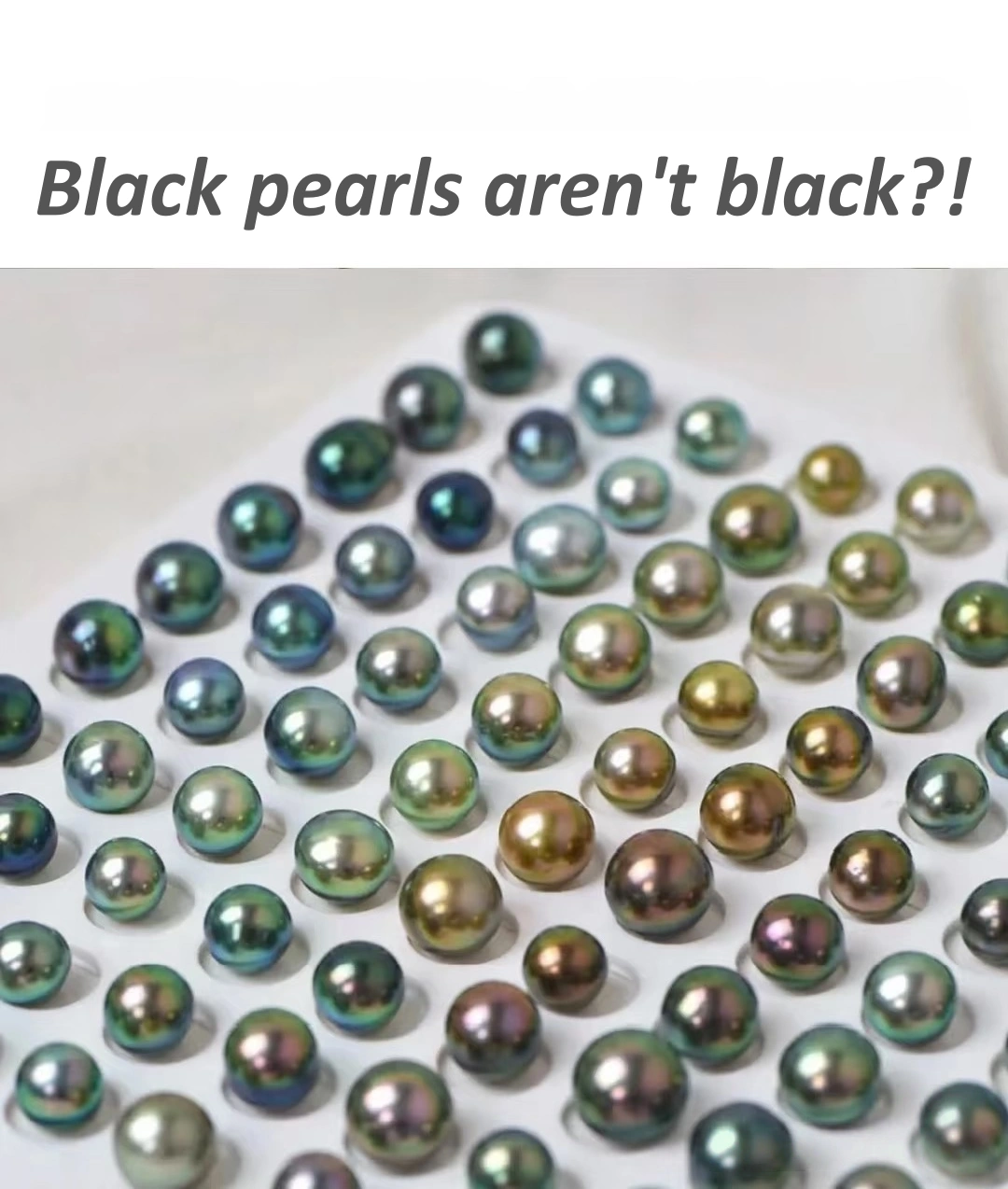
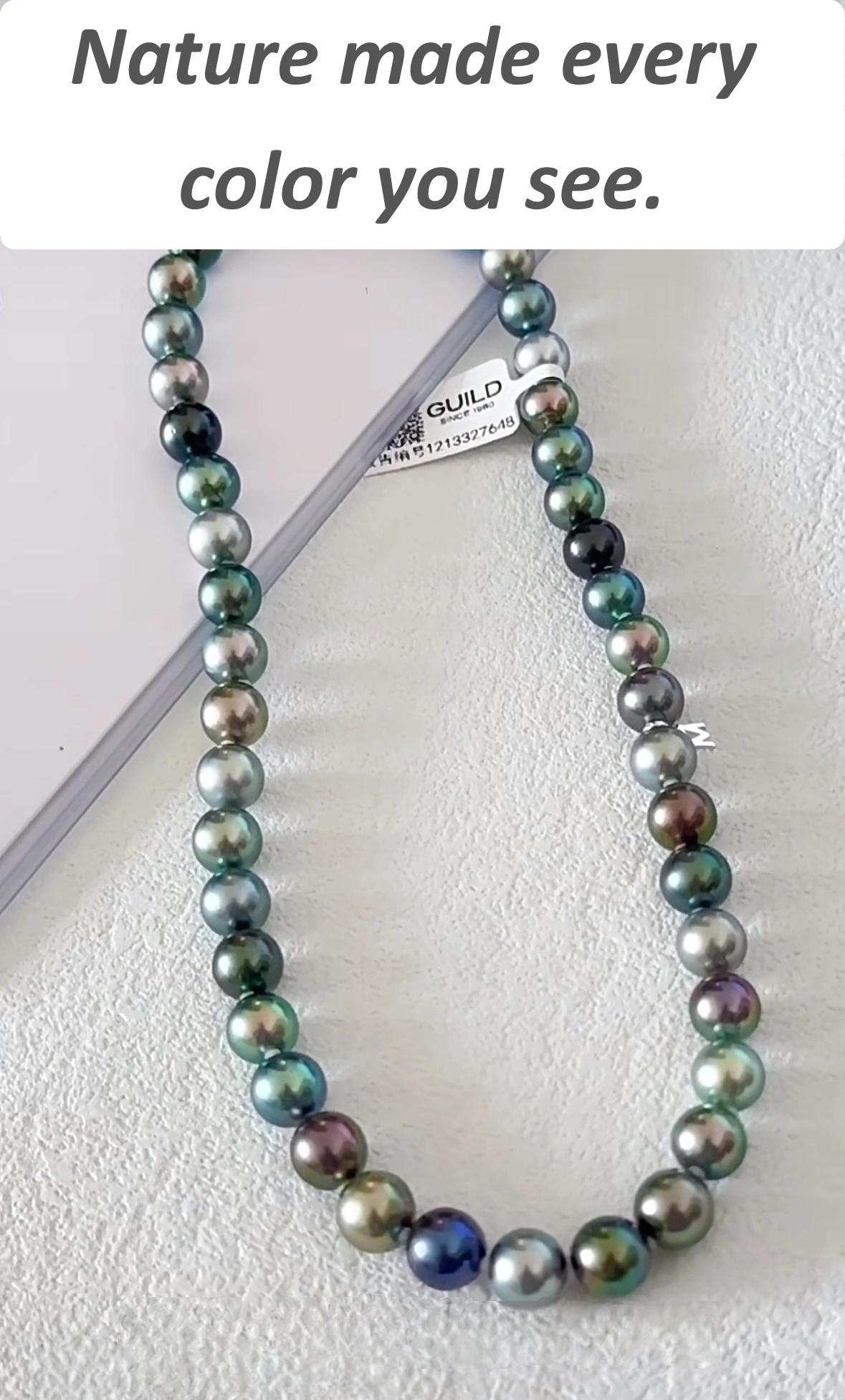
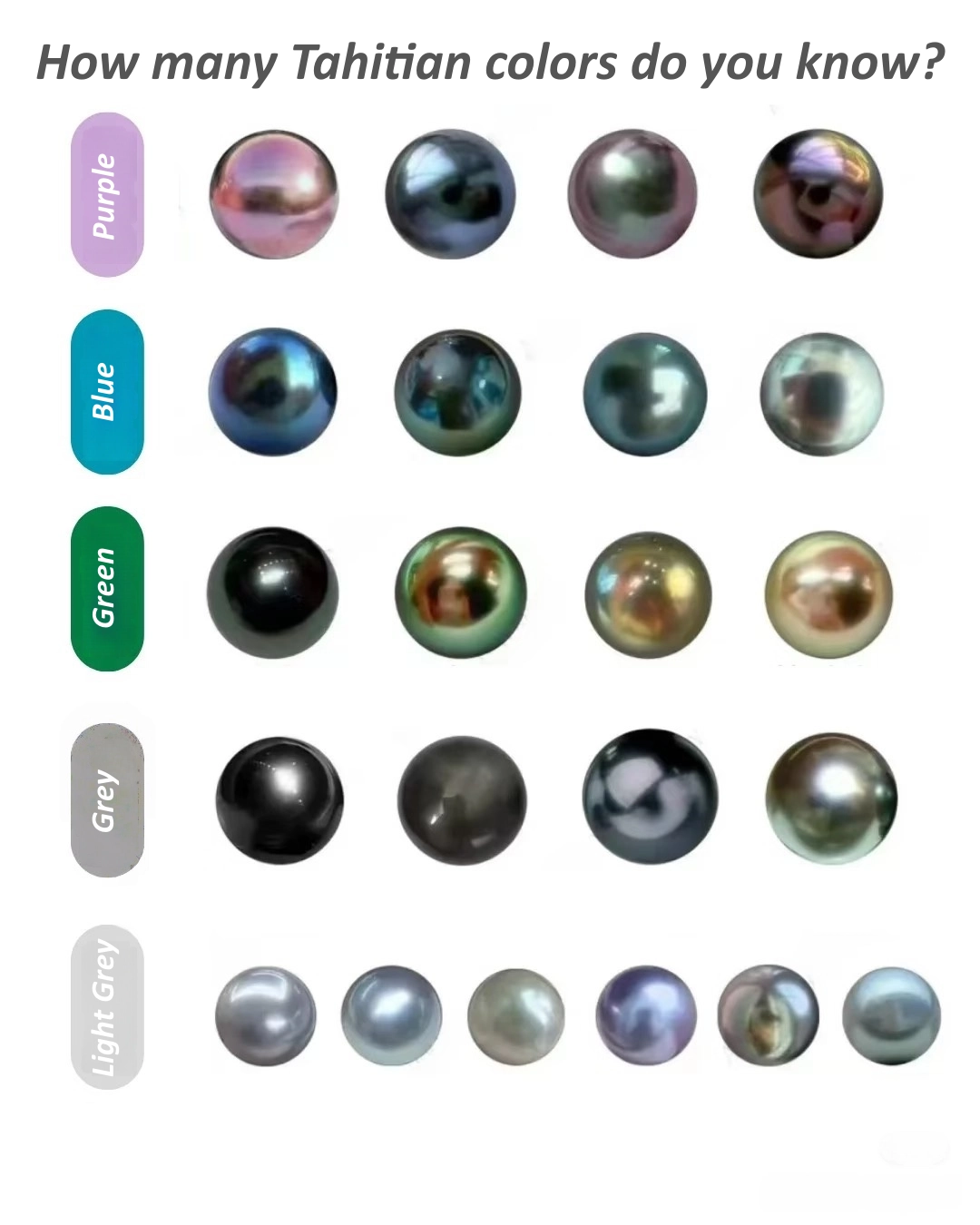
Tahitian black pearls are built upon two primary body colors—black and gray—and enhanced by 4 major overtone families: green, purple, yellow, and blue. These natural combinations create dozens of breathtaking color variations.
The vibrant shades shown above are not produced through artificial dyeing. They are the result of years of growth in the pristine waters of the South Pacific, where every pearl develops its own unique character and color arrangement.
No two Tahitian pearls are exactly alike.
So, what gives Tahitian black pearls such extraordinary colors?
Let’s explore how nature creates one of the most fascinating gems in the world.
How Nature Creates So Many Shades
1. Tahitian Black Pearls Come from the Black-Lipped Oyster
Tahitian pearls are primarily cultivated in French Polynesia and are produced by the black-lipped oyster (Pinctada margaritifera).
The mantle tissue of these oysters naturally contains dark pigments, which provide the foundation for the deep body colors associated with Tahitian black pearls.
Unlike white pearl oysters, black-lipped oysters already carry nature’s own color palette.
2. Nacre Structure Creates Optical Magic
A pearl’s color is never simply a single shade.
What we perceive as color is actually a combination of body color and optical interference.
Nacre consists of thousands of microscopic layers of aragonite crystals. When light enters these layers, it is reflected, refracted, and interferes with itself, producing brilliant overtones of green, blue, purple, silver, and countless subtle transitions.
The phenomenon is remarkably similar to the colors seen on soap bubbles or thin oil films on water.
The rainbow-like glow of Tahitian pearls is therefore an optical effect created by nature—not by human hands.
3. Environment Shapes Tahitian Pearl Colors
The surrounding environment also influences the final appearance of a pearl.
Mineral composition of the water
Different lagoons contain different minerals, which subtly affect pearl coloration.
Temperature and sunlight
Environmental conditions influence nacre deposition rates, altering both luster and overtone intensity.
Cultivation period
The longer a pearl remains inside the oyster, the thicker its nacre becomes. Thicker nacre often results in richer colors, stronger depth, and more vivid overtones.
Tahitian Pearl Color Chart: 9 Commercial Color Families
Among high-quality Tahitian pearls, gem laboratories and traders often use commercial color names to classify particularly desirable shades.
Guild Gem Laboratory recognizes nine commercial color categories for premium Tahitian pearls:
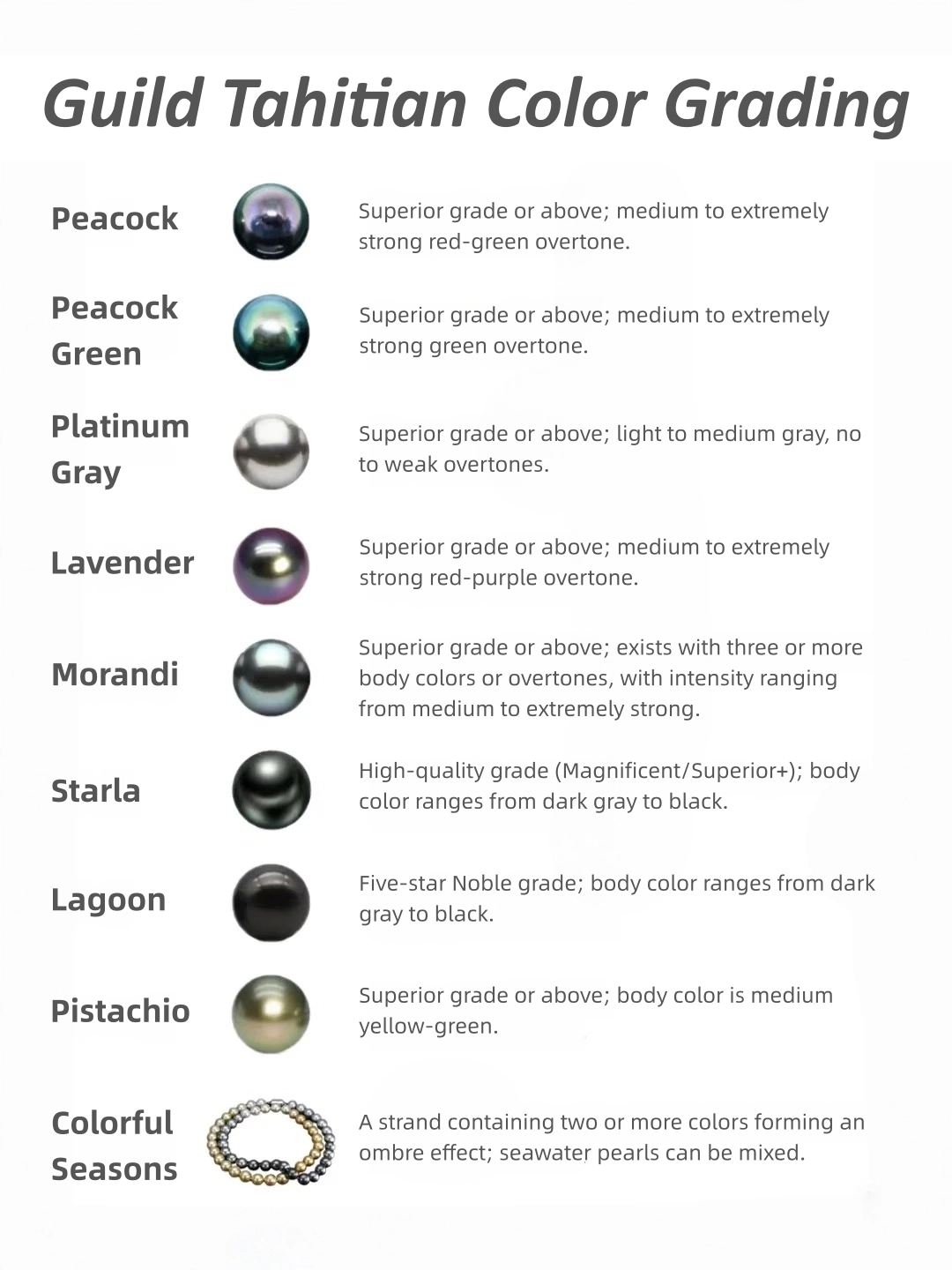
These categories help collectors and buyers communicate subtle differences that would otherwise be difficult to describe.
Some pearls display dramatic color transitions, while others are valued for their understated elegance.
The most sought-after colors change over time according to market preferences, but every shade has its admirers.
Tahitian Black Pearl Shapes Explained
Like other cultured pearls, Tahitian pearls occur in many different shapes.
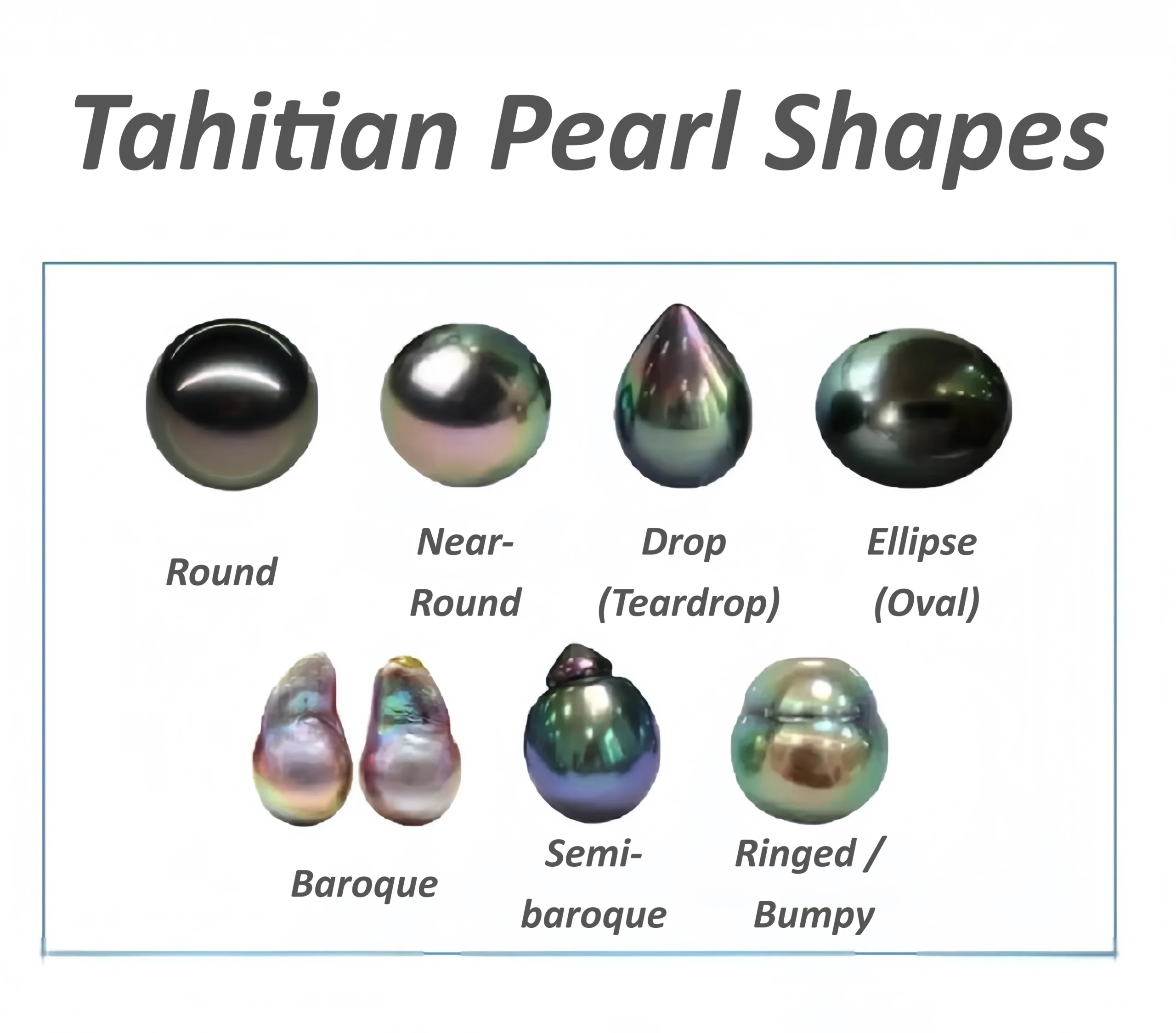
Perfectly round pearls remain the rarest and generally command the highest prices.
However, understanding authentic Tahitian baroque shapes can also help buyers avoid dyed imitations.
Most genuine Tahitian baroque pearls are irregular drop shapes or circled drops with natural grooves and rings.
They rarely develop the dramatic flame-like tails frequently seen in freshwater baroque pearls.
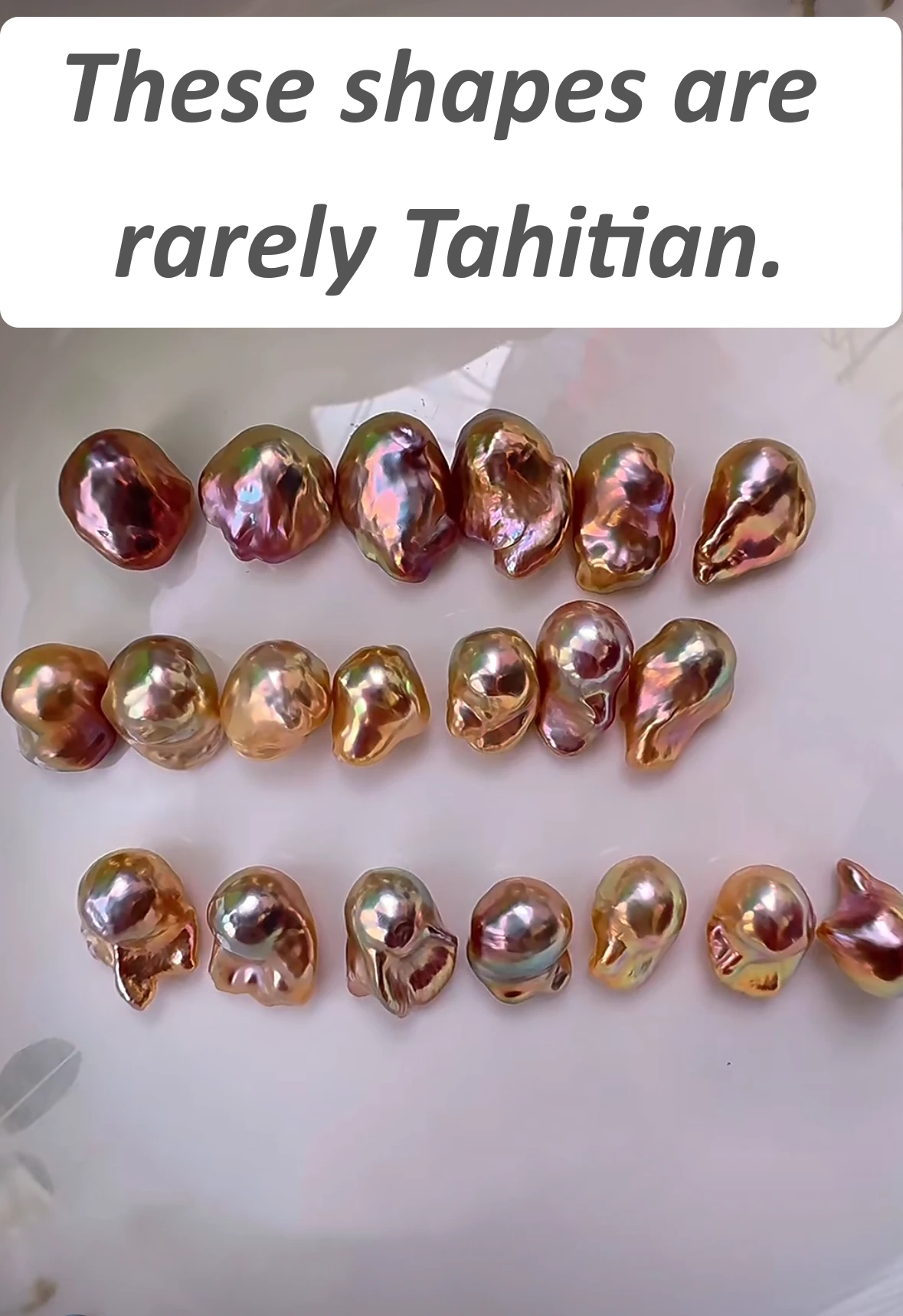
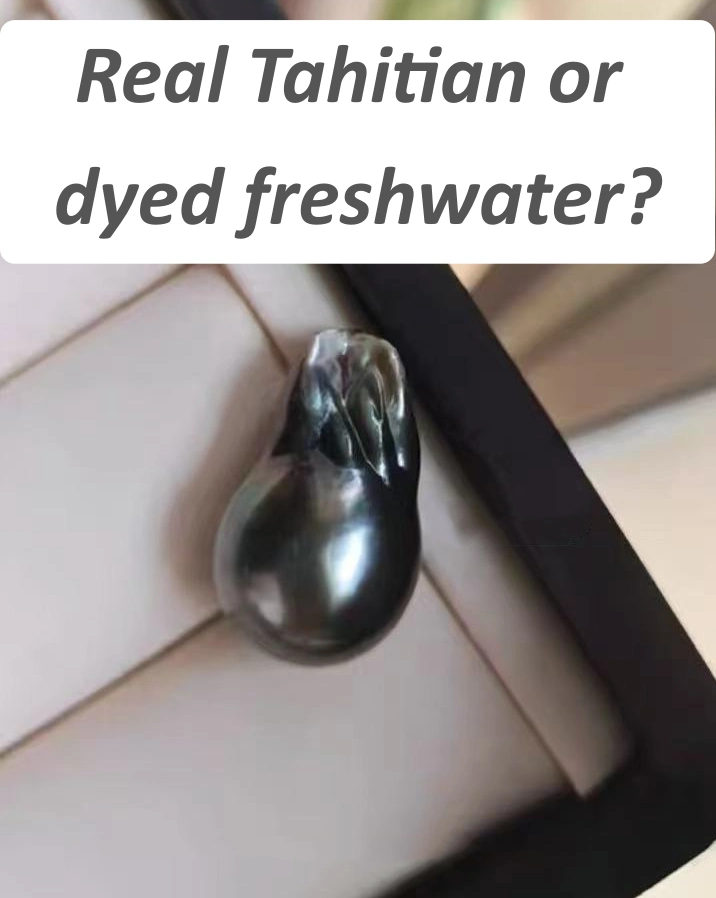
If you encounter a flame-shaped pearl displaying typical Tahitian colors, proceed with caution.
It may actually be a dyed freshwater pearl marketed as a black pearl.
Learn the Details and More About Baroque Pearls.
How to Tell Real Tahitian Black Pearls from Dyed Pearls
Unfortunately, Tahitian black pearls are among the most commonly imitated pearls on the market.
Dyed freshwater pearls are frequently sold as “black pearls,” making basic identification skills extremely valuable.
Here are two practical techniques.
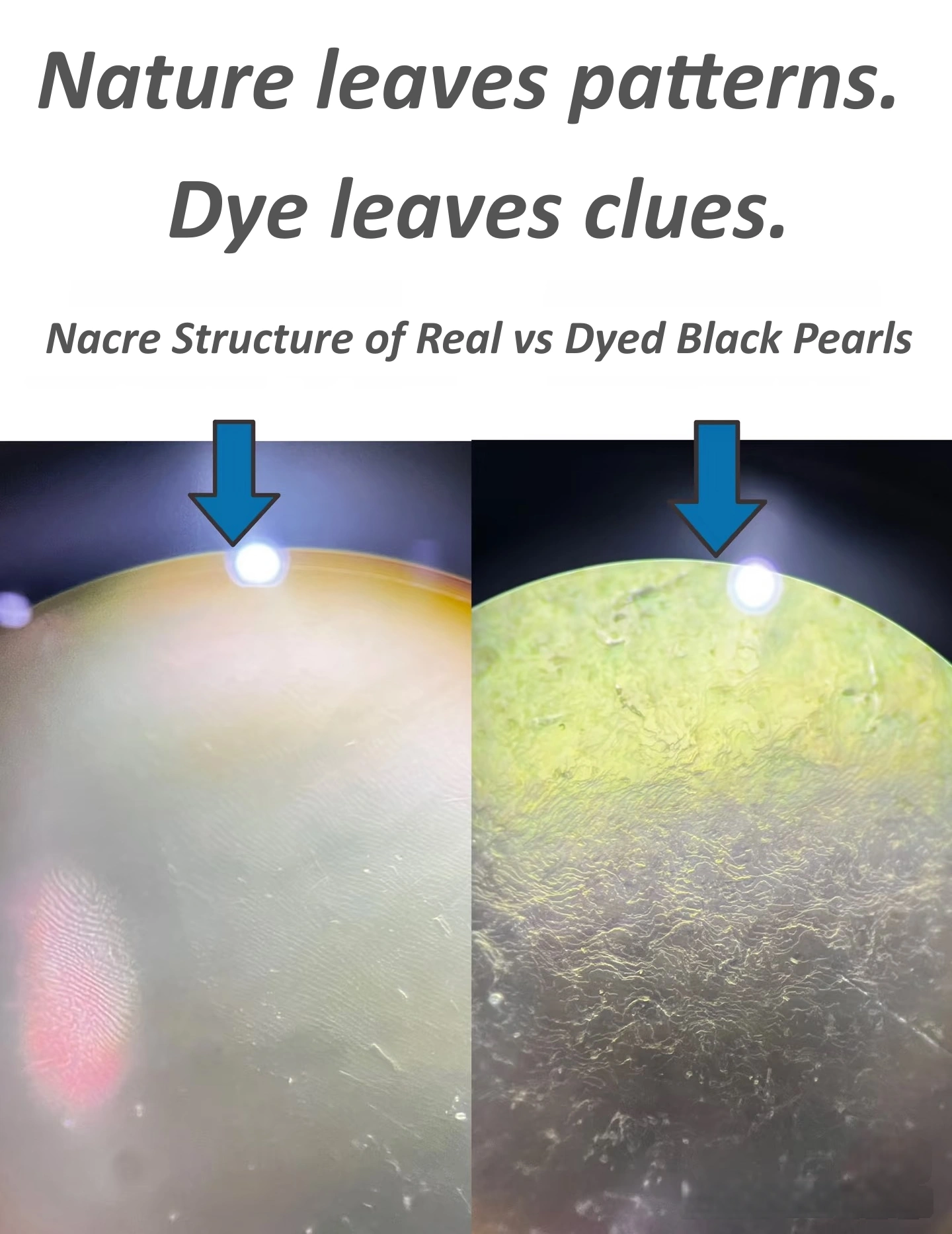
1. Examine the Surface Under Magnification
Genuine Tahitian pearls typically display:
- Fine and delicate surface textures
- Strong, even mirror-like luster
- Natural color transitions
Dyed pearls often exhibit:
- Rougher surfaces
- Duller reflections
- Artificial or uneven coloration
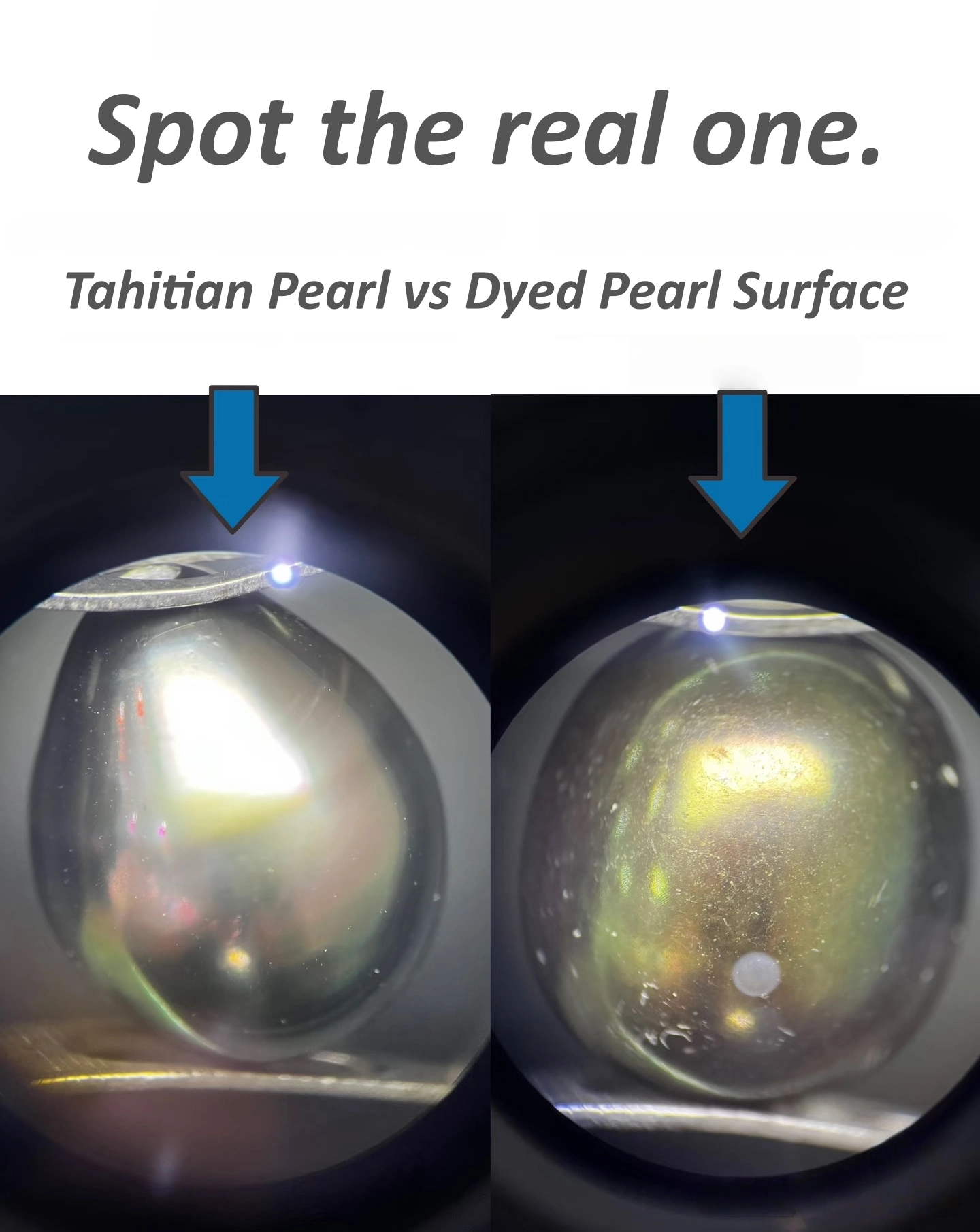
Under magnification, the nacre structure of genuine Tahitian pearls appears orderly and tightly packed.
Dyed freshwater pearls usually reveal more obvious, irregular, and chaotic surface structures.
2. Check the Drill Hole
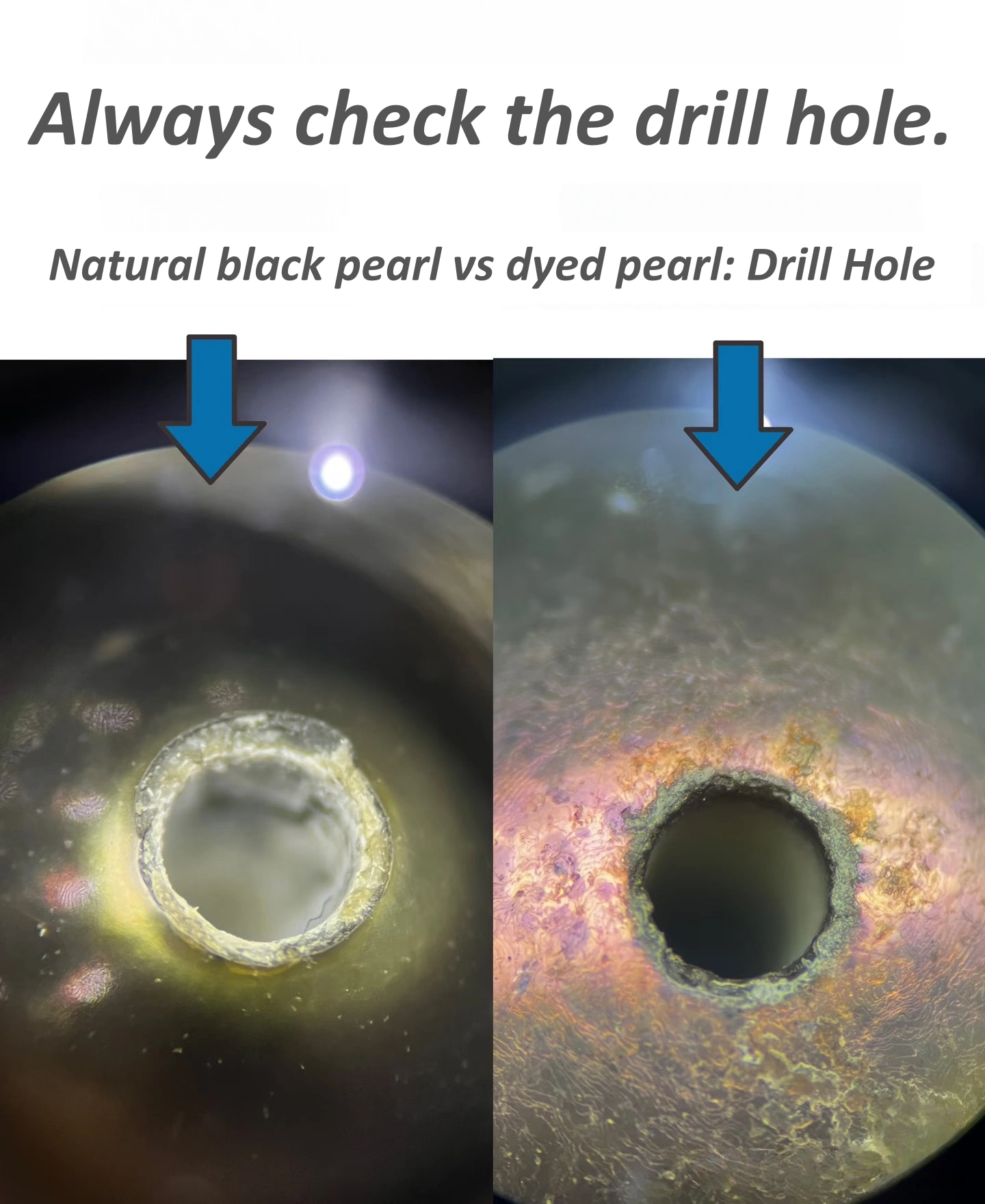
The drill hole often reveals clues invisible elsewhere.
Authentic Tahitian pearls usually have:
- Clean and natural hole edges
- Consistent coloration throughout
Dyed pearls frequently show:
- Dark staining around the drill hole
- Residual dye accumulation
- Uneven pigmentation near the opening
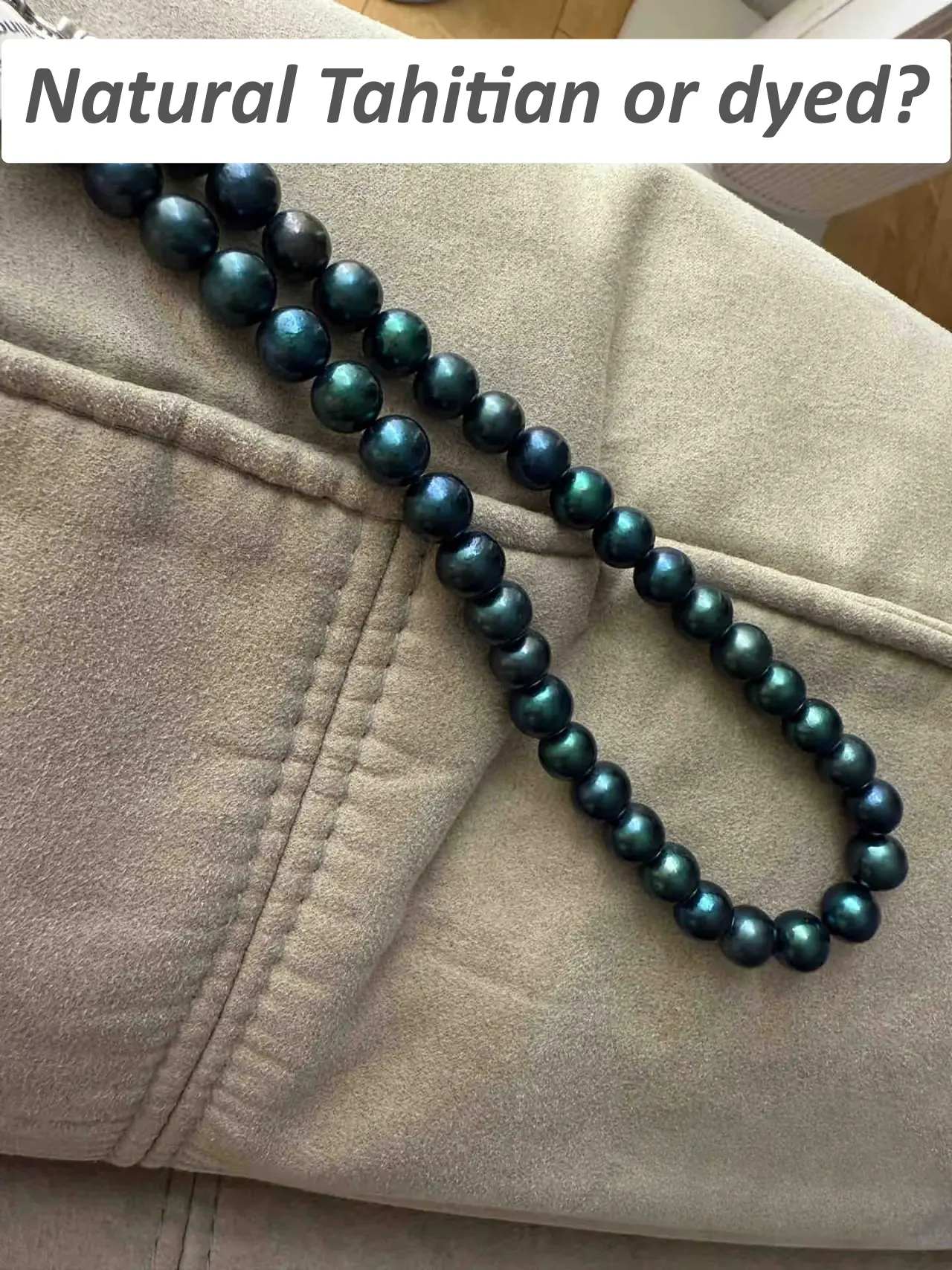
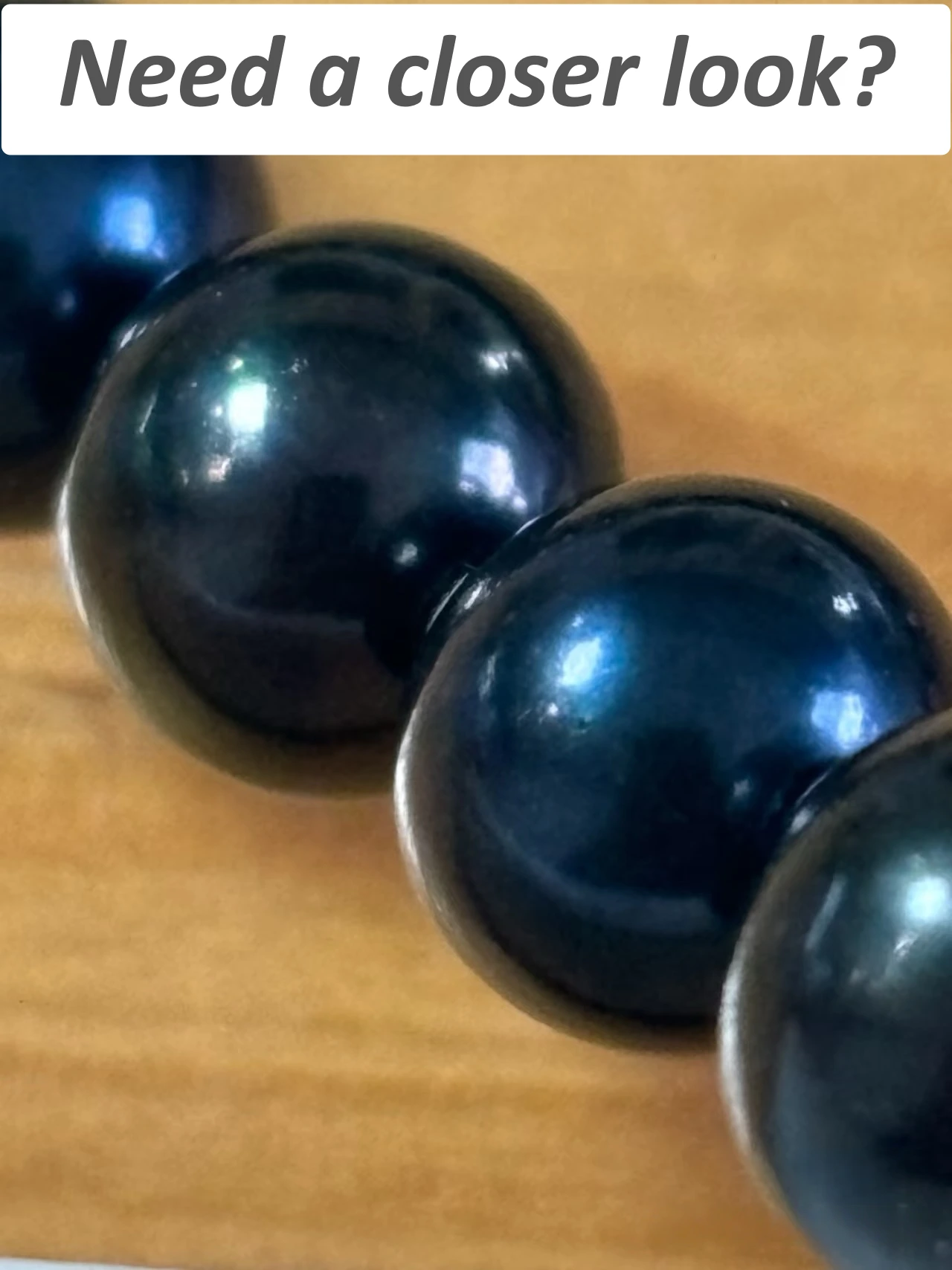
So, can you tell whether the following necklace contains genuine Tahitian pearls or dyed freshwater pearls?
Leave your answer in the comments below.
Want to learn more about dyed pearls and how to spot them?
Black Pearls Value: What Determines the Price of Tahitian Pearls?
Like all cultured pearls, the value of Tahitian pearls is determined by five major factors:
- Size
- Shape
- Luster
- Color
- Surface quality
However, these factors do not contribute equally.
When comparing two Tahitian pearls of similar size and shape, luster often accounts for more than 50% of the value difference.
Its importance generally exceeds both color and surface perfection.
Color, in turn, tends to have a greater impact than minor surface imperfections.
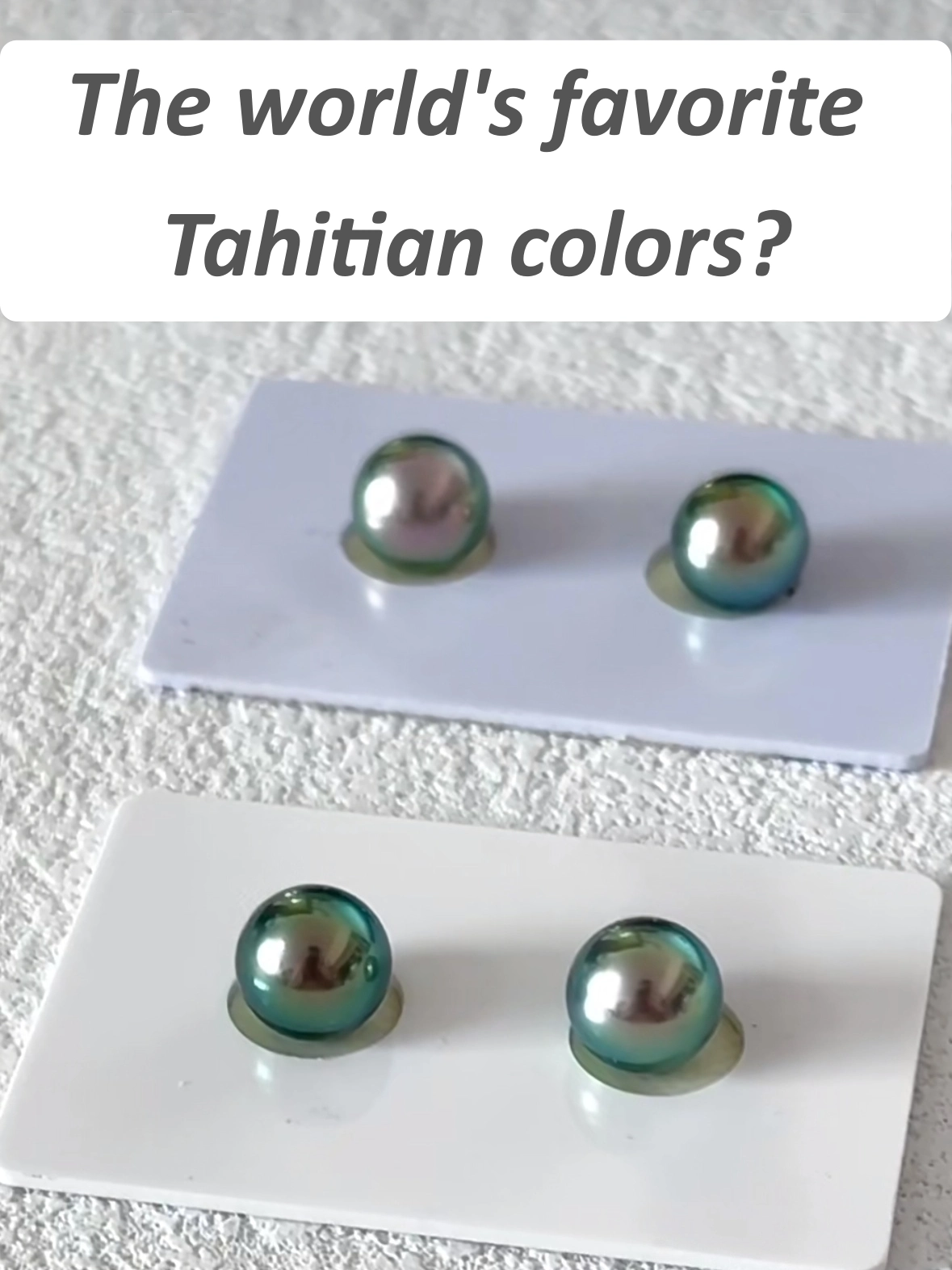
Today’s market strongly favors Peacock Green and related peacock color families.
Why Peacock Tahitian Pearls Command Premium Prices
Among all Tahitian pearl colors, Peacock and Peacock Green remain the most popular.
The famous peacock effect combines multiple overtones, often displaying green, bronze, red, and purple reflections within a single pearl.
Because demand consistently exceeds supply, these colors command premium prices.
However, market popularity should never be confused with objective superiority.
Many collectors genuinely prefer understated charcoal-gray pearls.
Fortunately, personal taste and market trends do not always align.
Sometimes, loving a less fashionable color simply means finding extraordinary beauty at a more approachable price.
Real Examples: Why One Tahitian Pearl Can Cost Twice as Much as Another
Example 1: Can You Tell Which Group Is Worth Twice As Much?
Both groups below contain high-quality Tahitian pearls.
Can you guess which one commands a significantly higher price?
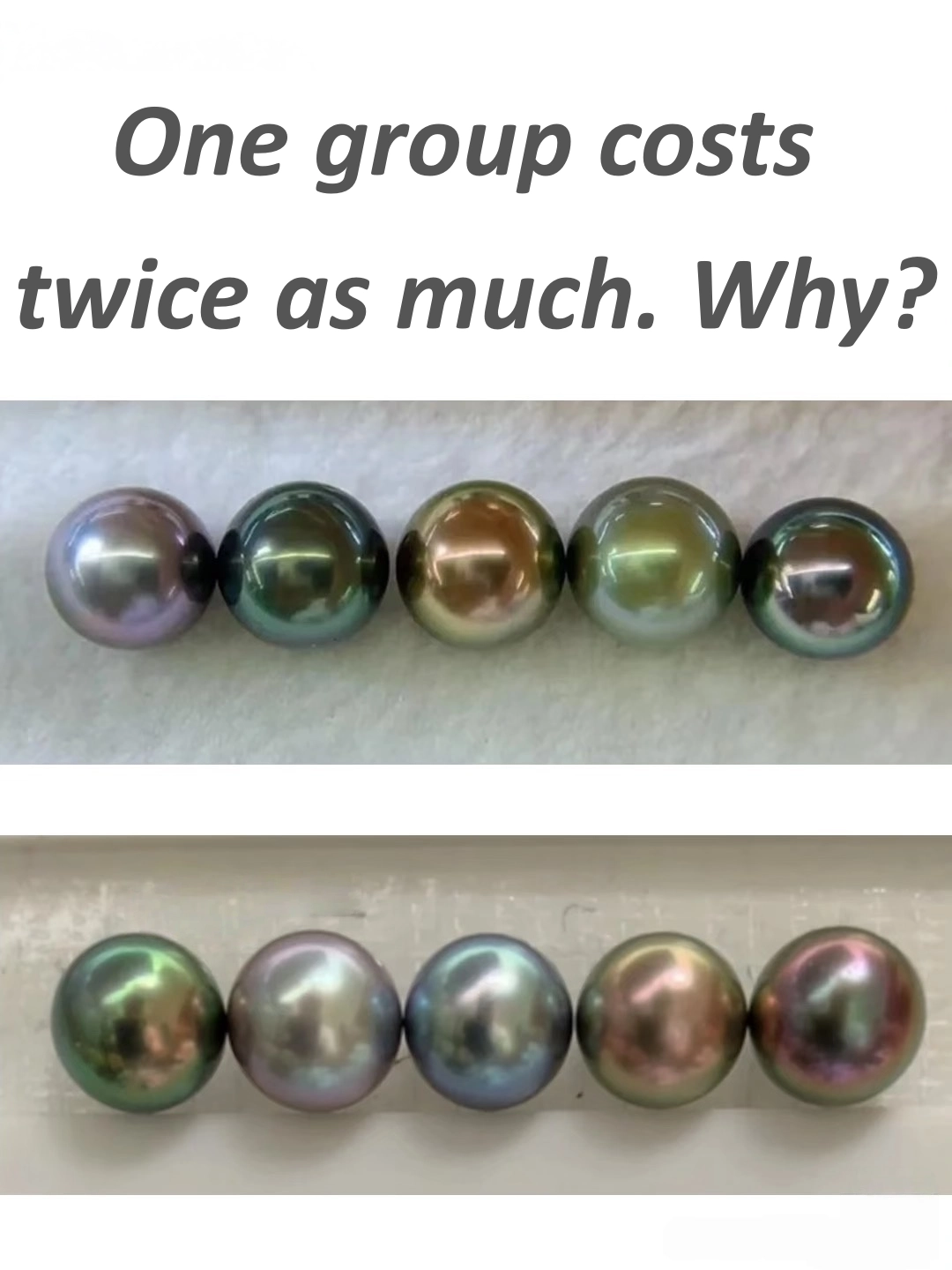
A useful technique for evaluating pearl luster is to examine reflected objects.
The sharper and clearer the edges of a reflection appear, the stronger and more mirror-like the luster becomes.
In this comparison, the upper group is worth roughly twice as much as the lower one.
Example 2: Two Lagoon Pearls, One Costs Double
Both pearls below received a Lagoon classification from Guild.
Their sizes and shapes are remarkably similar.
Yet one costs approximately twice as much as the other.
Can you tell which one?
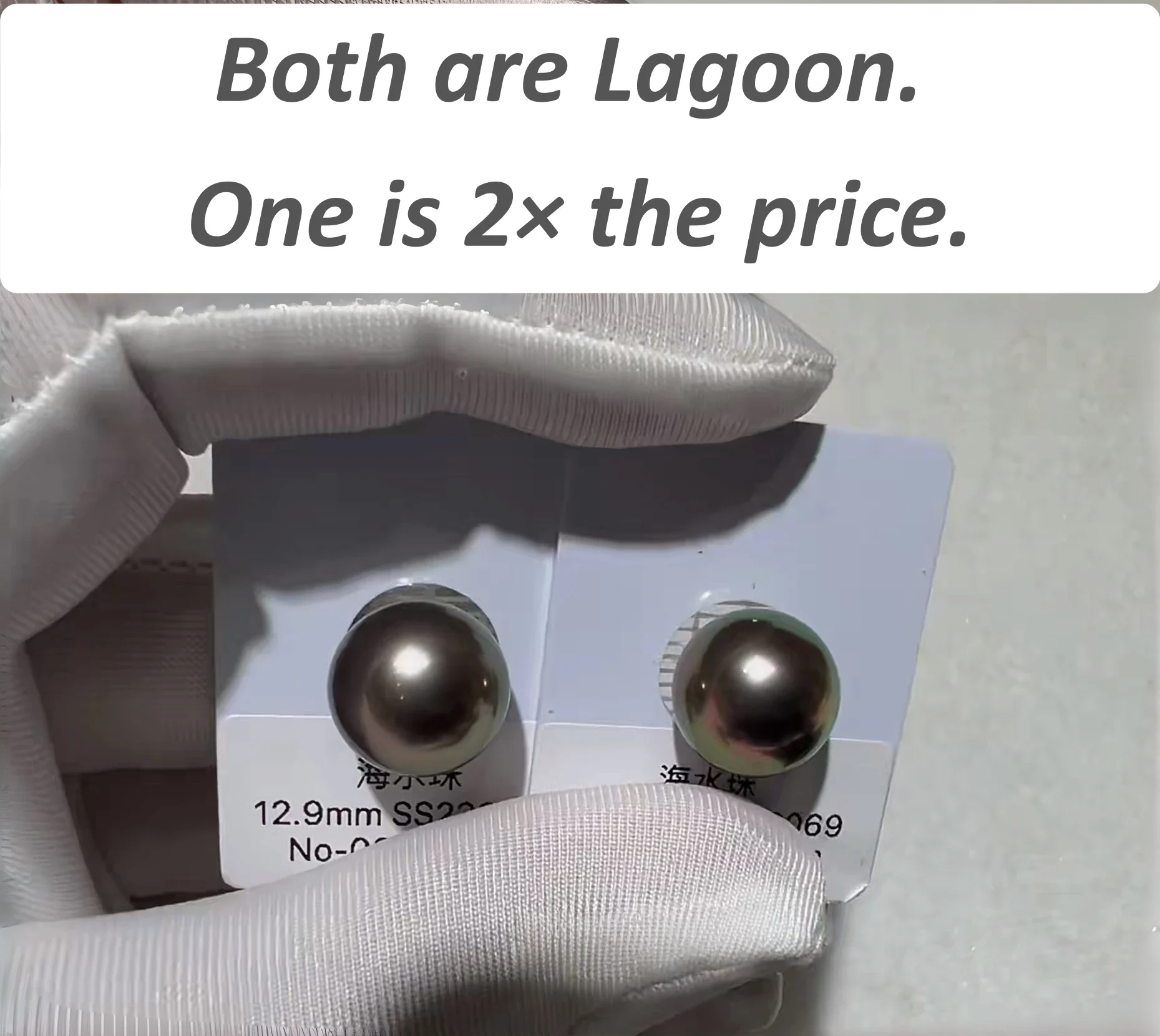
Both pearls display exceptional luster and nearly flawless surfaces, fully deserving their Lagoon status.
But look more closely.
The pearl on the right exhibits stronger and more complex overtones.
Its center reveals a reddish glow surrounded by a green outer layer—a combination commonly referred to in the industry as “green skin, red heart.”
The pearl on the left, by contrast, shows only subtle green hints over its dark gray foundation.
As a result, the pearl on the right commands roughly double the market value.
This does not mean colorful pearls are inherently superior to gray pearls.
It simply reflects current consumer preferences and supply-demand dynamics.
Many pearl lovers intentionally seek understated gray Tahitian pearls.
If that describes you, consider yourself fortunate—you may acquire your favorite pearls without paying a premium for fashion trends.
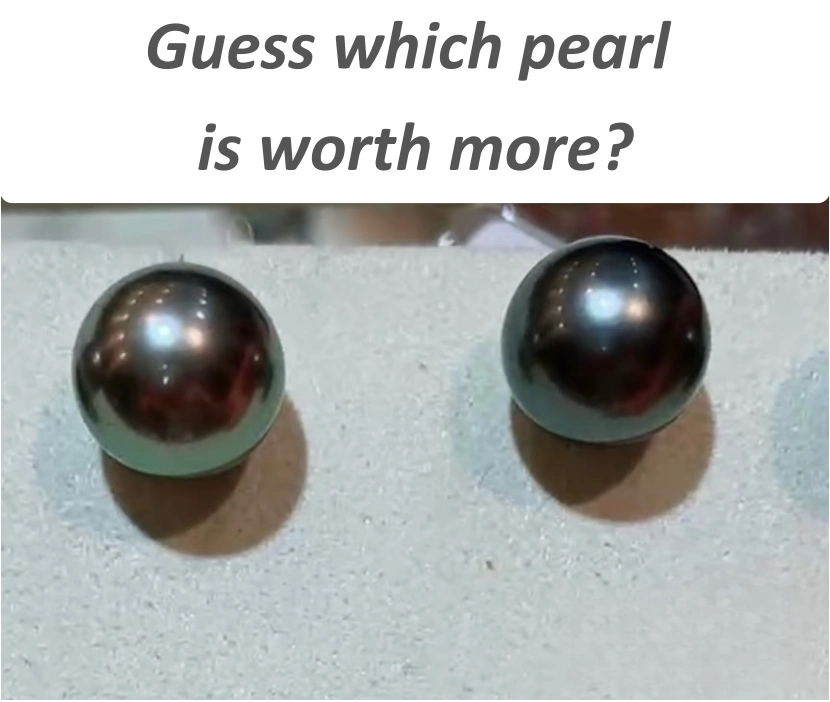
Based on the examples above, which pearl below do you think is worth more?
When Shape Matters More Than Everything Else
Shape can dramatically influence price.
If one pearl is nearly round while another is distinctly irregular, the round pearl may cost several times more, even when all other qualities are comparable.
This phenomenon is largely driven by market demand.
In Asian markets, particularly in Japan and China, pearl enthusiasts generally favor round pearls, further increasing their value.
How We Choose Tahitian Black Pearls at Raffie Pearls
At Raffie Pearls, our selection philosophy balances beauty with value.
Once a pearl satisfies our design requirements for size and overall shape, we usually prioritize luster and color over absolute surface perfection.
We are willing to embrace minor blemishes or slight asymmetry if a pearl displays extraordinary glow and captivating overtones.
This approach allows us to create luxurious jewelry without unnecessarily inflating prices.
During the jewelry-making process, small imperfections can often be carefully concealed, while the pearl’s most beautiful features remain fully visible.
The result is a sophisticated, high-quality piece that feels both elegant and attainable.
And honestly, the money saved on one pearl might mean bringing home another piece you love.
Why not enjoy both?
Which Tahitian Black Pearl Would You Choose?
If you were selecting a Tahitian black pearl, which factor would matter most to you?
- Size
- Shape
- Luster
- Color
- Surface quality
There is no universally correct answer.
The perfect pearl is simply the one that speaks to you.
Tell us in the comments—we’d love to hear your thoughts and learn what you value most in a black pearl.