
What are dyed pearls? Dyeing is a common method used to enhance pearl color and expand the range of colors available to consumers. By soaking pearls in dye solutions, pigments can be absorbed into the nacre, creating shades that are rare or unusual in naturally colored pearls.
However, dyed pearls often show certain characteristics that make them different from natural-color pearls. With careful observation, it is often possible to recognize these clues.
Below are several common ways to tell if pearls are dyed.
How to Tell If Pearls Are Dyed
Before we start, it is important to clarify one thing.
All the examples discussed here involve real pearls that have been artificially colored, not imitation or fake pearls. If you are unsure whether a pearl is real or fake, you can refer to How Can I Tell Real Pearls from Fake? for a separate guide on pearl authenticity.
Also note that modern dyeing techniques continue to improve. Not every dyed pearl will show all of the signs below. In many cases, finding just one of these clues is already a strong indication that the pearl may be dyed.
1. Body Color Without Natural Overtones
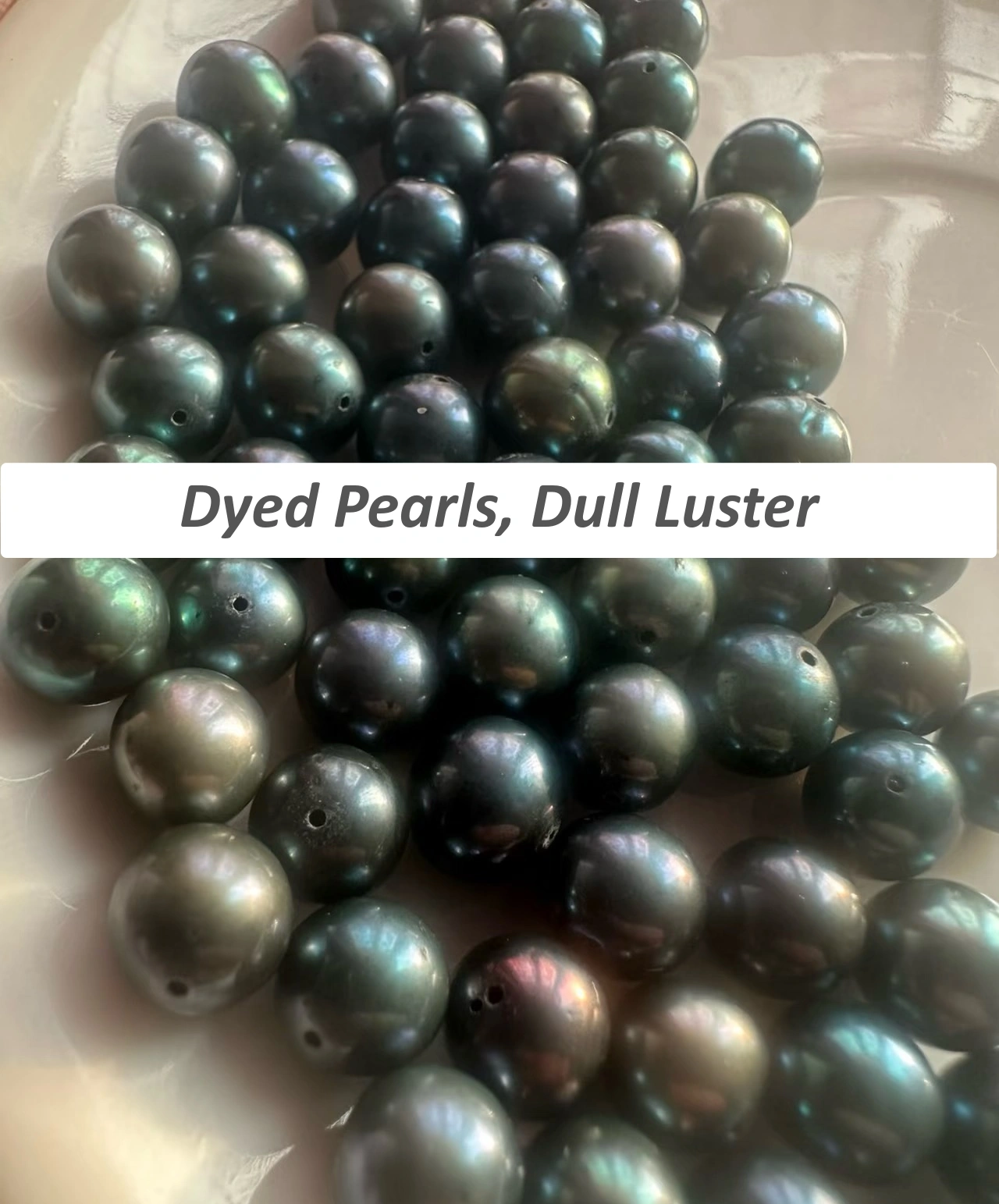
Dyed pearls often have a strong body color, but little or unnatural overtones.
Natural pearls usually display complex color layers — a body color combined with overtones and orients that shift under light. Dye pigments can cover these internal color effects, leaving the pearl with a flatter, more uniform appearance, with very dull luster.
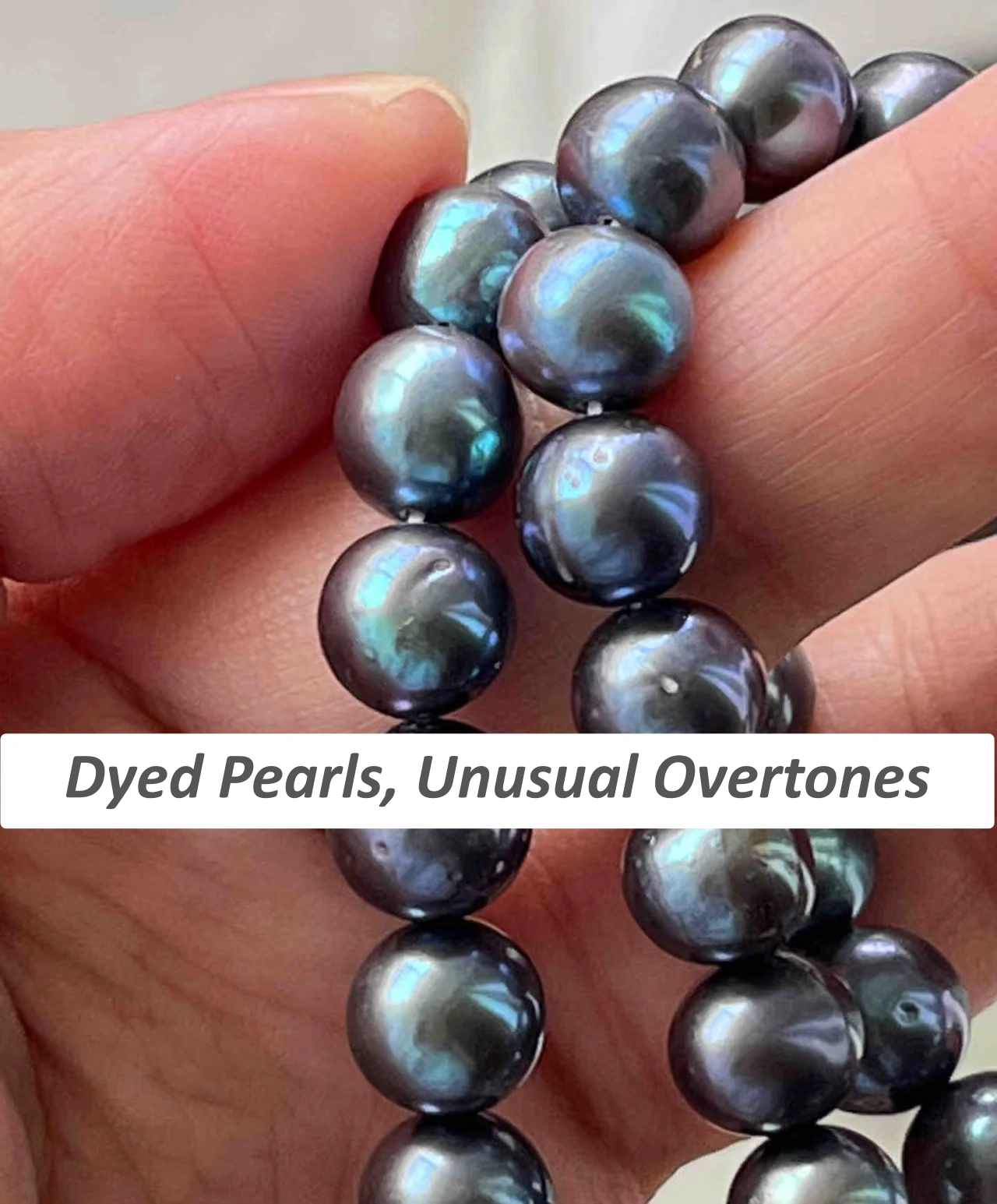
Sometimes in order to fake the overtones they add iridescent pearl coating, and the overtone looks unusual itself. For example, the black “Tahitian” pearls in the right image below show bright neon blue overtones. In genuine Tahitian pearls, blue overtones are typically deeper and more subdued. Even when a pearl shows a hint of lighter blue, it would not normally appear on nearly every pearl in a strand or look this intense.
2. Pigment Concentration Around Drill Holes or Surface Blemishes
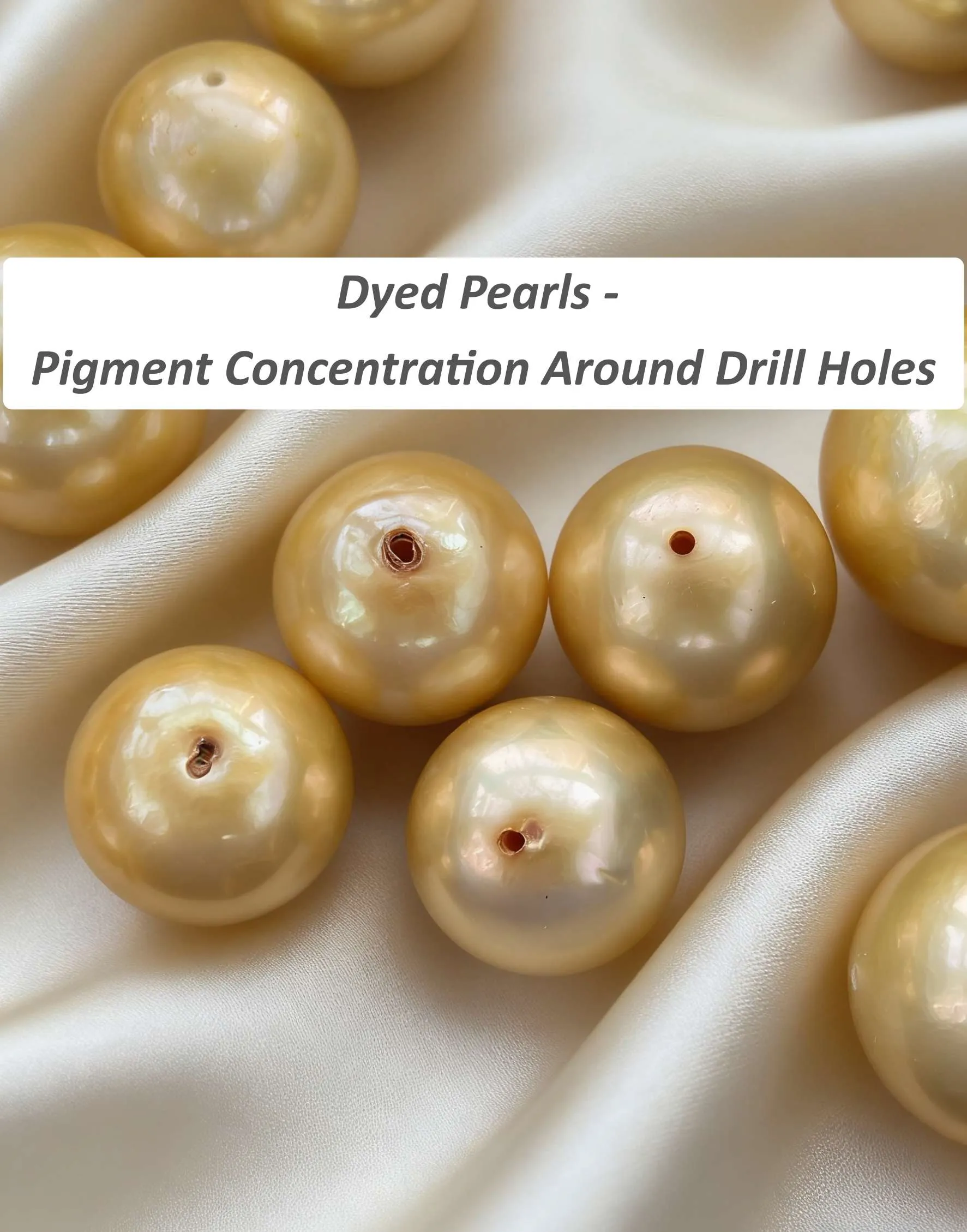
Dye pigments often accumulate in small creases, pits, or drill holes.
In the example below, these dyed “South Sea golden pearl” shows uneven pigment deposits around the drill hole. The wrinkles and folds on the pearl surface also appear darker where the dye has gathered.
Natural-color pearls usually have clean drill holes and evenly distributed color, without darker pigment buildup in these areas.
3. Dye Inside the Drill Hole or Stained Thread
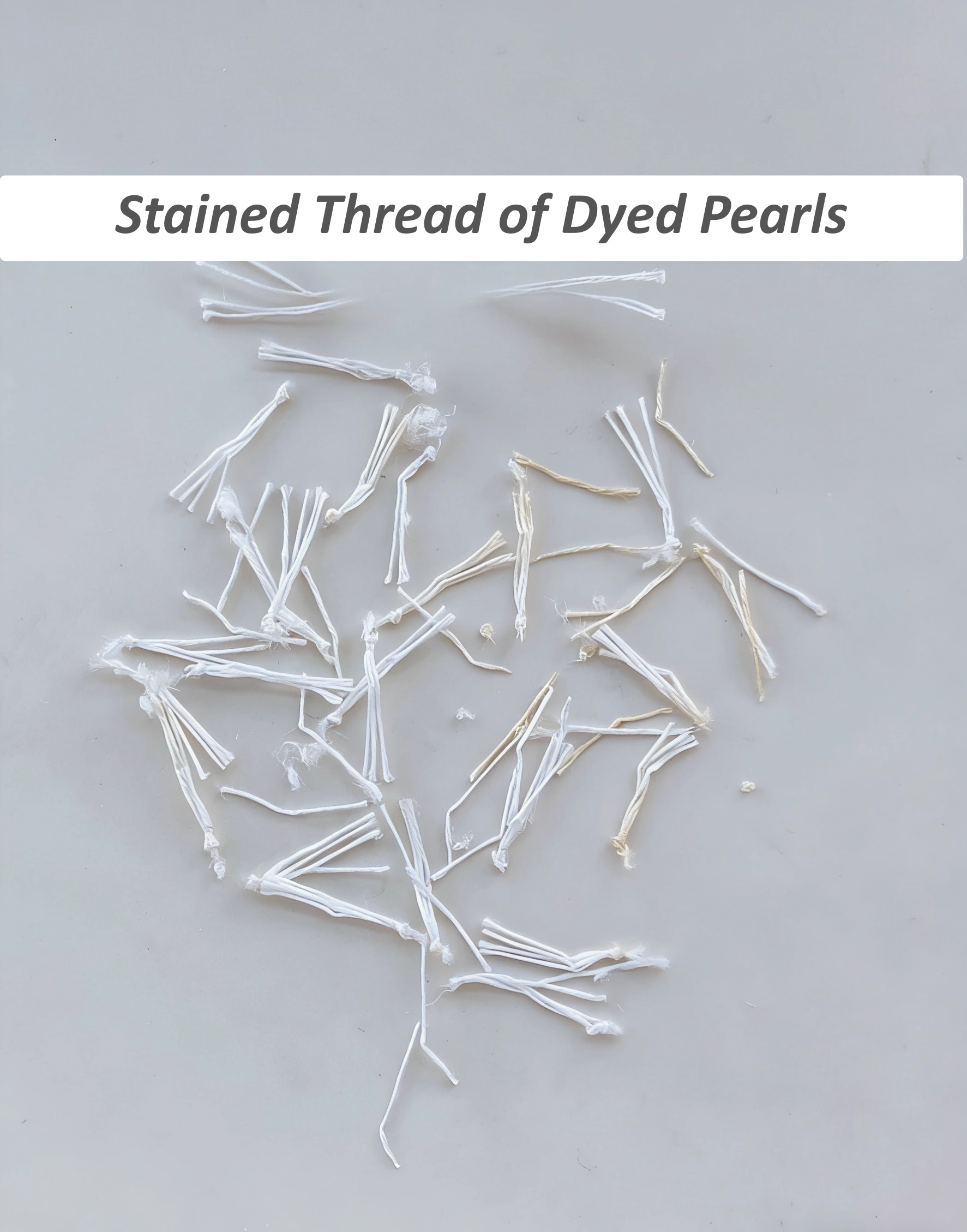
If pearls are dyed after drilling, the dye can penetrate into the drill hole itself.
Sometimes the thread used to string the pearls may also pick up a slight tint from the dye.
In contrast, naturally colored pearls typically have drill holes that appear close to white, and they do not stain the thread.
4. Color Transfer When Wiped (Lower-Quality Dyeing)
With lower-quality dyeing processes, gently wiping the pearl with an alcohol pad may sometimes cause slight color transfer.
However, this method is not reliable for high-quality dyed pearls, as more advanced dyeing techniques can produce relatively stable colors.
A Real Identification Example
Modern dyeing techniques have become increasingly sophisticated. Some dyed pearls can imitate the body color, overtone, and luster of natural pearls surprisingly well.
Because of this, identification does not always rely on dramatic visual differences. Instead, small details can make the difference.
In the example below, the three “Tahitian” pearls all look attractive at first glance. Their colors and overtones appear consistent with natural pearls.
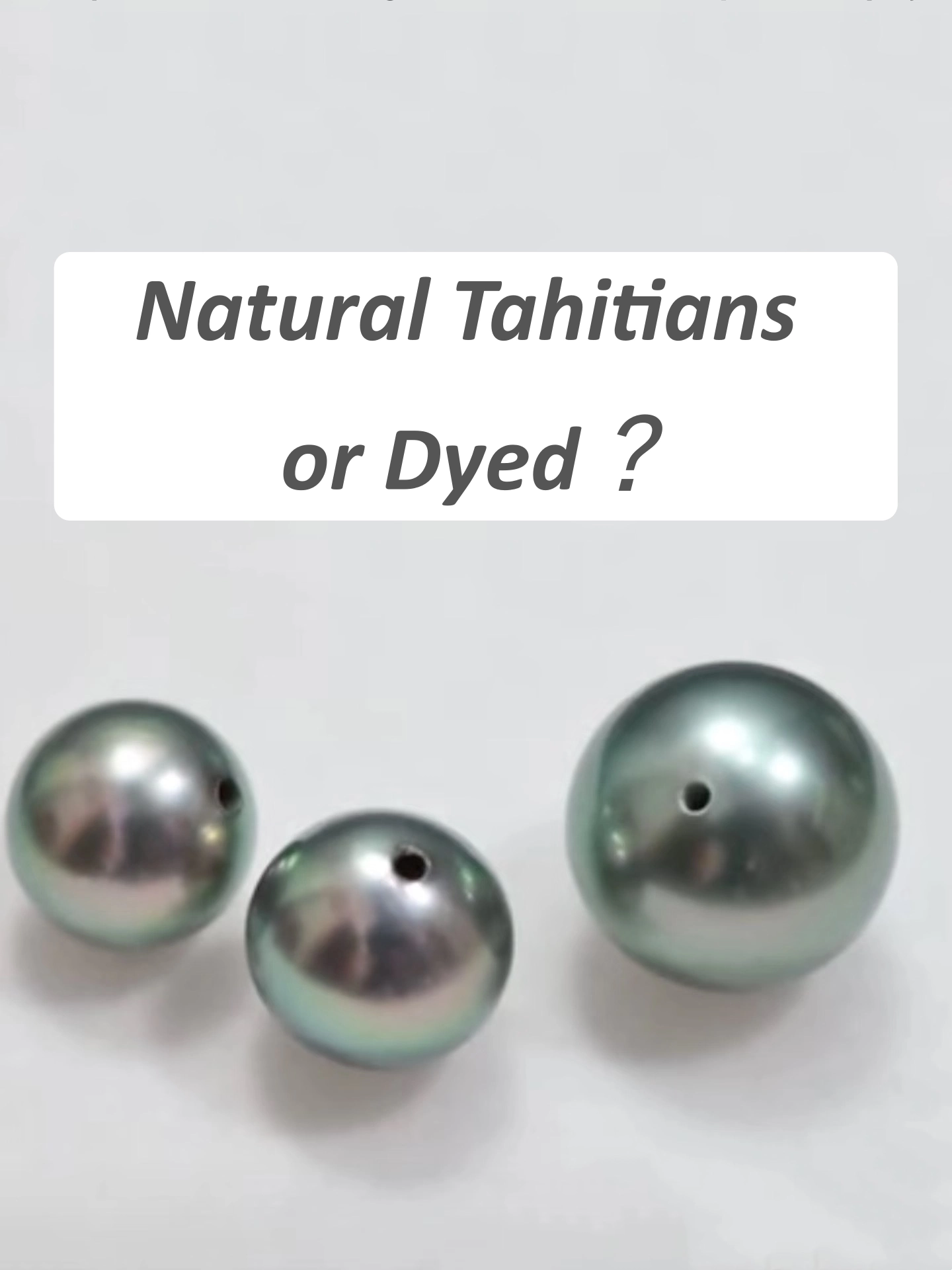
However, when looking closely at the drill holes, the first two pearls show slight pigment concentration, while the third pearl has a clean and even hole.
In fact, the first two are newly dyed pearls, and only the third one is a real Tahitian pearl.
Do Dyed Pearls Fade?
Dyed pearls may fade over time.
In some cases, the color can begin to fade within just a few months. As the dye slowly breaks down or migrates out of the nacre, the pearl may gradually lose its original color intensity.
There is also a small possibility that certain dye chemicals may leach out and cause skin irritation for wearers.
Because dyeing is a relatively traditional color treatment, and because consumers have become more familiar with these identification clues, it is used less frequently today than it once was. There’re more advanced treatments which we’ll talk about in the next few articles.
What Colors Are Pearls? Natural Pearl Colors Explained
Pearl Color Treatments: 5 Ways Pearl Colors Are Enhanced
Pearl Toning Explained: The Secret Behind Pink Akoya Pearls
Coated Pearls & Dyed-Coated Pearls: Identification Guide
Irradiated Pearls vs Natural Grey Pearls: How to Tell the Difference
Do Pearls Change Color Over Time? Natural Pearl Fading Explained