
Are your pearls real?
And if they are… are their colors real too?
Many people assume natural pearl color is simply white or black. In reality, pearls come in an astonishing range of natural colors created by biology, environment, and light interaction inside the nacre layers.
Modern pearl science is still evolving, but researchers already understand many of the factors that influence pearl color — including the host mollusk, mineral content of the water, and organic pigments produced during nacre formation.
This guide explains:
- Why pearls come in different colors
- The natural color ranges of major pearl types
- What makes some pearl colors more valuable than others
Why Pearls Come in Different Colors
During pearl formation, certain minerals or pigments in the environment can influence the pearl’s color.
Today, over 99% of pearls on the market are cultured pearls, while natural wild pearls are extremely rare.
Learn more about Cultured vs Natural Pearls.
Cultured pearls still develop inside mollusks, and the surrounding environment can introduce minerals that subtly influence nacre pigmentation.
For example:
- When mollusks absorb higher levels of copper ions, pearls may develop golden tones.
- When manganese levels are higher, pearls may appear gray or black, often with metallic overtones.
Metal ions interacting with porphyrin pigments can produce even more complex color effects. Variations in the type and size of the central metal ions shift absorption bands, creating different metallic colors through red-shift and blue-shift optical effects.
In other words, pearl coloration is the result of a delicate chemical and biological interaction — almost like a microscopic color laboratory happening inside the oyster.
The Unique Optical Beauty of Natural Pearl Colors
Natural-colored pearls (whether wild or cultured) almost never display just a single flat color.
Even a pearl that appears white or black will usually show multiple subtle tones when viewed under different lighting.
Three key characteristics define pearl color:
Bodycolor
The dominant overall color of the pearl.
Overtone
A translucent color layer that appears over the bodycolor.
Orient
Rainbow-like iridescence caused by light interference within the nacre layers.
These optical effects are what give pearls their famous depth and movement of color.
Different mollusk species have unique genetic traits that determine how their nacre forms. Some genetic profiles produce nacre that favors deeper tones, while others naturally produce metallic hues.
Because each pearl forms under slightly different conditions, natural pearl colors are inherently unpredictable. Even pearls from the same oyster farm may show very different colors depending on how each pearl interacted with its environment.
That unpredictability is exactly why collectors value natural-colored pearls so highly:
every pearl becomes completely unique.
What Are Pearl Colors by Pearl Type
If you are looking for a specific pearl color, it helps to understand the natural color ranges available in each pearl category.

Among all pearls, conch pearls and melo pearls are extremely rare and valuable, so they are not discussed in detail here.
The pearl colors most commonly seen in the jewelry market include the following:
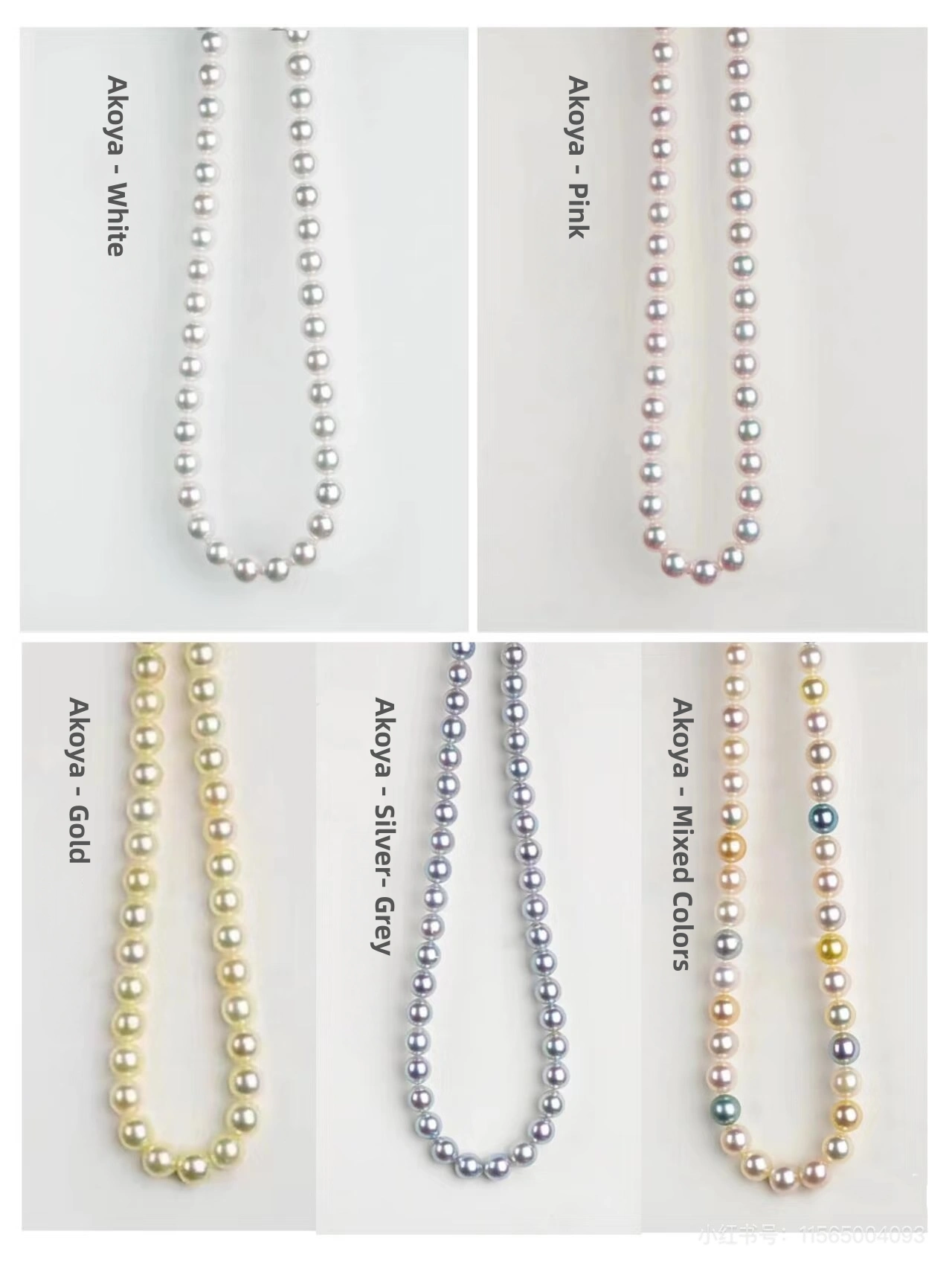
Akoya Pearls
Akoya pearls’s natural color range typically includes:
- White
- Cream
- Silver
- Light blue
- Soft pink overtones
Among these, pearls with a delicate pink overtone are traditionally considered the most desirable for classic pearl necklaces.
In recent years, blue Akoya pearls have also gained popularity among collectors.
South Sea Pearls
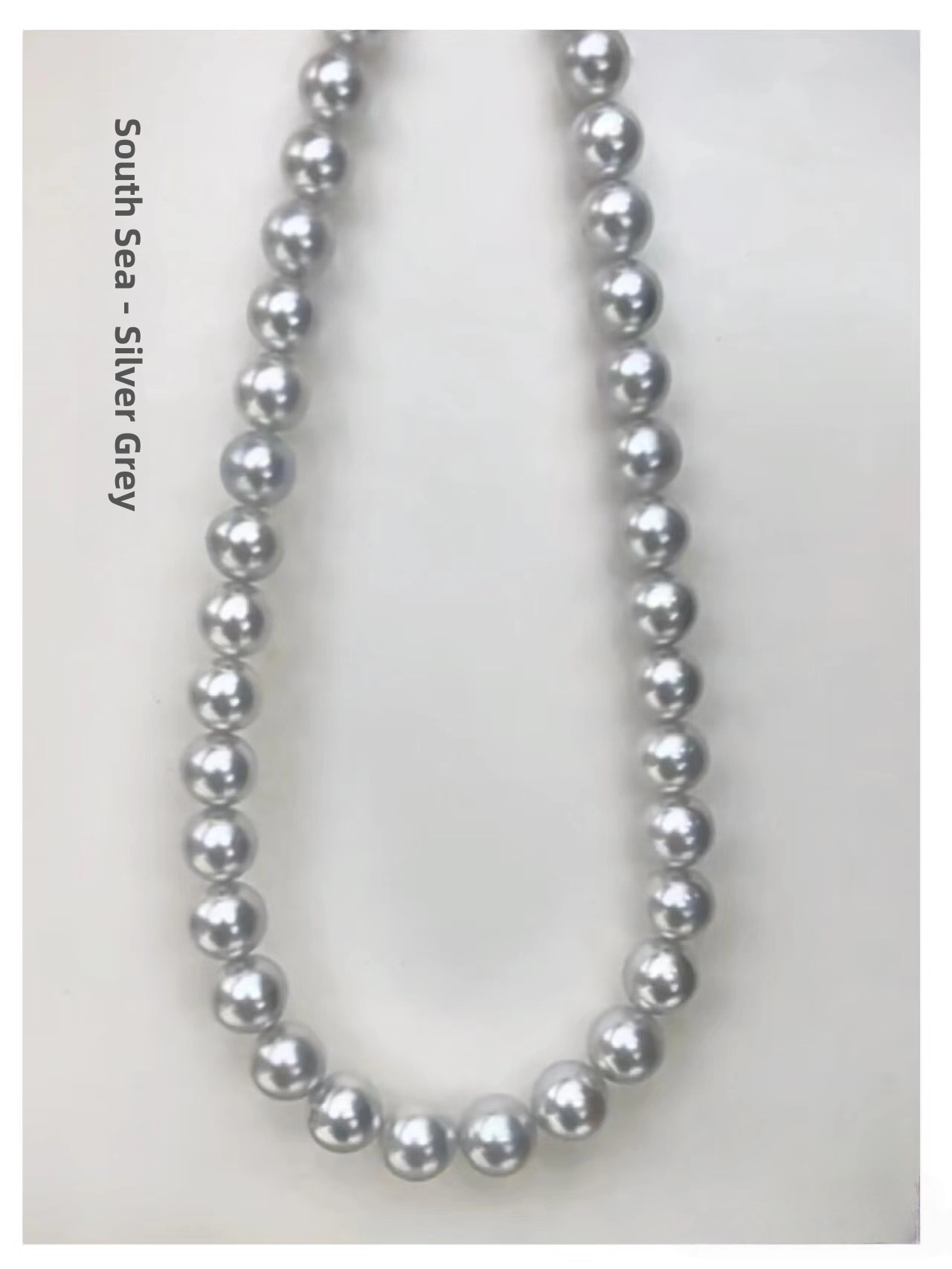
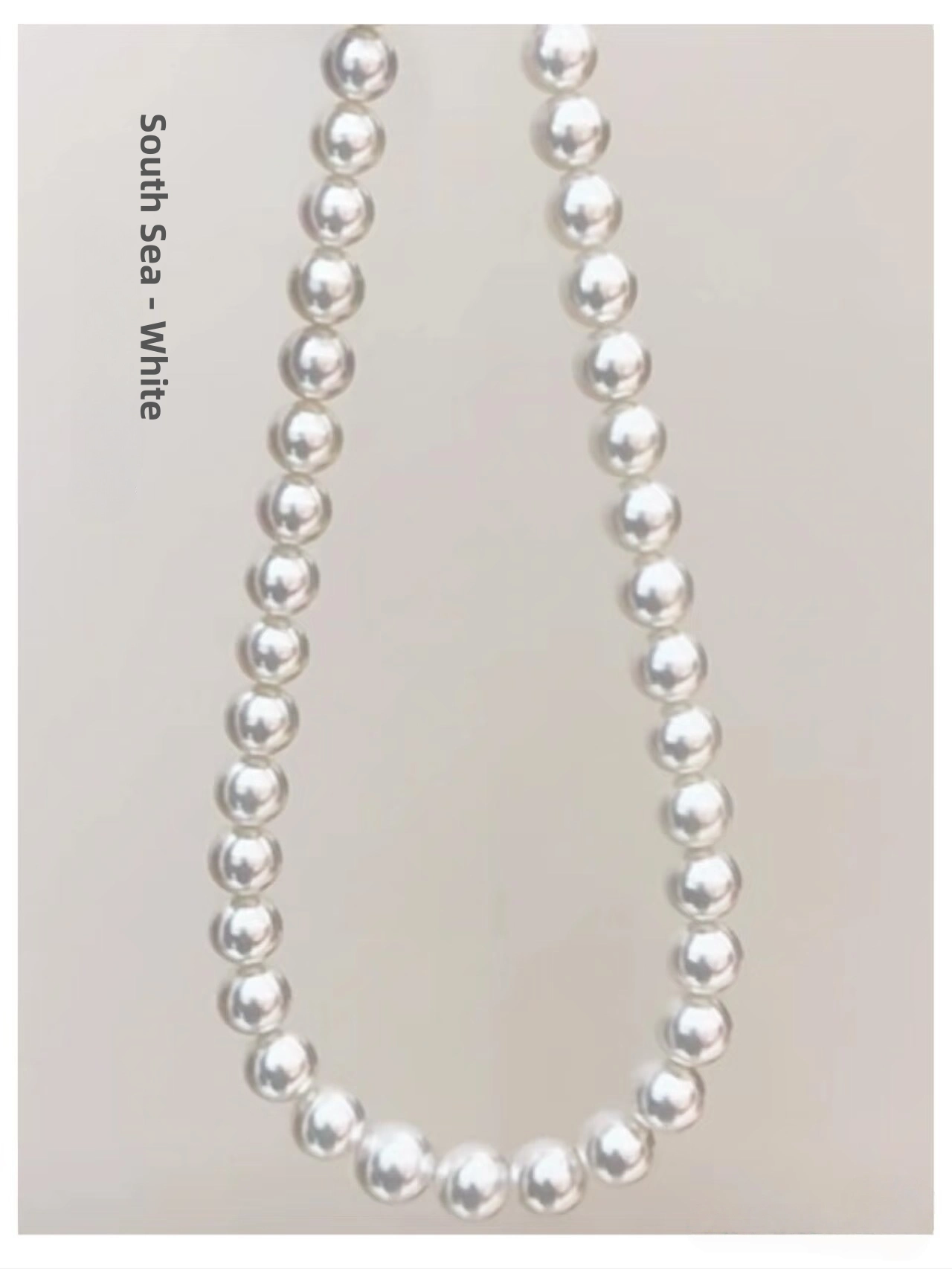
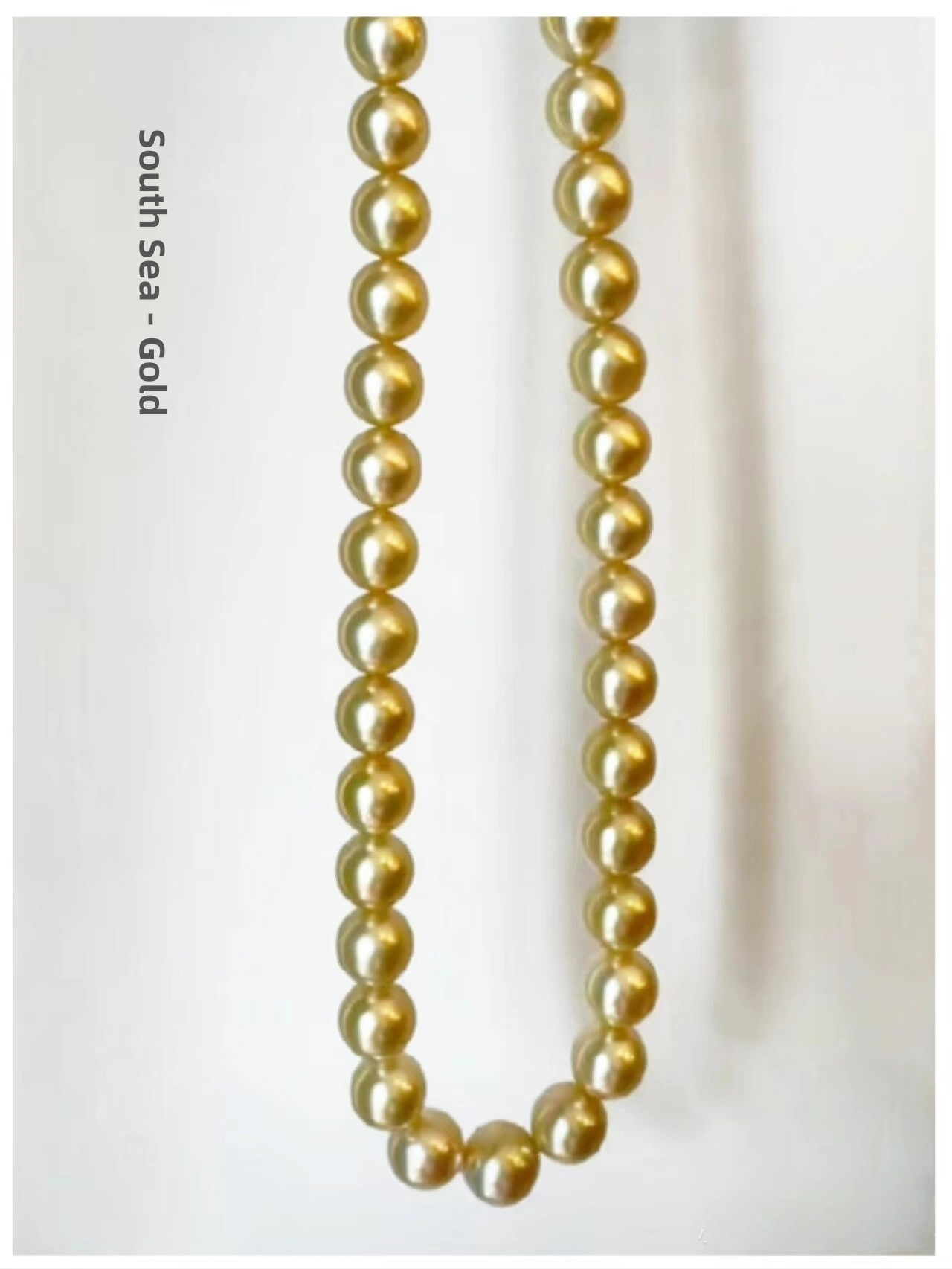
South Sea pearls range from white to golden tones, depending on the oyster species.
Two main oyster varieties produce these pearls:
- Silver-lipped oyster → white and silver pearls
- Gold-lipped oyster → golden pearls
Within golden pearls, deep gold and pure gold tones tend to command higher prices due to strong market demand.
Tahitian Pearls
Often referred to as “black pearls,” Tahitian pearls actually display a wide spectrum of dark colors.
Common bodycolors include:
- Gray
- Brown
- Dark green
- Blue
- Purple
Among these, pearls with a green overtone known as “peacock green” are especially prized.
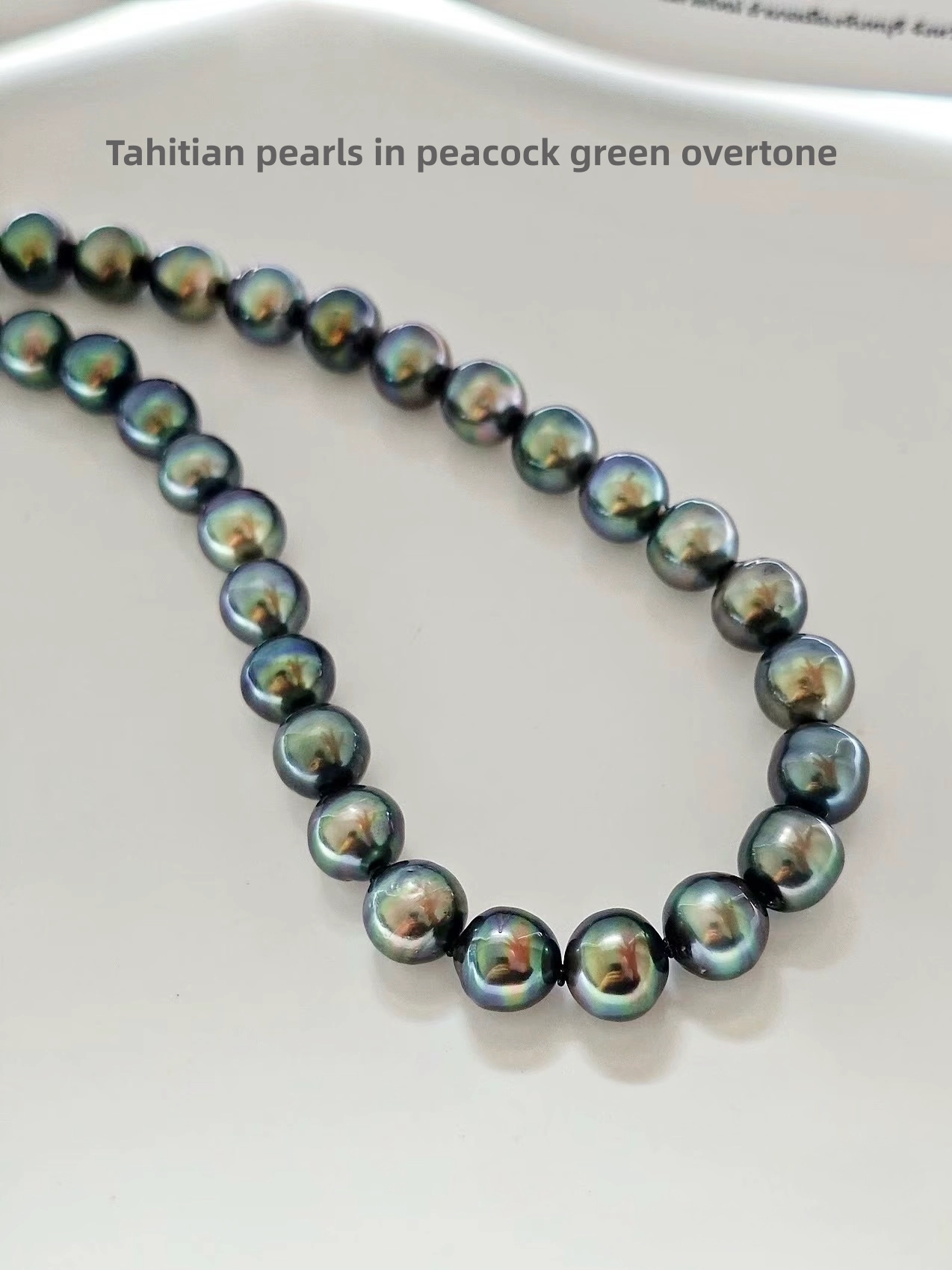


Discover our Tahitian Black Pearls Collection.
Freshwater Pearls
Freshwater pearls have the widest color range of all pearl types.
Natural freshwater colors may include:
- Pink
- Peach
- Lavender
- Gold
- White
- Cream
- Green
- Gray
- Blue
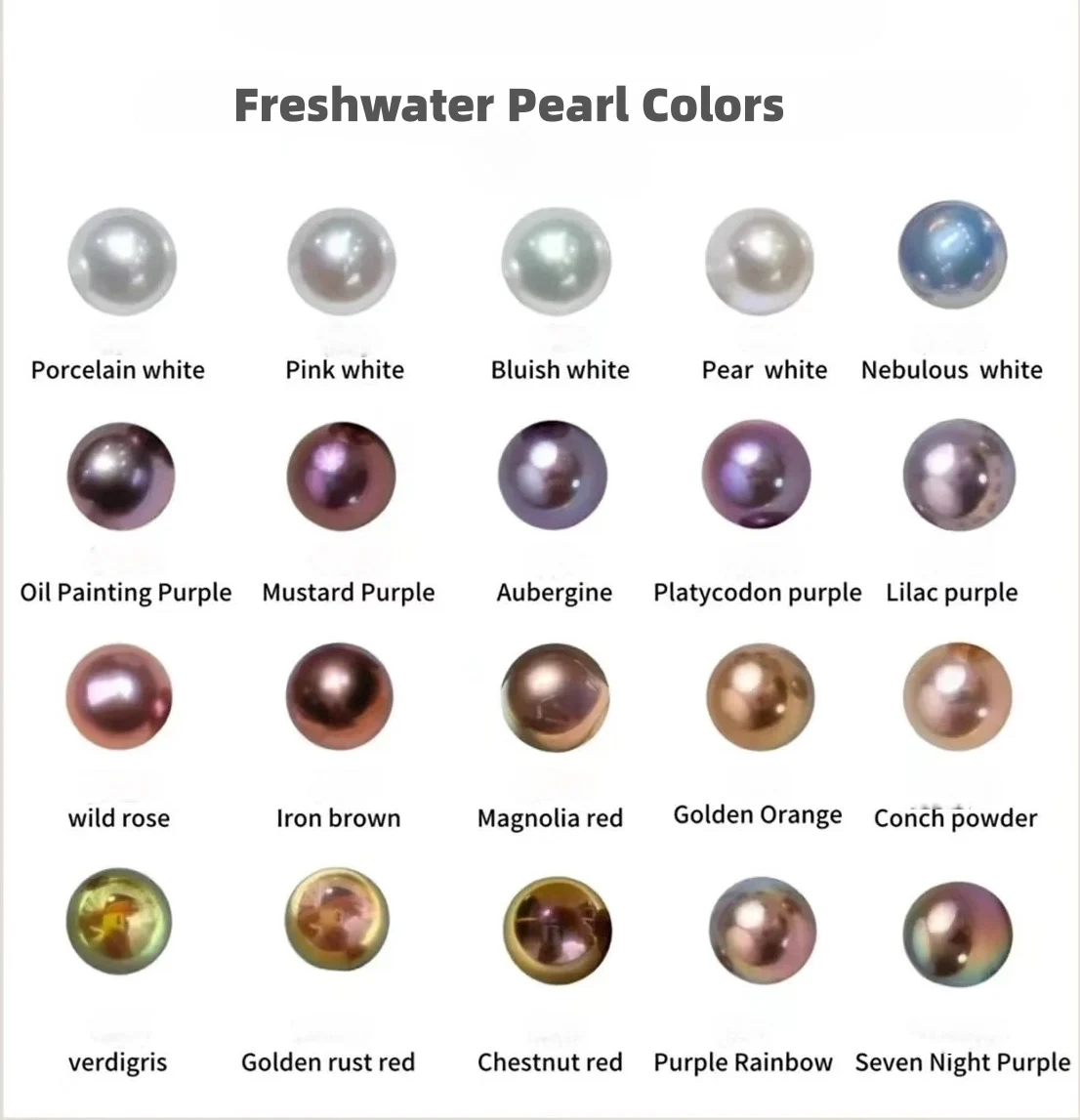
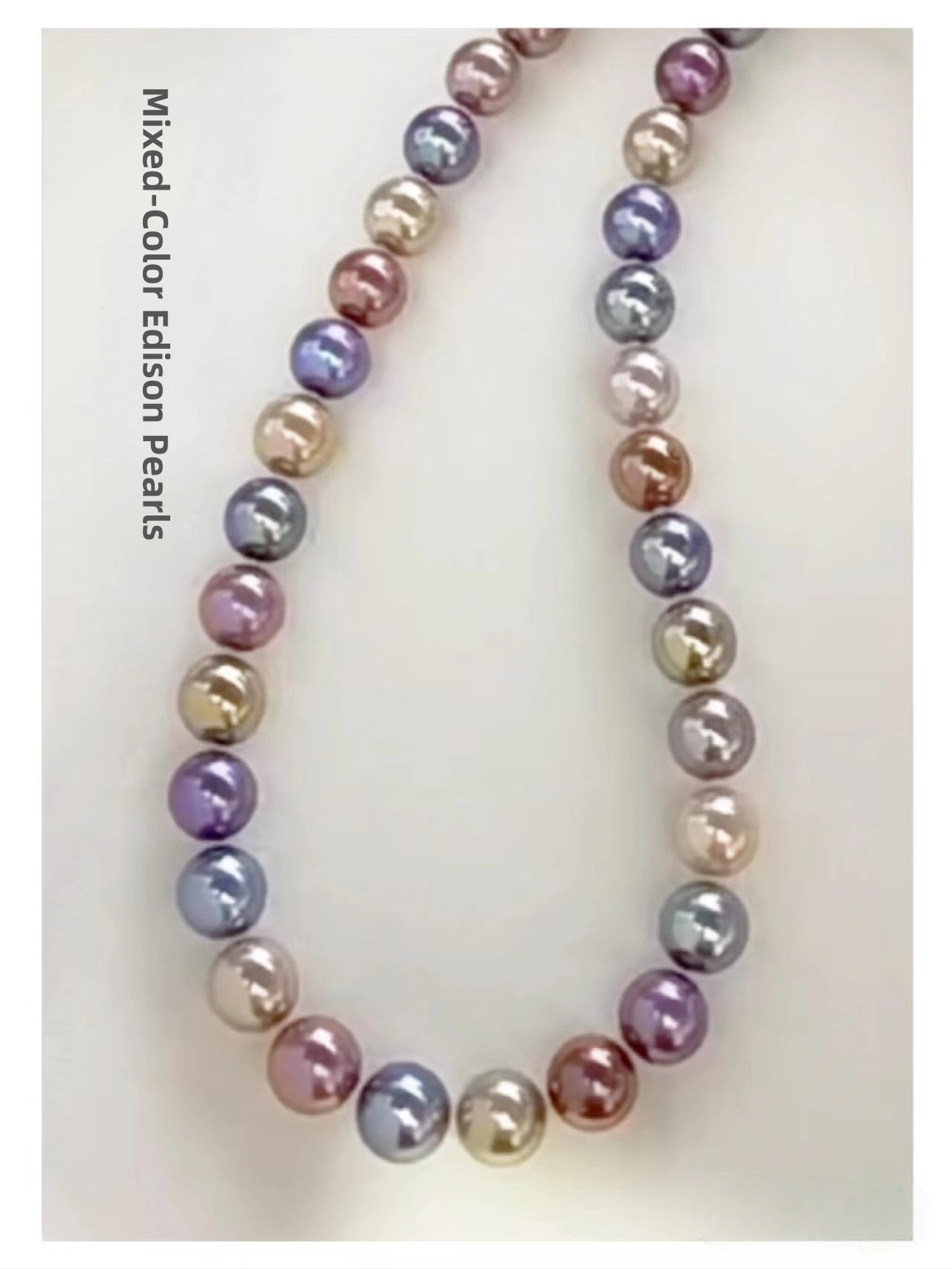


Discover our Freshwater Colorful Pearls Collection.
Using Natural Color Knowledge to Spot Fake Colors
Knowing the natural color ranges of different pearl types can help you identify obvious color treatments.
For example:
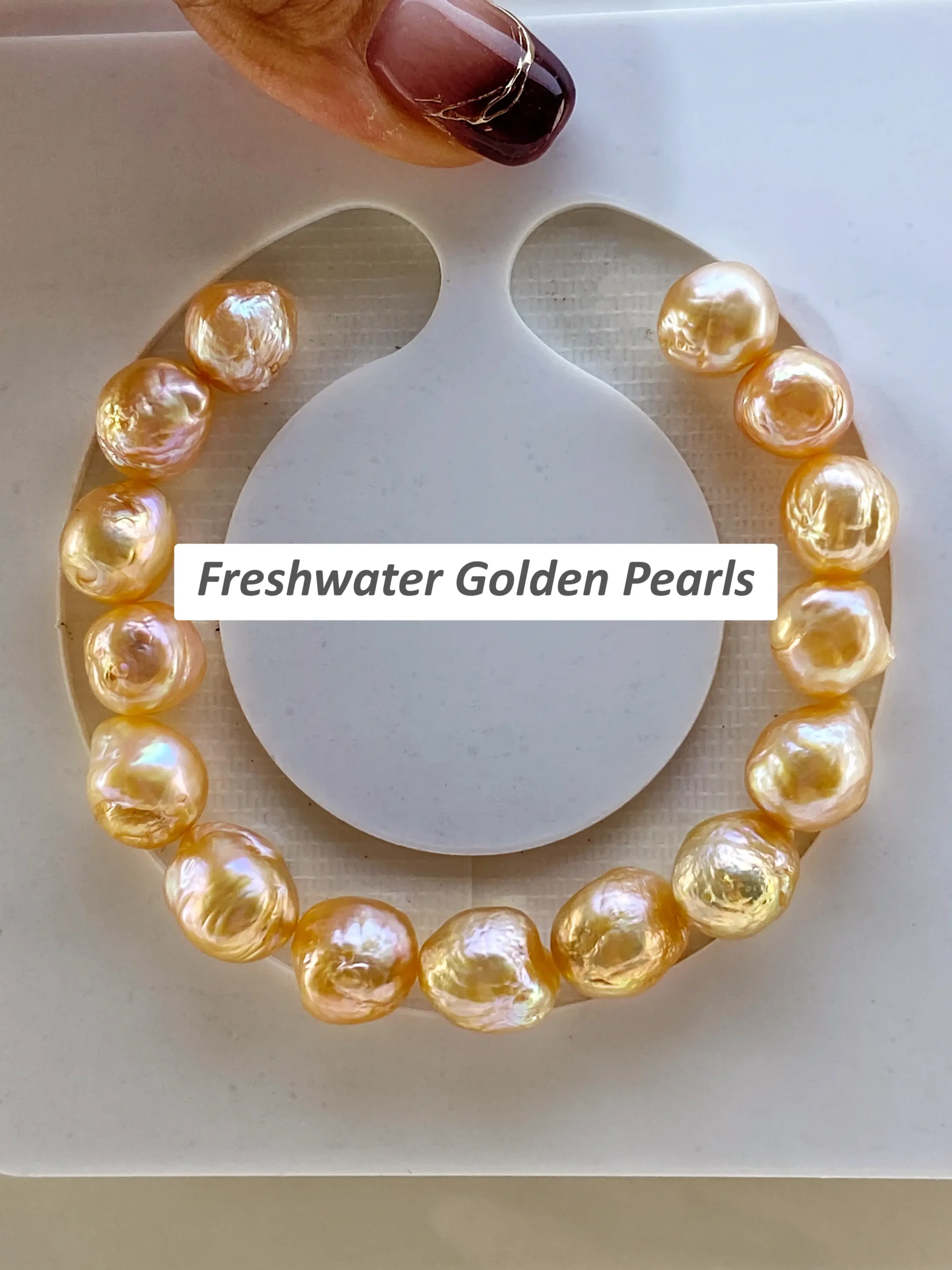
- Freshwater pearls do not naturally occur in deep golden colors (although gold-peach or pink-gold tones can occur).
- Freshwater pearls also do not naturally have black base colors.
- Tahitian pearls rarely appear in flame-shaped baroque forms.
So when you see a black flame-shaped baroque pearl, it is often a freshwater pearl treated to imitate Tahitian pearls.


What Are The Most Valuable Pearl Colors?
According to the Gemological Institute of America (GIA), pearl value is evaluated based on six factors:
- Nacre thickness
- Luster
- Color
- Surface quality
- Shape
- Size
However, the importance of color varies depending on the pearl type.
For example:
Tahitian Pearls
Color strongly influences their value because color is their most distinctive feature.
Akoya Pearls
Size often plays a larger role than color.
The most common Akoya sizes range from 6mm to 7mm, while pearls 7mm or larger are significantly rarer and therefore more valuable.
Because these elements interact, color alone cannot determine a pearl’s value.
However, certain pearl varieties and color combinations are currently more sought after in the jewelry market.
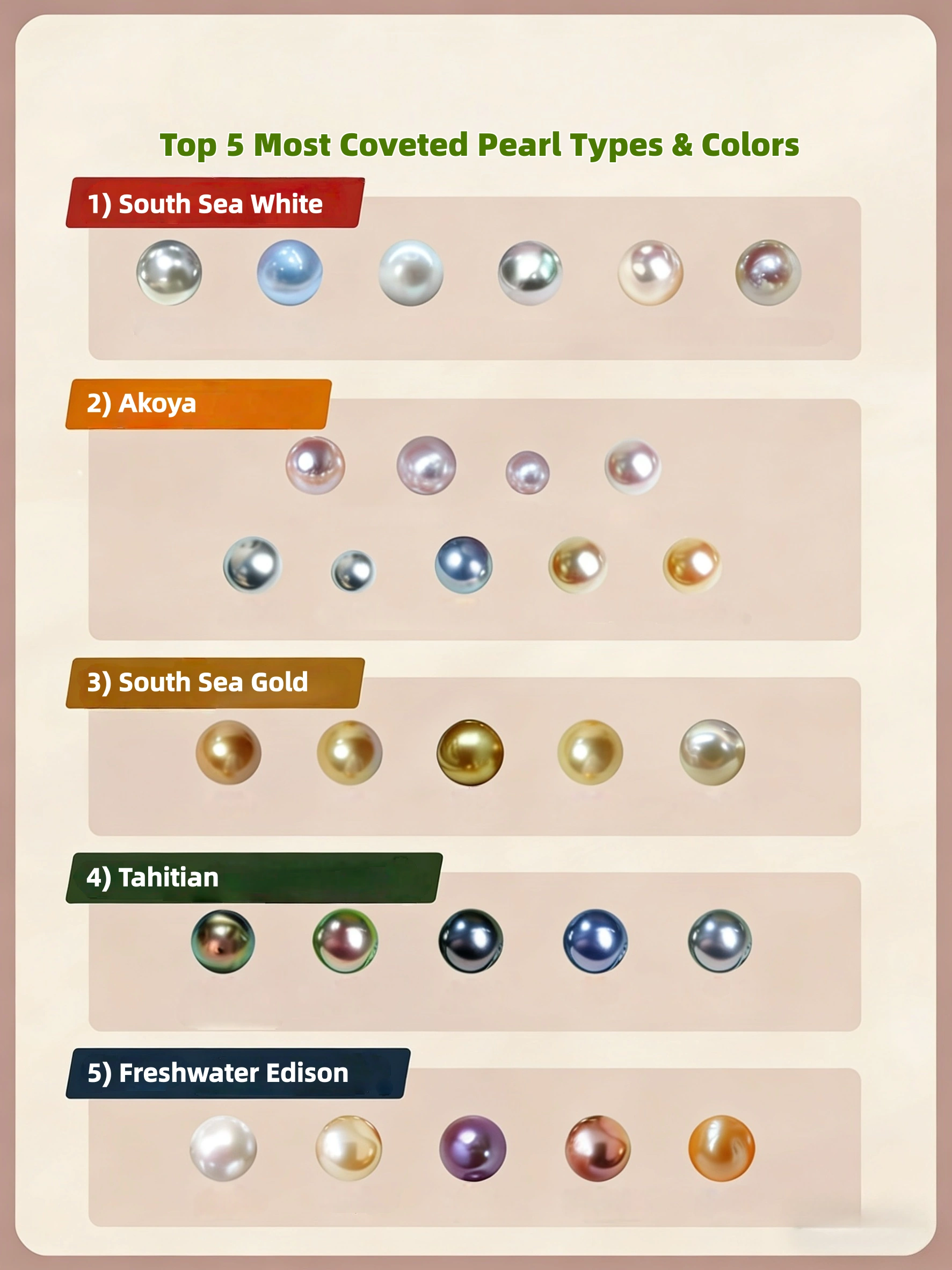
The following chart shows several of the most popular pearl categories and their common colors (excl. conch & melo pearls). The order roughly reflects their typical price ranges, though it should not be interpreted as an absolute ranking.
Natural vs Treated Pearl Colors
While many pearls display beautiful natural colors, others may be artificially colored or enhanced after harvest.
Learn the 5 Modern Pearl Color Treatments:
- Dyed Pearls: How to Tell If Pearls Are Dyed?
- Coated Pearls & Dyed-Coated Pearls: Identification Guide
- Irradiated Pearls vs Natural Grey Pearls: How to Tell the Difference
- Pearl Toning Explained: The Secret Behind Pink Akoya Pearls
Some treatments are purely cosmetic, while others alter the pearl’s internal structure.
We explain these methods in detail with identification cases in the independant blogs as above.
Do Pearls Change Color Over Time? Natural Pearl Fading Explained