
Pearl toning is one of the most common — and most misunderstood — pearl optimization methods in the jewelry industry.
Especially in Akoya pearls, toning is widely used to reduce yellowish hues, brighten luster, and enhance pink or green overtones.
So what exactly is pearl toning?
Does it make pearls fake?
And why do some pink Akoya pearls look almost impossibly beautiful?
If you’ve already read our previous guides on dyed pearls, coated pearls, or irradiated pearls, pearl toning sits in a very different category — one that major pearl laboratories generally accept without lowering the pearl’s grade.
What Colors Are Pearls? Natural Pearl Colors Explained
Pearl Color Treatments: 5 Ways Pearl Colors Are Enhanced
Dyed Pearls: How to Tell If Pearls Are Dyed?
Coated Pearls & Dyed-Coated Pearls: Identification Guide
Irradiated Pearls vs Natural Grey Pearls: How to Tell the Difference
Do Pearls Change Color Over Time? Natural Pearl Fading Explained
What Is Pearl Toning?
Pearl toning is a gentle optimization process used to refine and stabilize a pearl’s natural color.
It typically involves:
- Mild oxidizing or reducing agents
- Slight pH adjustments
- Physical and chemical micro-bleaching
The goal is not to add a new artificial color, but to:
- Remove unwanted overtone impurities (such as yellowish hues)
- Brighten the pearl
- Enhance natural overtones like pink, green, or blue
This process is commonly used on high-quality freshwater pearls and especially on Akoya pearls to achieve the famous “aurora” effect.
Pearl Toning Does Not Change the Pearl’s Base Color
Unlike dyeing or coating, toning does not fundamentally change the pearl’s natural body color.
In the pearl industry, toning is generally considered an optimization, not a heavy treatment.
Why?
Because:
- The color remains stable and long-lasting
- The pearl will not fade from toning
- No external pigments are added
- The process only slightly adjusts the pearl’s natural organic compounds
- The pearl remains a genuine pearl in every sense
A toned pearl also cannot magically transform a low-quality pearl into a high-quality one.
Think of it like makeup:
the pearl is already beautiful — toning simply helps its best qualities stand out more clearly.
Why Pink Akoya Pearls Are Often Toned
Many people love soft pink pink Akoya pearls.
But interestingly, natural pink overtones in Akoya pearls are not always stable over time.
Appropriate toning can actually help preserve and stabilize these beautiful pink tones for longer periods, making the pearls appear more consistently rosy and luminous.
This is one reason why toned Akoya pearls are so widely accepted in the Japanese pearl market.
Can We Identify Toned Pearls?
Toned pearls usually look very natural and lively. It’s hard to tell with bare eyes.
Under magnification:
- There is no artificial pigment accumulation
- No coating boundary can be seen
- The drill holes remain clean
- Color transitions from surface to drill hole appear smooth and natural
- The nacre structure still looks consistent with natural pearls
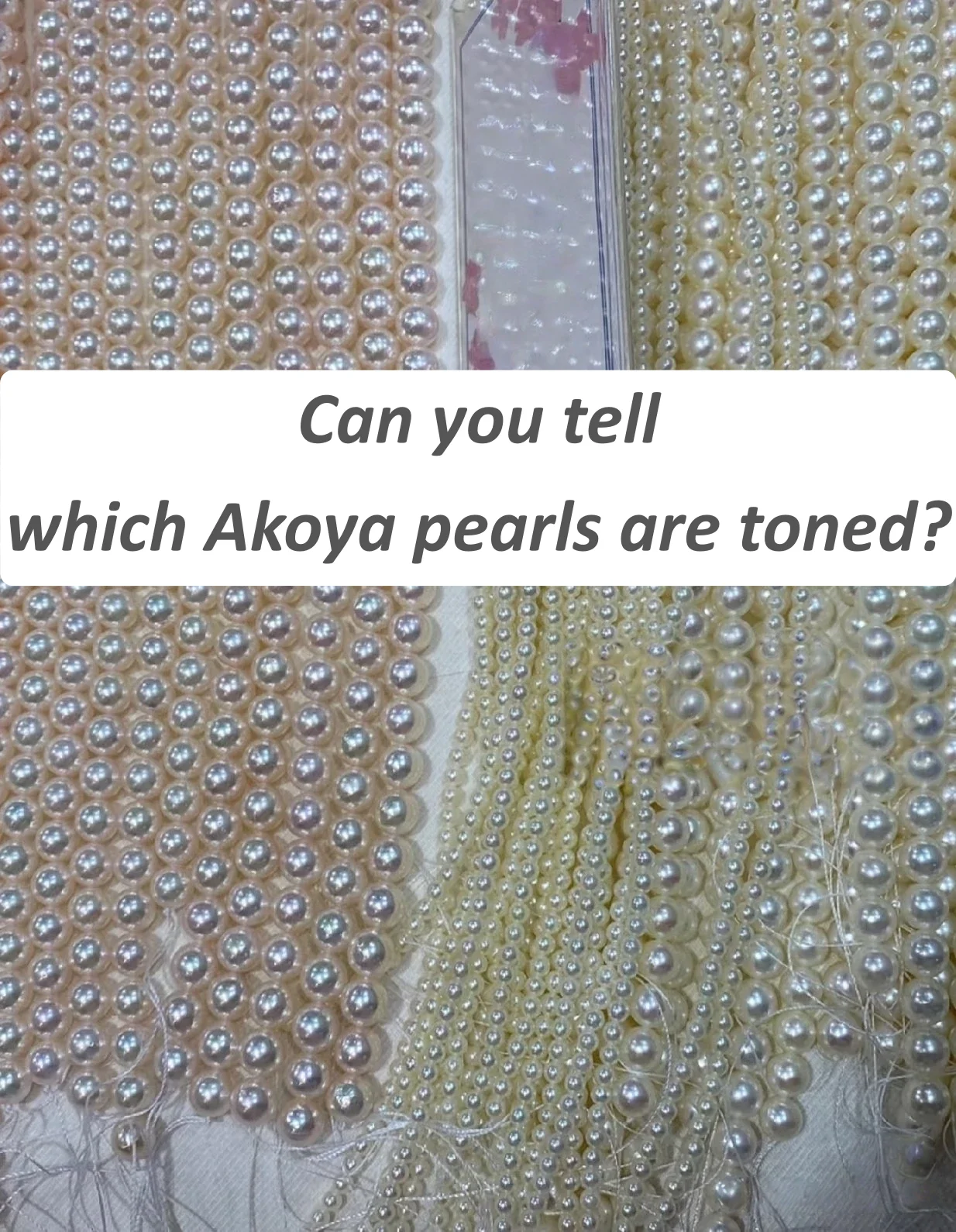
Even under magnification, both the pearls on the left and right still look completely natural — pearl toning is that subtle.
However, toned Akoya pearls (left) usually display stronger and more even pink or green overtones, with a brighter and cleaner overall appearance.
Untoned Akoya pearls (right), on the other hand, often look softer and more natural in color, and are more likely to show slight creamy or yellowish undertones.
Unlike dyed or coated pearls, toned pearls generally do not show obvious signs of artificial coloring.
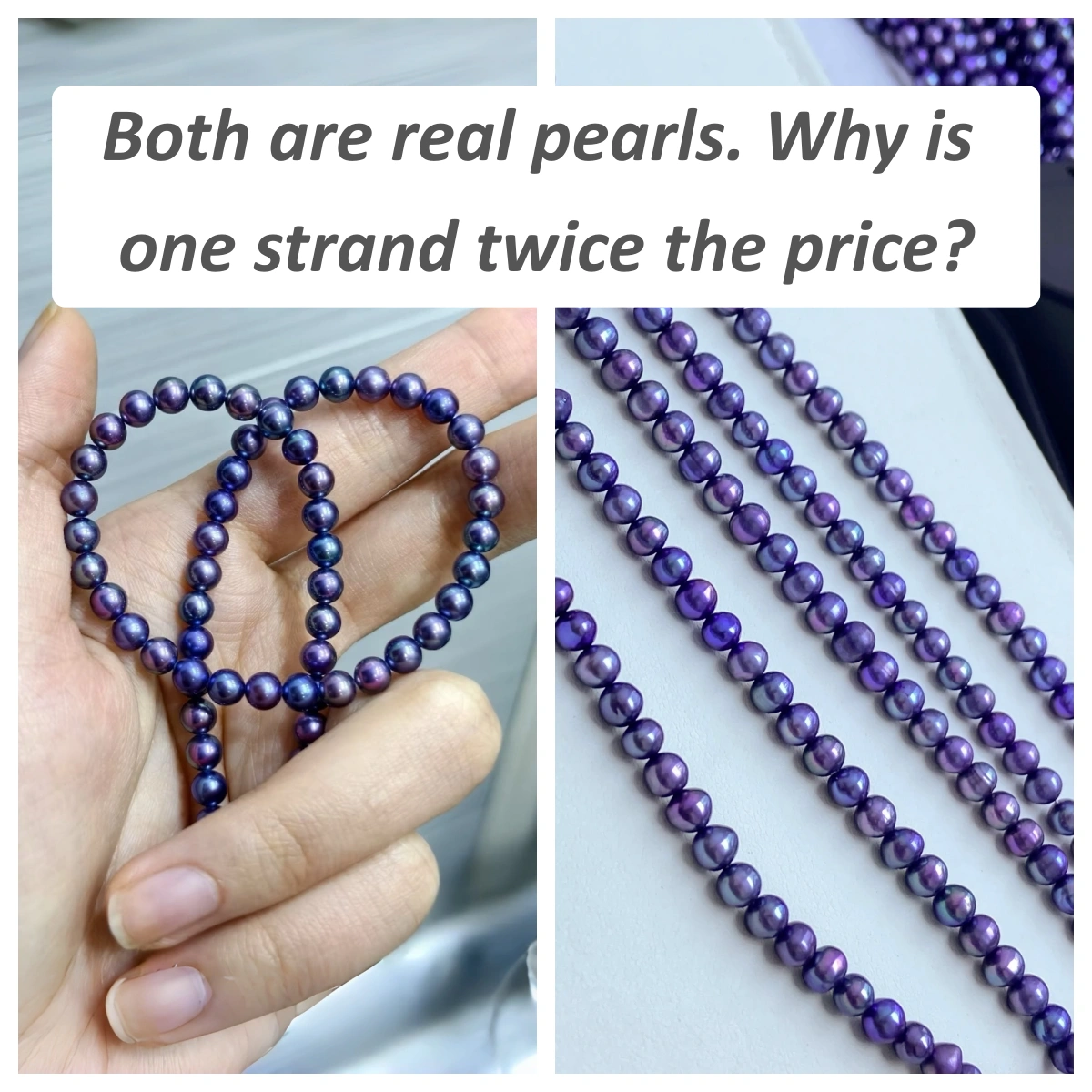
The purple pearls above are all freshwater pearls — and both are beautiful.
However, the strand on the left costs about twice as much as one strand on the right, despite having similar size, color, and luster.
Why?
Because the pearls on the left are naturally colored.
That vivid purple tone formed naturally inside the mollusk, and finding pearls with such strong natural color — especially in near-round shapes — is extremely rare.
The pearls on the right have undergone subtle toning, or “makeup.” Their original color was probably already attractive, but toning enhanced their appearance and made the color more vivid and radiant.
Since toned pearls are generally easier to source than naturally exceptional pearls, they are usually much more affordable.
Are Toned Pearls Accepted by Major Pearl Laboratories?
Yes.
Major international gemological laboratories such as:
- Gemological Institute of America
- GUILD Gem Laboratories
- Japanese pearl research laboratories
generally accept pearl toning as a legitimate optimization process.
Toning usually does not reduce the grading of the pearl on laboratory certificates.
On reports, toning may:
- Not be mentioned at all
- Or be disclosed with specific wording such as “toned”
By contrast, stronger color-altering methods like dyeing or coating are normally clearly disclosed as treatments and may lower the pearl’s grade — or prevent certification altogether.
Why Pearl Toning Is So Common in Japan
Japan has some of the world’s most advanced pearl toning technology.
The Japanese pearl market has extremely strict grading standards for certain color categories, especially for Akoya pearls.
This creates strong motivation to tone pearls within the same color family in order to achieve more desirable and valuable grades.
In fact, it is estimated that over 95% of Japanese Akoya pearls have undergone toning.
Golden pearls are another category where toning technology is extremely common.
Untoned Pearls Can Be Significantly More Expensive
If an untuned pearl naturally reaches the same visual grade as a toned pearl, it is usually much rarer — and much more expensive.
For example:
A ~5mm untreated “Tennyo-grade” Akoya pearl necklace can cost roughly $1,000 USD more than a toned Tennyo-grade Akoya necklace of similar appearance.
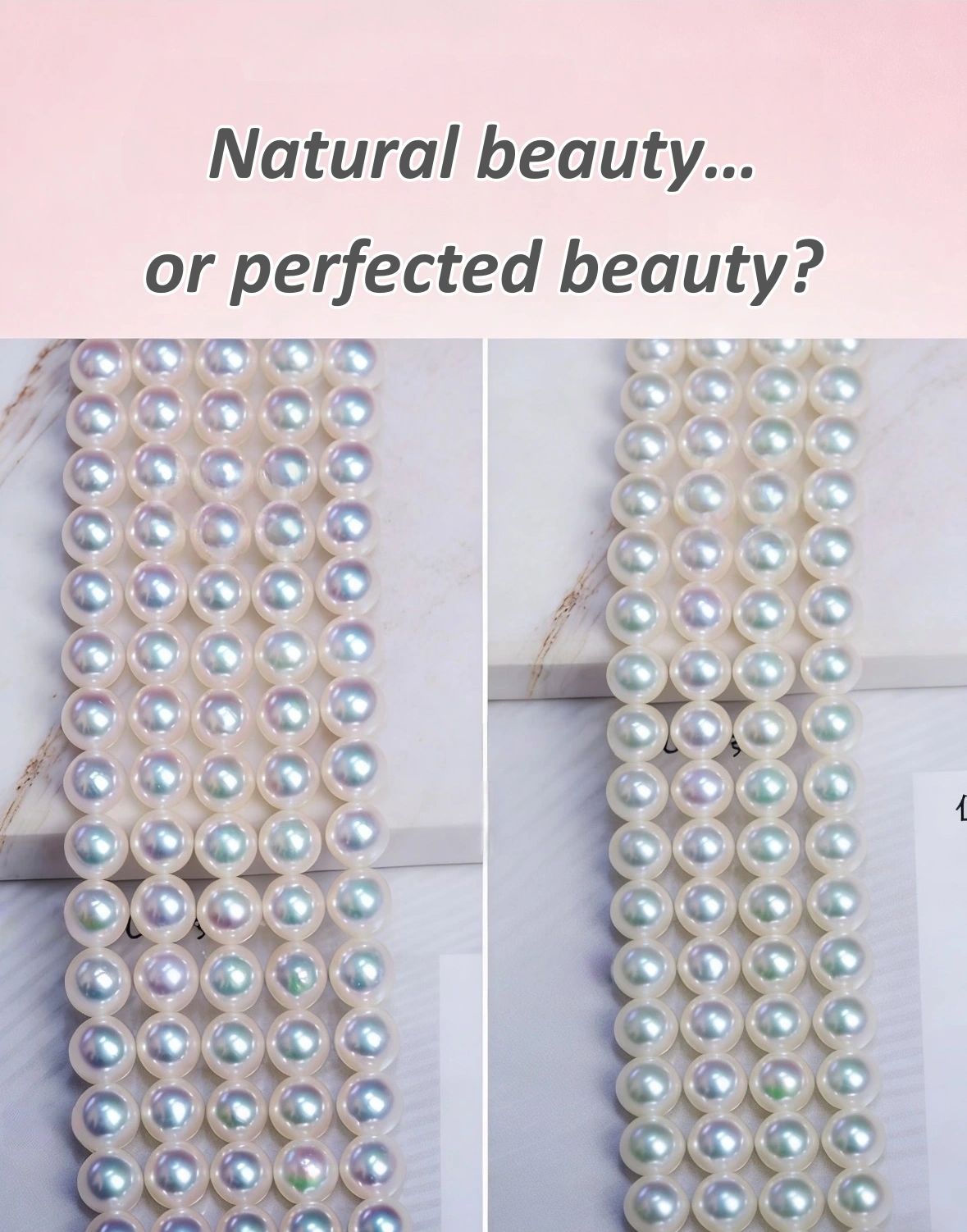
The Akoya pearls on the right in the photo above are untreated natural-color pearls, while the ones on the left have been toned.
You can see that the untreated pearls already have naturally pink overtones. However, after toning, the overall pink color becomes more vivid, more even, and the luster appears brighter and sharper.
If an untreated Akoya pearls necklace can naturally achieve the same level of brightness and pink overtone that toned pearls typically display, it usually means the pearls themselves are rarer and of exceptionally high quality. As a result, their prices are often significantly higher.
That is why high-grade untreated Akoya pearls have long held strong collectible value in the Japanese market.
Does Raffie Pearls Sell Toned Pearls?
Currently, the pearls used by Raffie Pearls have not undergone any of the optimization methods discussed above.
However, some customers are specifically interested in toned pearls because they offer:
- More vivid color
- Better color stability
- A more affordable price compared to rare naturally exceptional pearls
If you are interested in toned pearls, feel free to contact us at [email protected]. We can specially source toned pearls for you upon request.