
The 5 Most Common Pearl Color Treatments
The most widely used pearl color treatments include:
- Dyeing
- Coating
- Dyeing combined with coating
- Irradiation
- Toning
Pearl color treatments are processes to modify or enhance the color of pearls after they come out of the mollusk. These treatments can deepen color, remove unwanted tones, or create shades that are rare in nature.
Natural-colored pearls develop their color during the pearl-forming process inside the mollusk, influenced by minerals and pigments in the environment.
Color-treated pearls, by contrast, are pearls whose color has been enhanced after harvest through techniques such as dyeing, coating, irradiation, or toning.
If you are curious about the full range of natural pearl colors, you can read our guide here:
→ What Colors Are Pearls? Natural Pearl Colors Explained
Color treatments allow manufacturers to produce pearls with more uniform or unusual colors. However, compared with natural-colored pearls, many treated pearls may lack the subtle overtone and depth that give pearls their unique charm.
Below are five common pearl color treatments, how they work, and their typical characteristics.
1. Dyed Pearls: One of the Oldest Pearl Color Treatments
Dyeing is one of the most traditional ways of enhancing pearl color.
In this process, pearls are soaked in dye solutions. The pigment penetrates the nacre layers and produces colors that are rare or absent in nature.
Dyed pearls can offer bright and unusual shades, which expands consumer choices. However, dyeing often covers the pearl’s natural overtones, resulting in a more uniform and less dynamic appearance.
The dye may also clog microscopic pores on the pearl’s surface, which can soften the reflection of light and reduce the crispness of the luster.
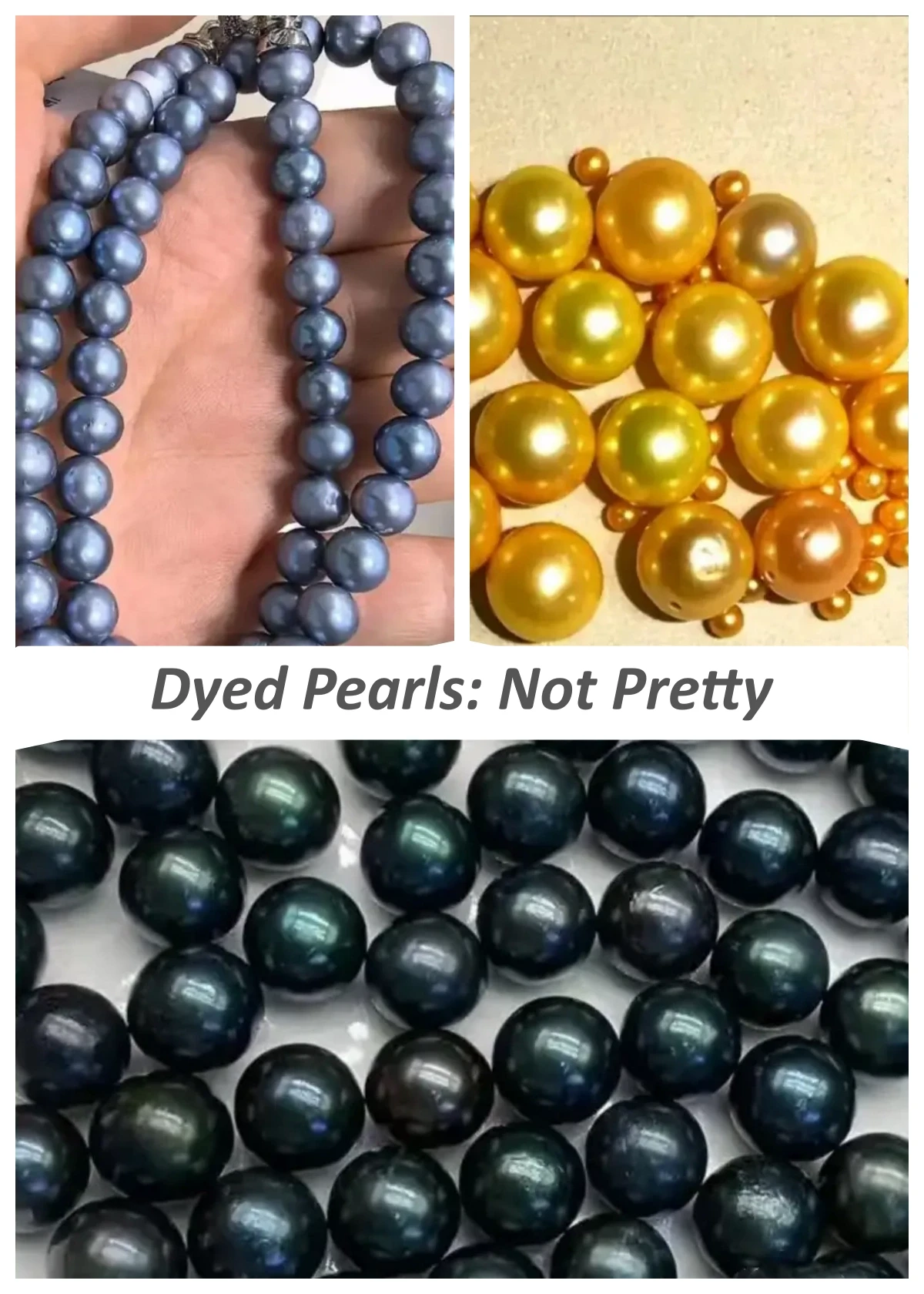
Another limitation is durability. Some dyed pearls may fade over time — sometimes within months — depending on the dye used and how the pearls are worn.
Certain chemical dyes may also irritate sensitive skin in rare cases. Because of these drawbacks, simple dyeing is considered a more traditional technique and has gradually become less common in high-quality pearls.
Dyed Pearls: How to Tell If Pearls Are Dyed?
2. Coated Pearls: Surface Pearl Color Treatment
Coating is another method to enhance pearl appearance.
In this treatment, a thin layer of material — such as metal oxides, lacquer, or synthetic compounds — is applied to the surface of the pearl. The coating can enhance luster or produce metallic color effects.
However, coating alone cannot change the pearl’s base color. Therefore, pearls selected for coating usually already have a base tone similar to the desired final color.
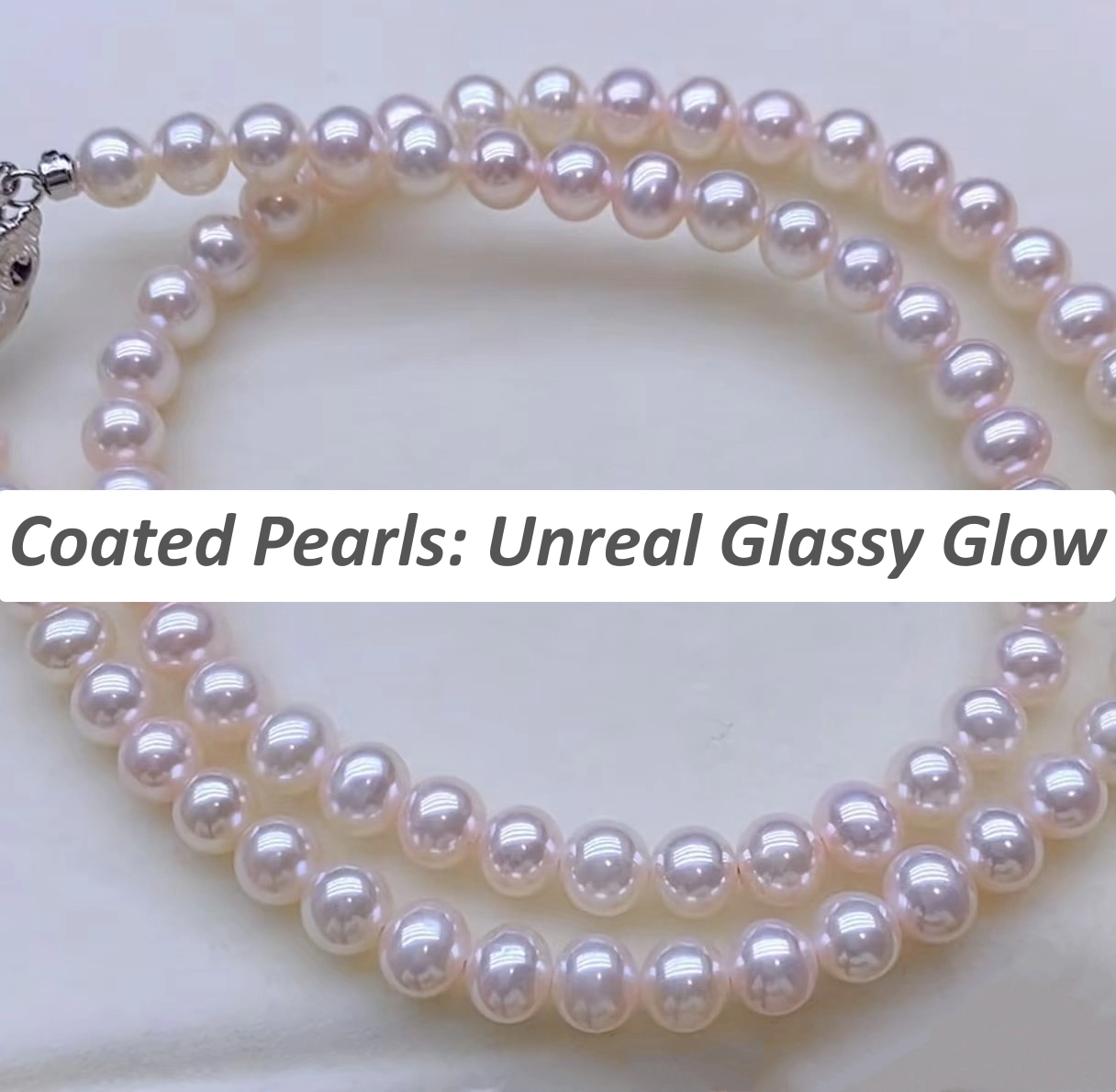
One important limitation is durability. Surface coatings are temporary and may gradually wear away through normal use. Pearls with coatings require careful handling and should stay away from chemicals or abrasive materials.
Coated Pearls & Dyed-Coated Pearls: Identification Guide
3. Dyed and Coated Pearls
Modern pearl processing sometimes combines dyeing and coating.
In this approach, pearls are first dyed and then covered with a thicker coating layer to enhance the shine. The coating dramatically increases the reflective effect, sometimes producing a metallic mirror-like surface.
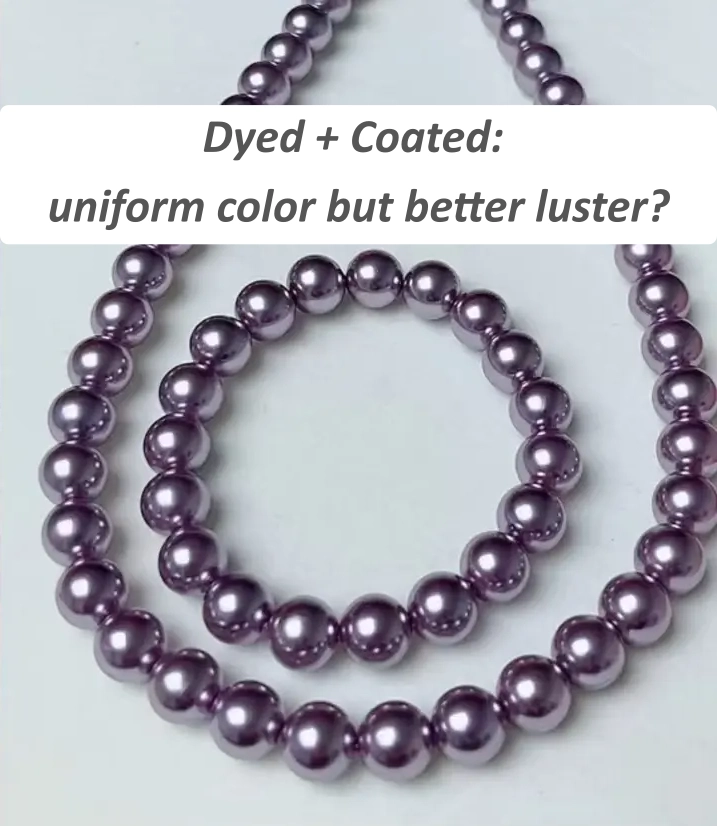
While this can create striking visual effects, the appearance can sometimes look unusually glossy or oily compared with natural pearls.
Coated Pearls & Dyed-Coated Pearls: Identification Guide
4. Irradiated Pearls: Modern Pearl Color Treatments
Irradiation — sometimes informally called “baked color” — is a modern technique used to deepen pearl colors.
This method uses gamma rays or electron accelerators to alter the crystal structure within the pearl. The radiation changes the oxidation state of elements such as manganese, which can produce darker tones like steel gray or bluish gray.

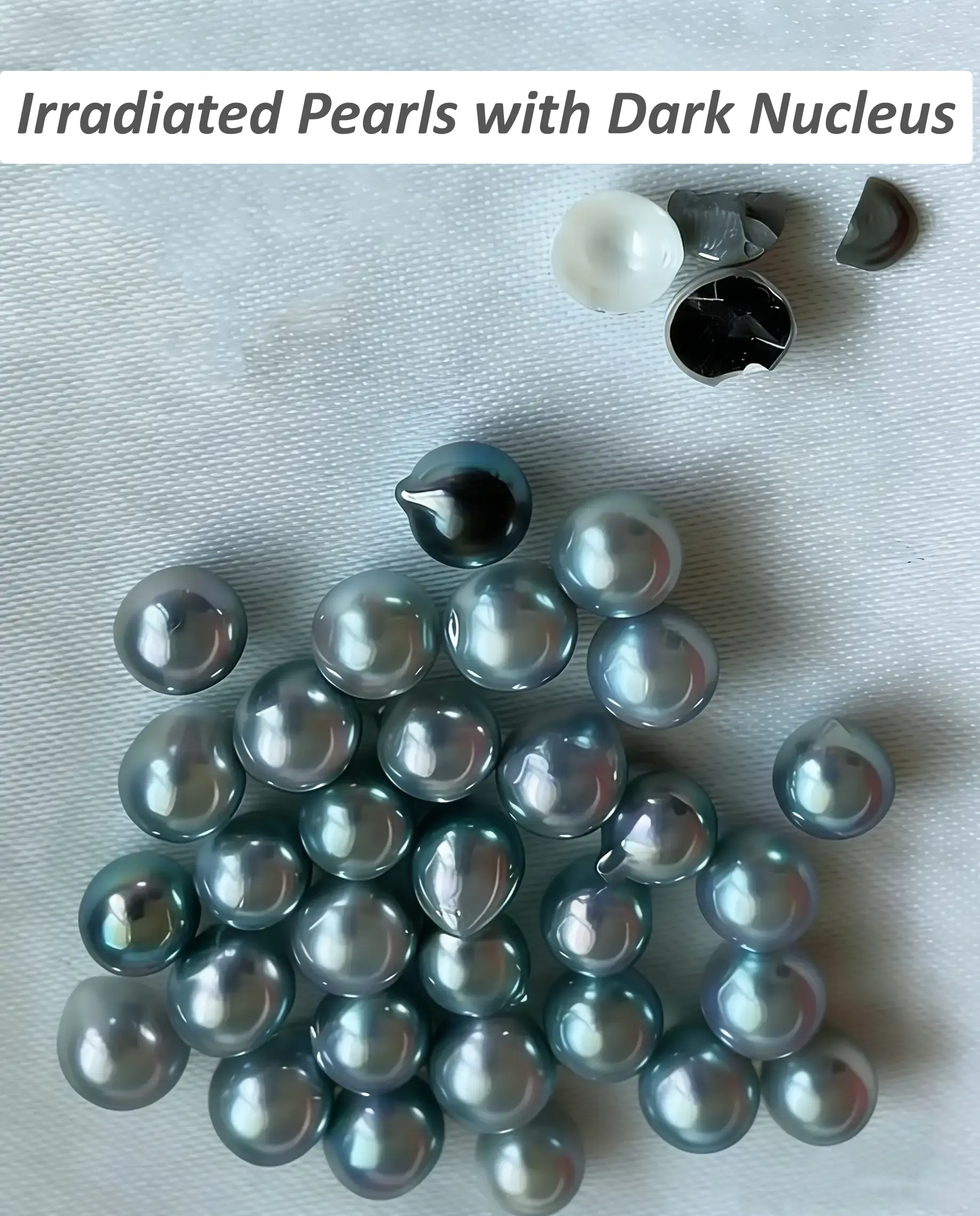
Unlike simple dyeing, irradiation does not introduce external pigments. Properly treated pearls are generally considered safe, with no residual radioactivity. The resulting color is stable and does not fade easily.
Interestingly, pearl colors can naturally change over time because pearls are organic gems. In some cases, irradiated colors may actually remain more stable than certain natural colors.
Irradiated Pearls vs Natural Grey Pearls: How to Tell the Difference
5. Toned Pearls: Subtle Pearl Color Enhancement
Toning is a more subtle and widely accepted form of pearl enhancement.
This process uses mild oxidation or reduction reactions combined with controlled pH adjustments. The treatment gently removes unwanted surface tones (such as yellowish hues) and stabilizes the pearl’s organic pigments.
The result is often a brighter appearance with more noticeable overtones, such as pink or green.
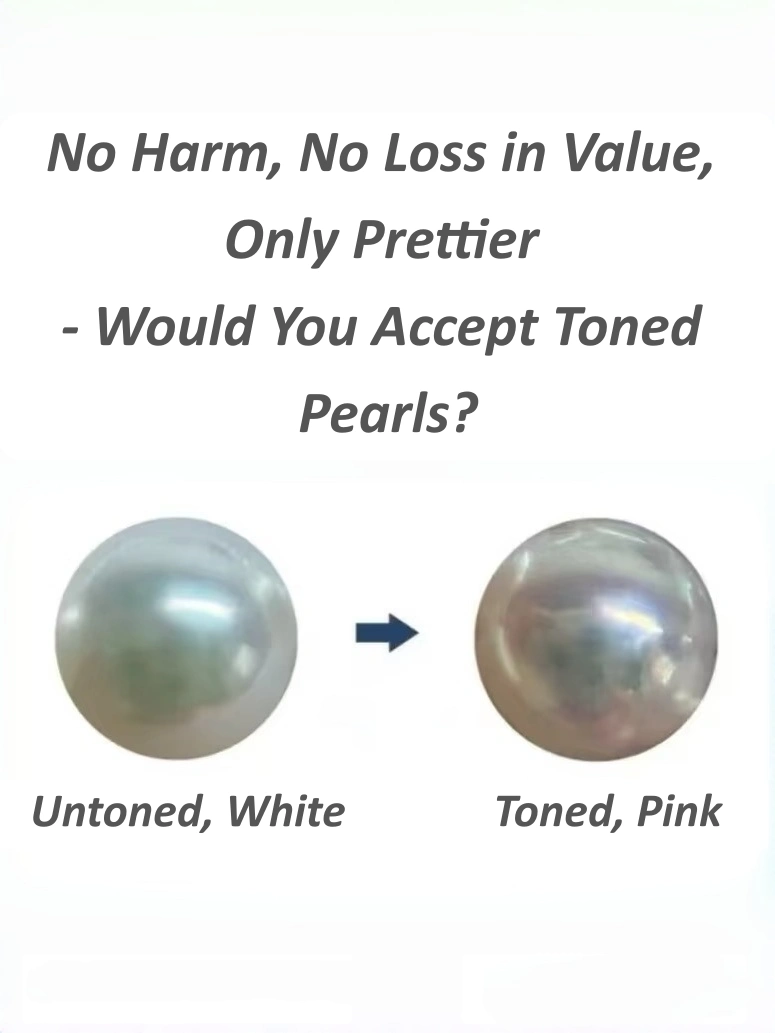
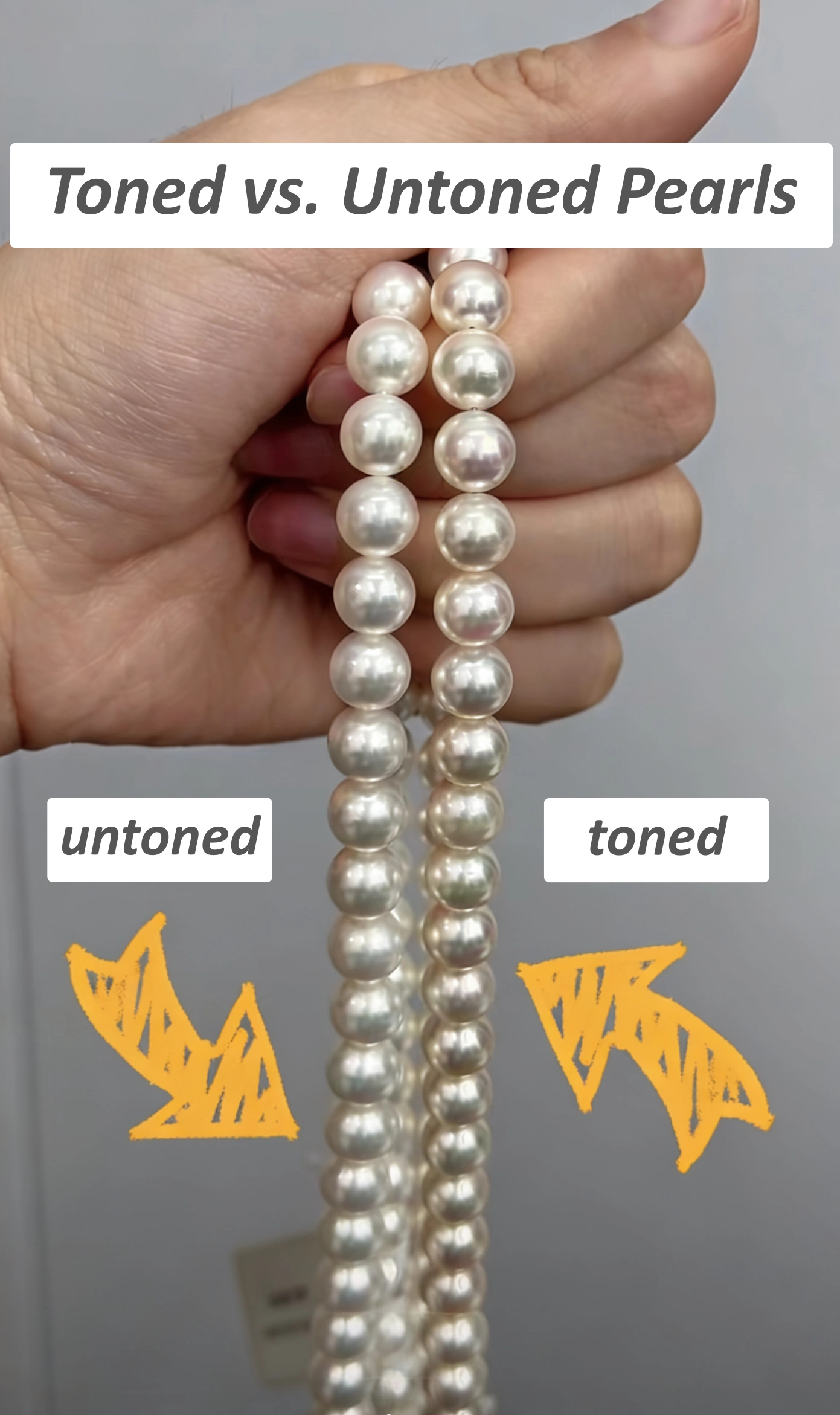
Toning does not change the pearl’s underlying body color. Instead, it refines and stabilizes the natural pigments already present in the nacre.
For this reason, toning is often considered optimization rather than artificial coloring.
It is commonly applied to Akoya pearls to produce the famous “aurora” effect, and also used on high-quality freshwater pearls.
Unlike dyeing or coating, toning does not introduce foreign pigments and does not fade over time.
For example, the pink overtone often associated with Akoya pearls is not always stable in untreated pearls. Proper toning can help preserve that desirable tone for longer.
Major gemological laboratories such as GIA, GUILD, and the Pearl Science Laboratory in Japan generally accept toning as a standard treatment. It may not even be explicitly listed on some reports.
Pearl Toning Explained: The Secret Behind Pink Akoya Pearls
Our Approach to Untreated Pearls
At Raffie Pearls, we currently choose pearls that have not undergone any of the treatments described above.
Whenever possible, we select pearls with naturally strong luster or metallic shine. For colored pearls, we often store them for extended periods before selling them, allowing the color to stabilize naturally.
We generally do not recommend paying excessive premiums purely for pearl color, especially in varieties such as Akoya or Edison pearls.
To keep our jewelry accessible, some pearls may have small natural marks on the side or back. We believe these natural traces are part of the pearl’s story — a small trade-off for the beauty of untreated pearls.
Explore Our Naturally Colored Pearls Collection.


Final Question: What Do You Think About Pearl Treatments?
Pearl treatments often spark debate among pearl lovers.
Some people believe pearls should always remain completely natural and untouched.
Others feel that certain treatments — especially safe and stable ones like irradiation or toning — can simply make beautiful pearls more affordable and accessible.
So we’re curious:
Would you only buy completely untreated pearls?
Or are you comfortable with certain treatments if they are safe, stable, and well disclosed?
Let us know your thoughts.
Do Pearls Change Color Over Time? Natural Pearl Fading Explained
FAQ
Colored pearls can be either natural or treated. Natural colored pearls develop their color during the pearl-forming process due to minerals or pigments in the environment. Treated pearls are natural or cultured pearls whose color have been enhanced after harvest through techniques such as dyeing, coating, irradiation, or toning.
Common pearl color treatments include dyeing, coating, irradiation, and toning. Dyeing and coating may fade or wear over time and in some cases may cause skin irritation. Irradiation and toning are generally considered stable treatments that do not leave harmful residues and are widely used in the pearl industry.
At Raffie Pearls, we use pearls that have not undergone any of the color treatments described above. Whenever possible, we select pearls with naturally strong or metallic luster. Colored pearls are sometimes stored for about a year before being used, allowing their color to stabilize naturally. To keep our jewelry affordable, some pearls may have small natural marks on the side or back — a trade-off we believe is worth making for the beauty of untreated pearls.