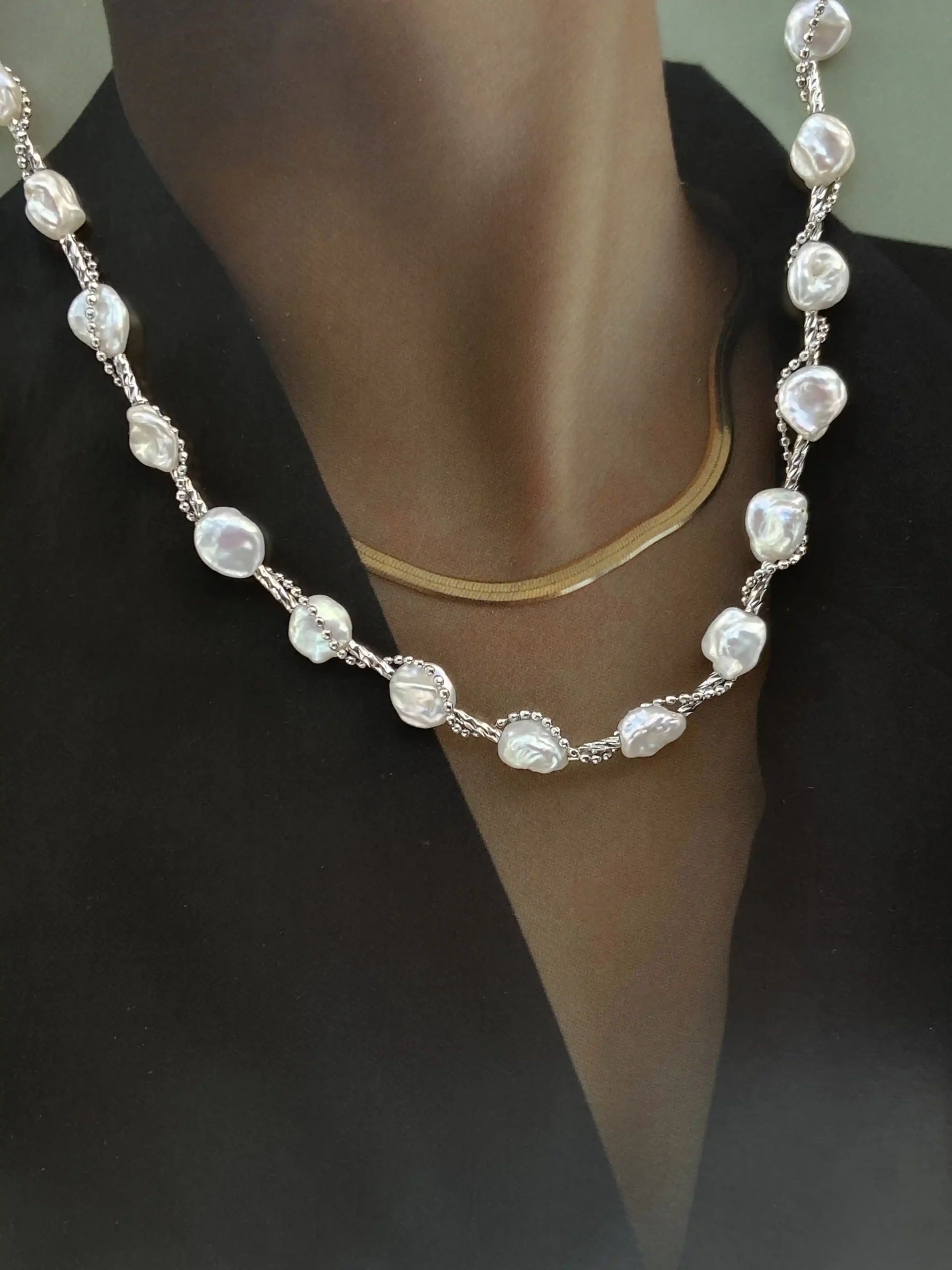
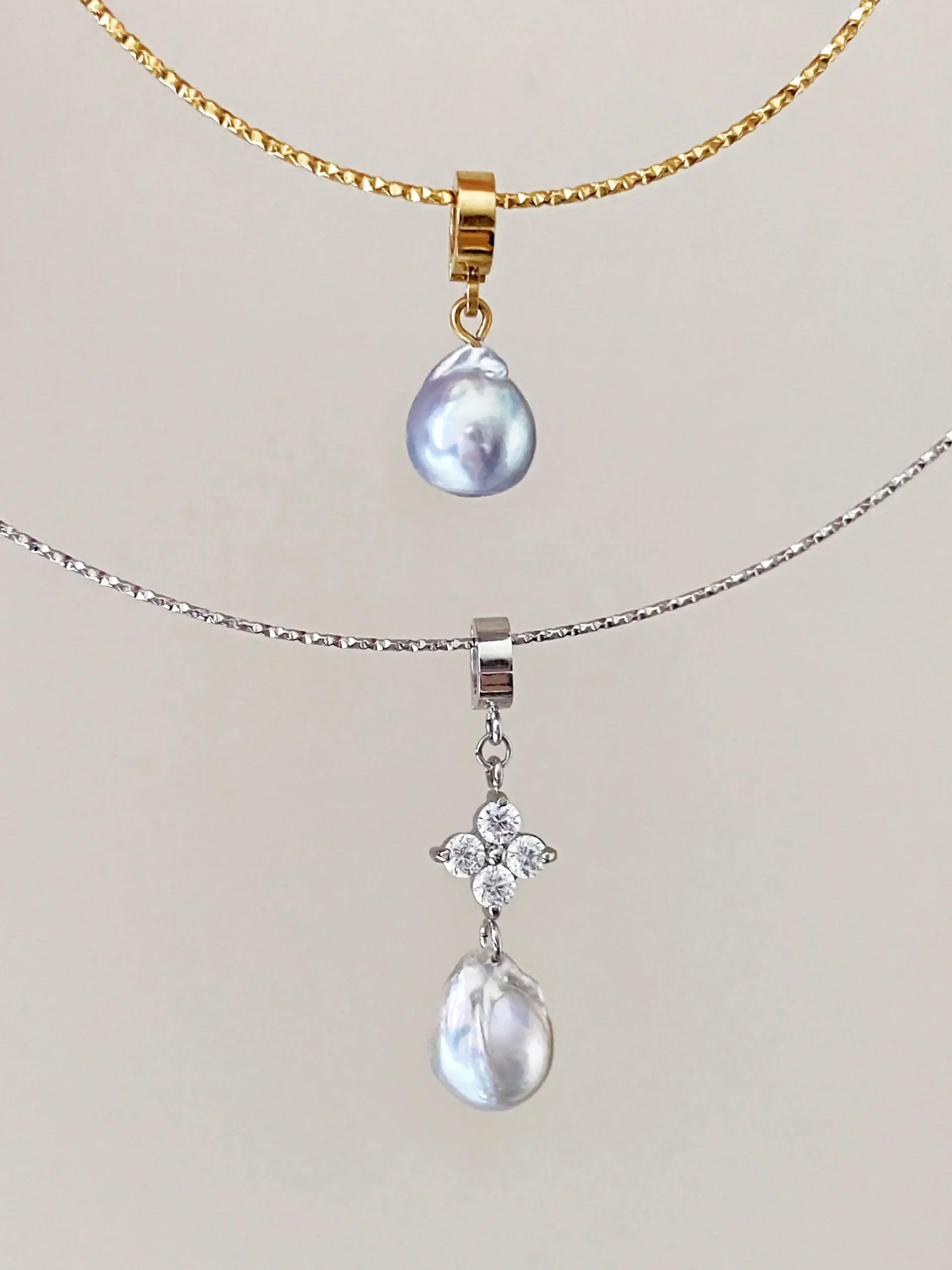
Did you know many grey pearls on the market are actually irradiated pearls?
Pearl irradiation is one of the most common modern pearl treatments, to create grey and blue-grey pearl color — the Akoya look.
Some look obviously treated.
Others are almost impossible to distinguish with the naked eye.
So what exactly are irradiated pearls?
Are they safe?
And how can you tell a natural grey pearl from an irradiated one?
What Are Irradiated Pearls?
Pearl irradiation is one of the most common modern pearl treatments to darken pearl color.
What Colors Are Pearls? Natural Pearl Colors Explained
Pearl Color Treatments: 5 Ways Pearl Colors Are Enhanced
Dyed Pearls: How to Tell If Pearls Are Dyed?
Coated Pearls & Dyed-Coated Pearls: Identification Guide
Pearl Toning Explained: The Secret Behind Pink Akoya Pearls
Do Pearls Change Color Over Time? Natural Pearl Fading Explained
The treatment uses gamma rays or electron accelerators to alter the structure inside the pearl, especially the oxidation state of manganese elements, creating darker tones such as:
- blue grey
- steel grey
- silver charcoal
- dark metallic grey
This method is a popular treatment to imitate natural grey Akoya pearls.
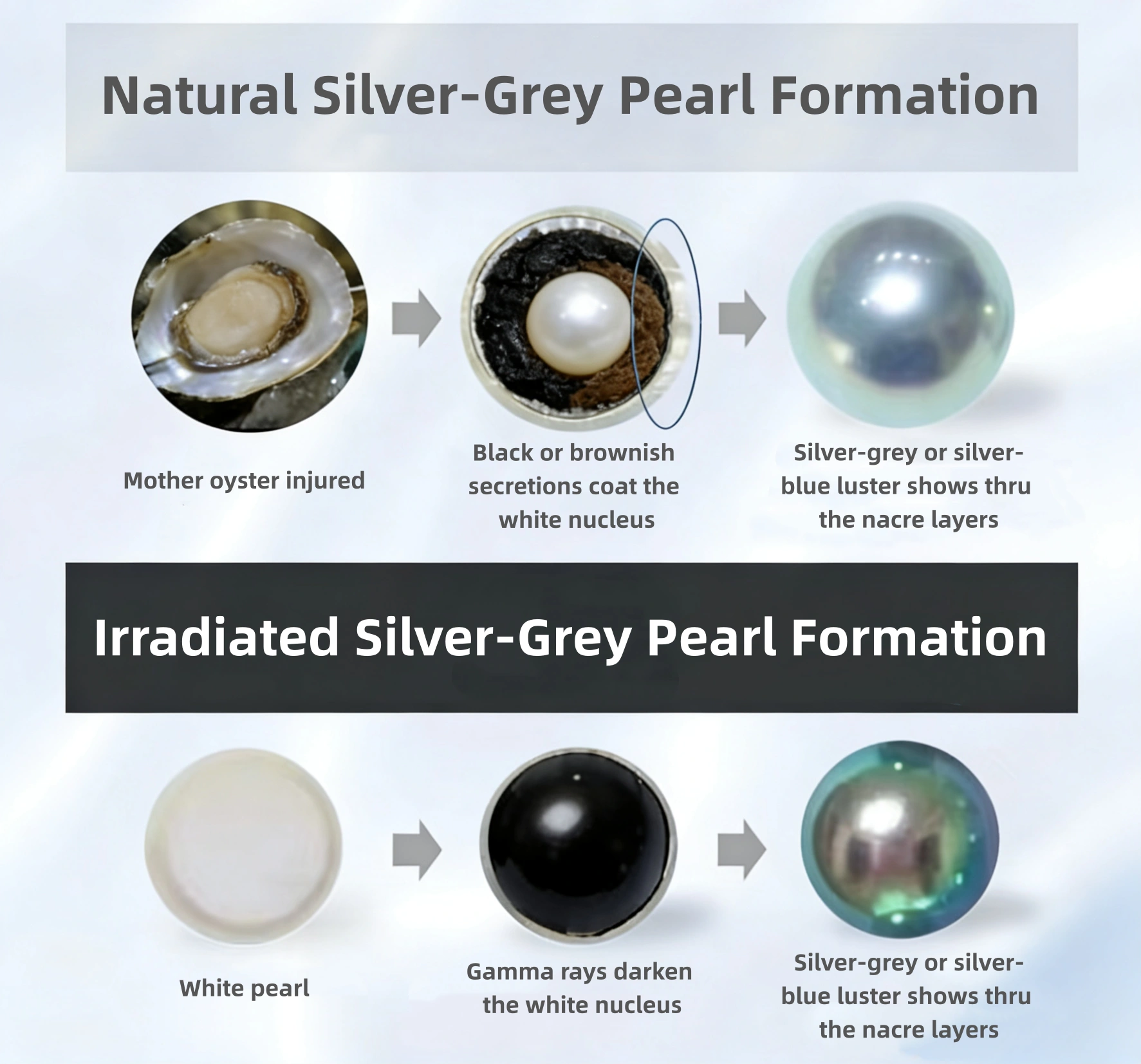
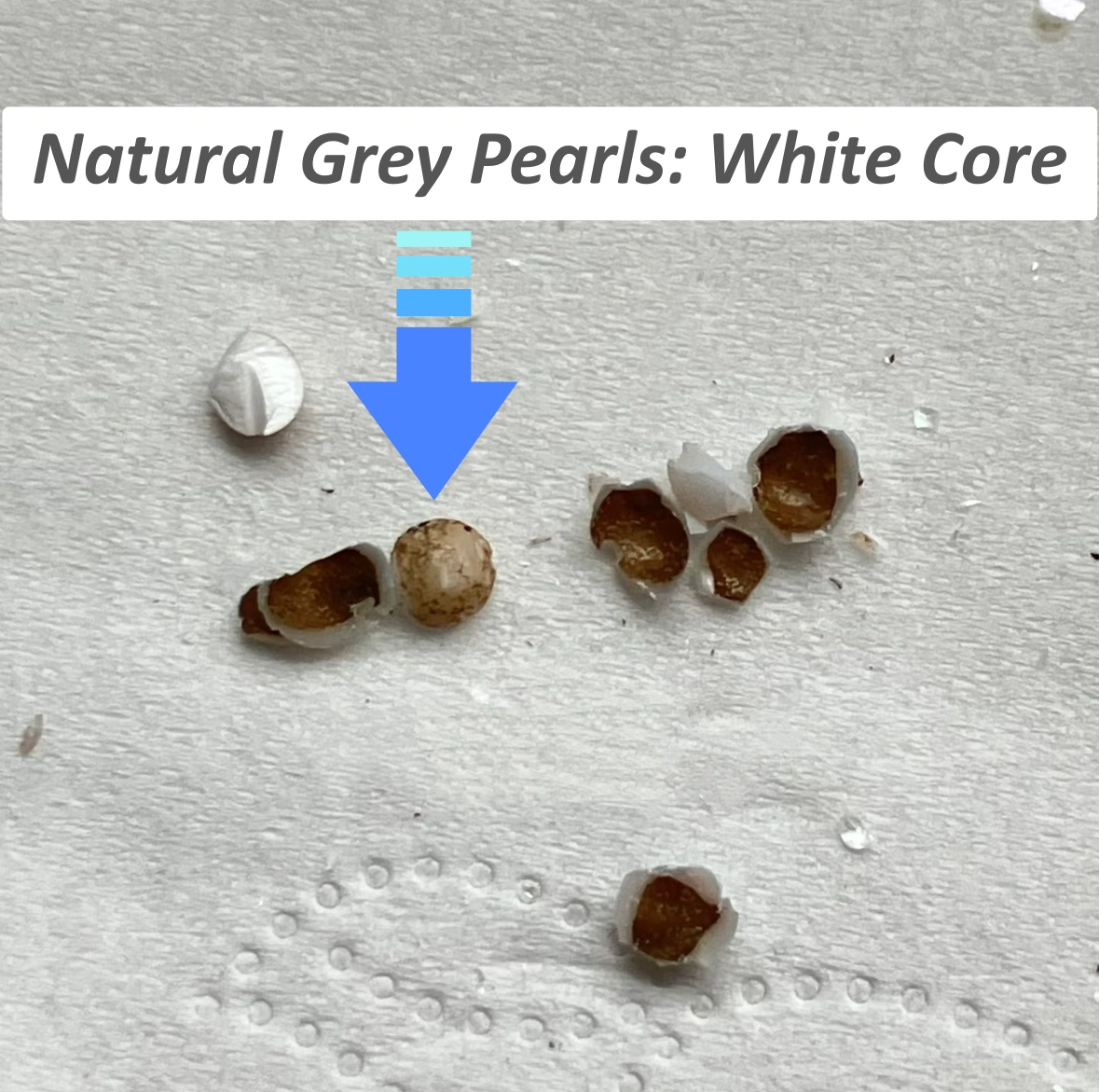
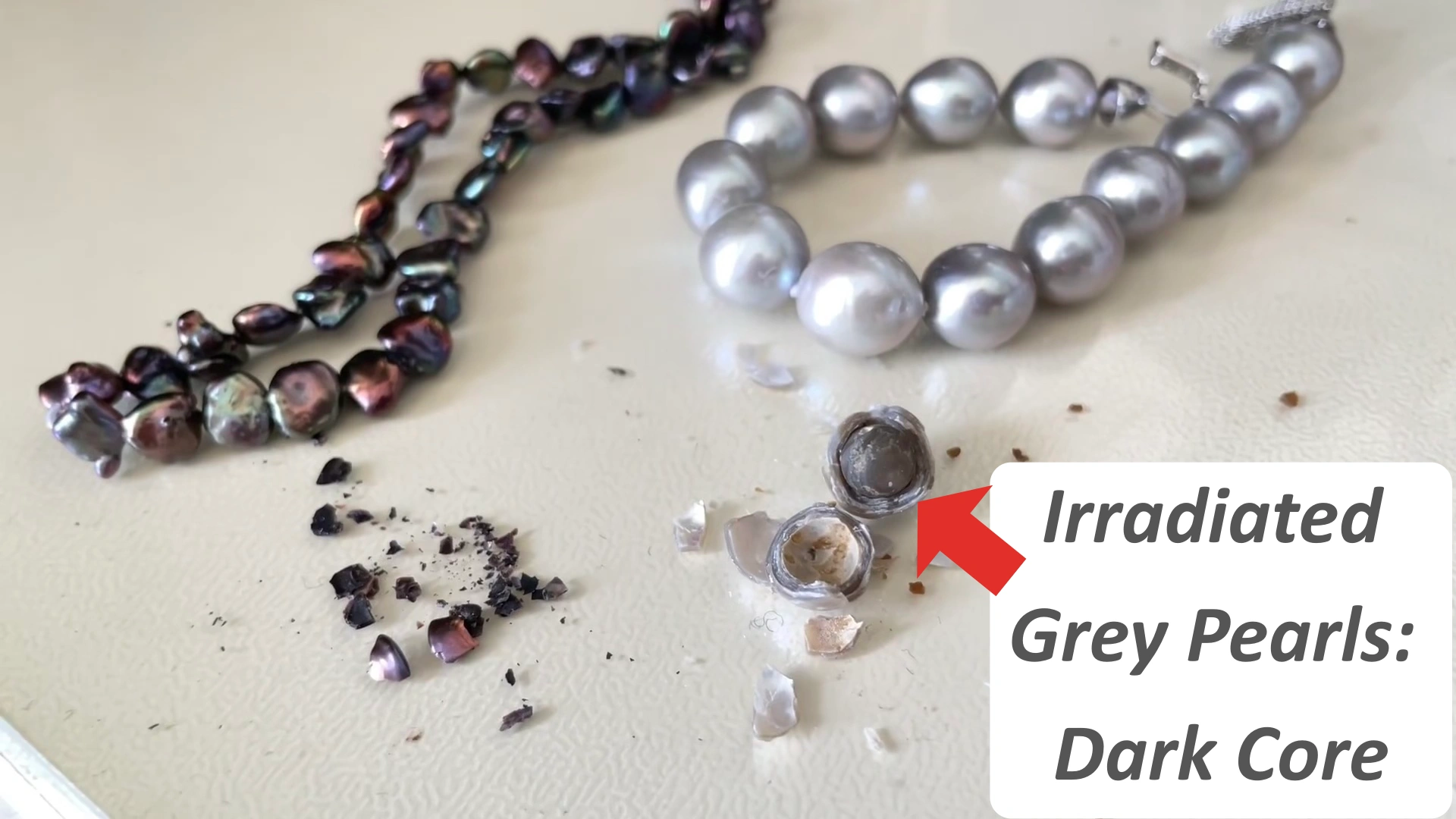
Natural grey pearls usually still have a white nucleus inside.
Irradiated grey pearls, however, often develop a dark grey nucleus after treatment.
Are Irradiated Grey Pearls Safe?
Generally speaking, pearl irradiation is considered stable, residue-free, and non-toxic.
The treatment itself does not leave harmful radioactivity inside the pearl, which is one reason irradiated pearls have become popular in the jewelry market.
In fact, irradiated color can sometimes be even more stable than natural grey Akoya color.
Yes — pearls are organic gems, and even natural pearl color can change over time.
Does Pearl Irradiation Affect Its Value?
Yes.
Major scientific gem labs usually will not issue premium grading certificates for irradiated pearl color.
Labs like GUILD Gem Laboratory may label irradiated grey pearls as:
“Color origin undetermined”
and often avoid assigning full value grading to treated grey pearls.
Today, many Akoya pearls on the market are irradiated to deepen their famous silver-grey color and increase perceived value.
If two blue-grey Akoya strands have a similar appearance, but one is irradiated and the other is natural color, the irradiated strand may cost only one-third to one-half as much as the natural grey Akoya version.
How to Identify Irradiated Pearls
1. Grey Pearl Color: Natural vs Irradiated
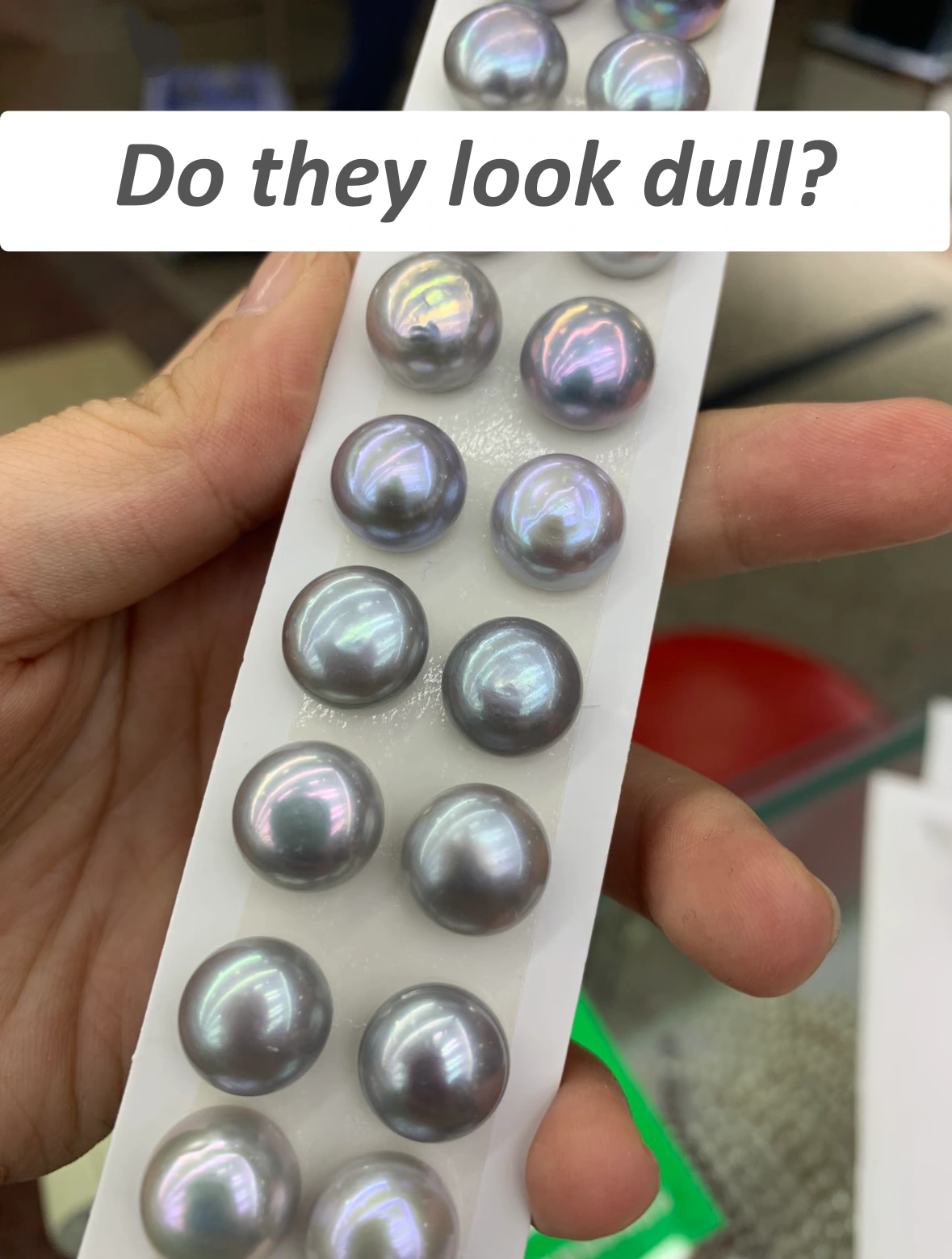
Grey freshwater pearls produced through irradiation often appear:
- darker
- flatter
- slightly dull
- lacking transparency
- missing overtone and orient
If you regularly handle pearls, you can often recognize this with the naked eye.
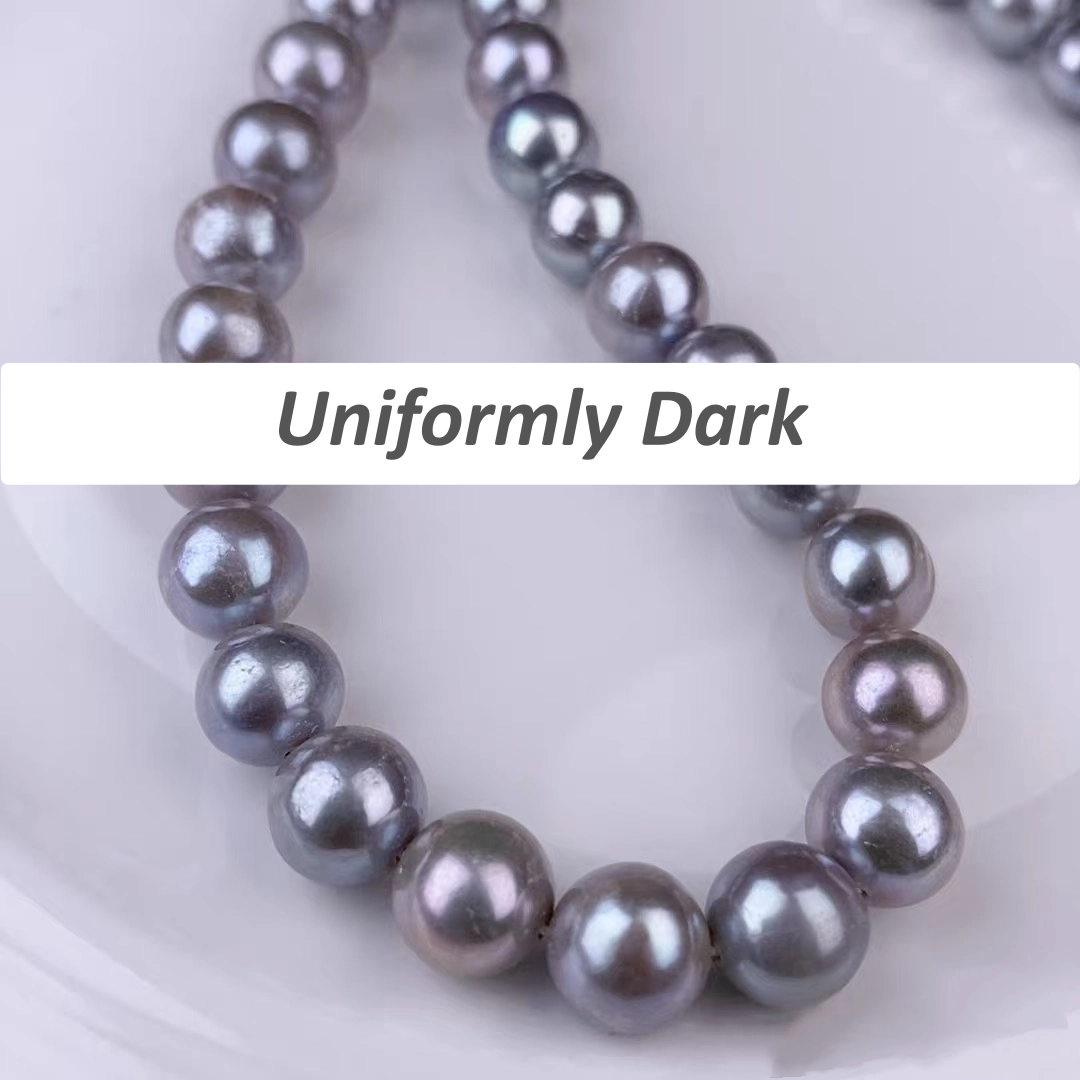
However, when light grey Akoya pearls are used for irradiation, the resulting blue-grey pearls can still retain beautiful luster and overtones.
The blue-grey effect also becomes much stronger.
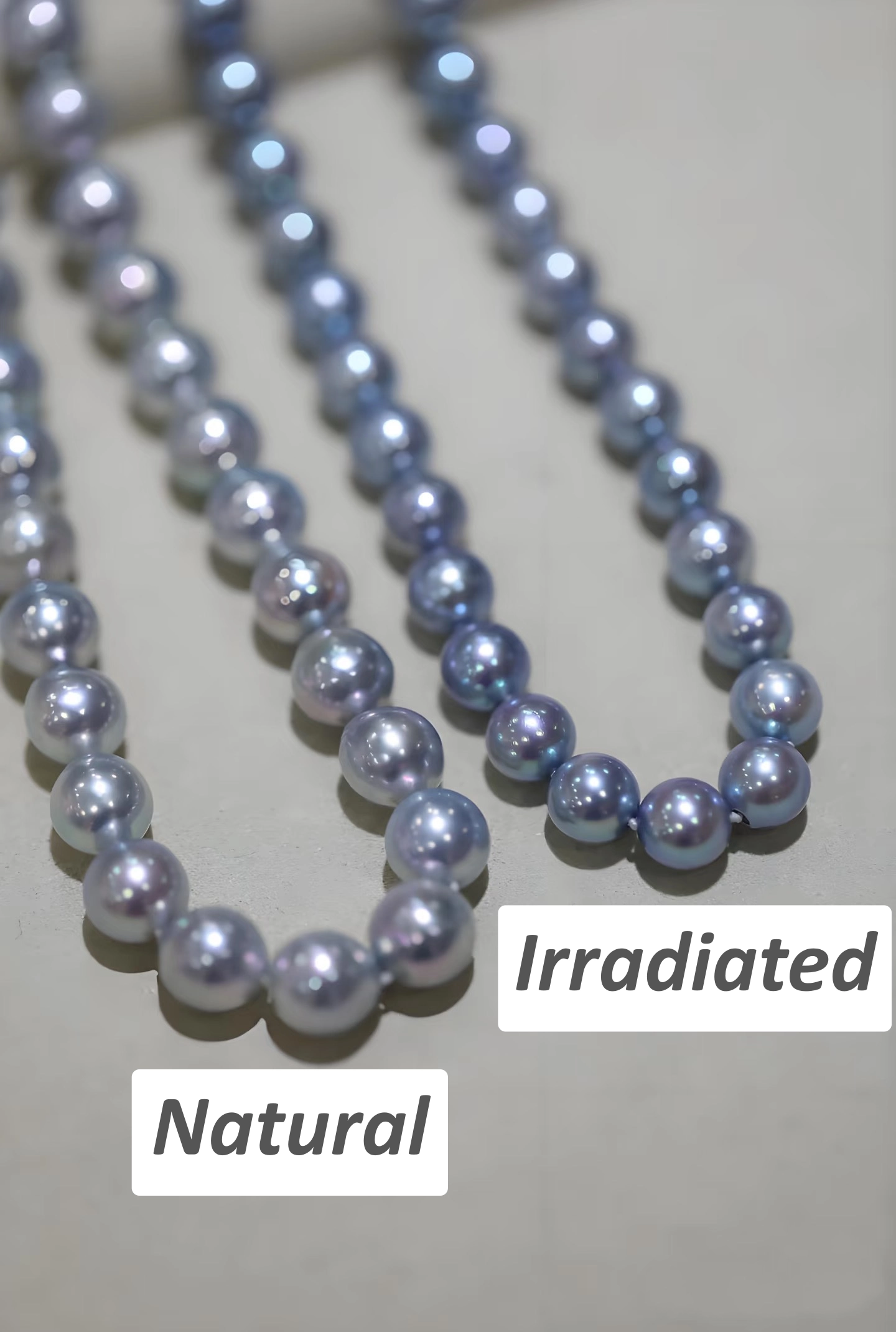
Natural grey Akoya pearls are usually lighter in tone because their underlying body color is still silver-white with some blue pigment.
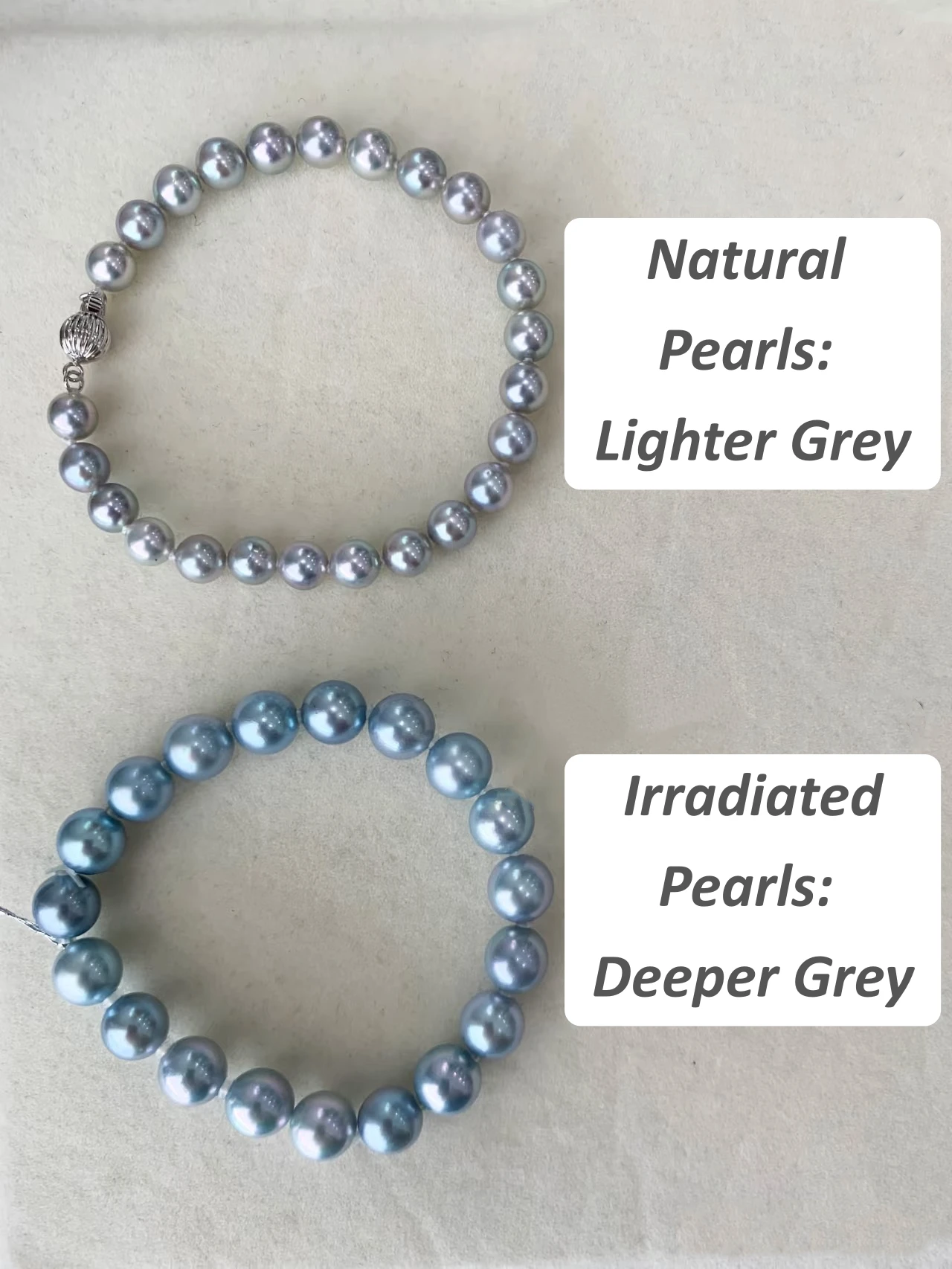
That blue pigment often distributes unevenly.
Irradiated Akoya pearls, on the other hand, can achieve a much darker and more uniform color.
So if you see grey pearls with:
- slightly uneven color
- transparent glow
- strong overtones
- natural orient
there is a good chance they are natural Akoya grey pearls.
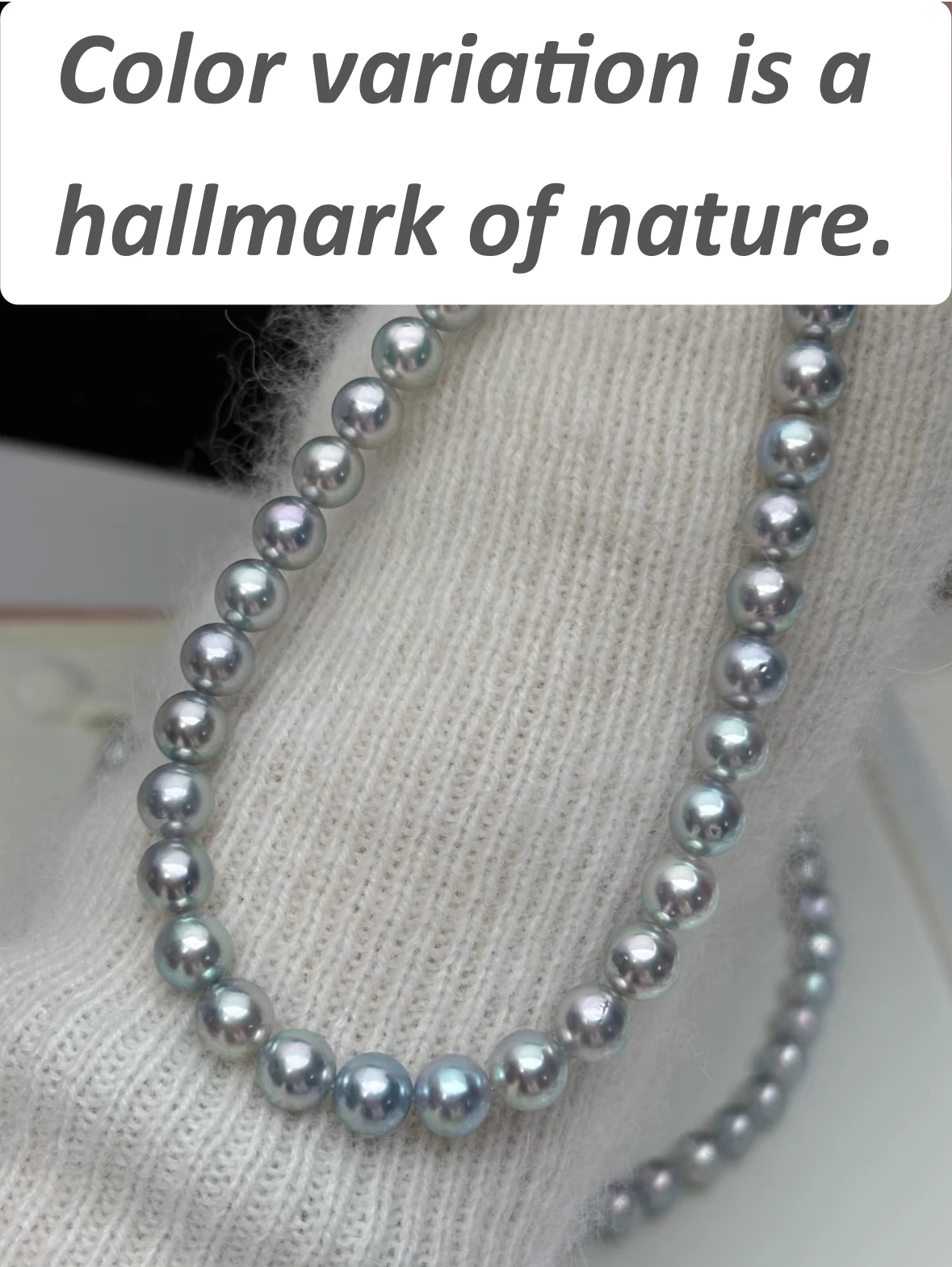
As irradiation technology improves — and because some treated pearls are already Akoya pearls before treatment — certain irradiated pearls can now be extremely difficult to identify visually.
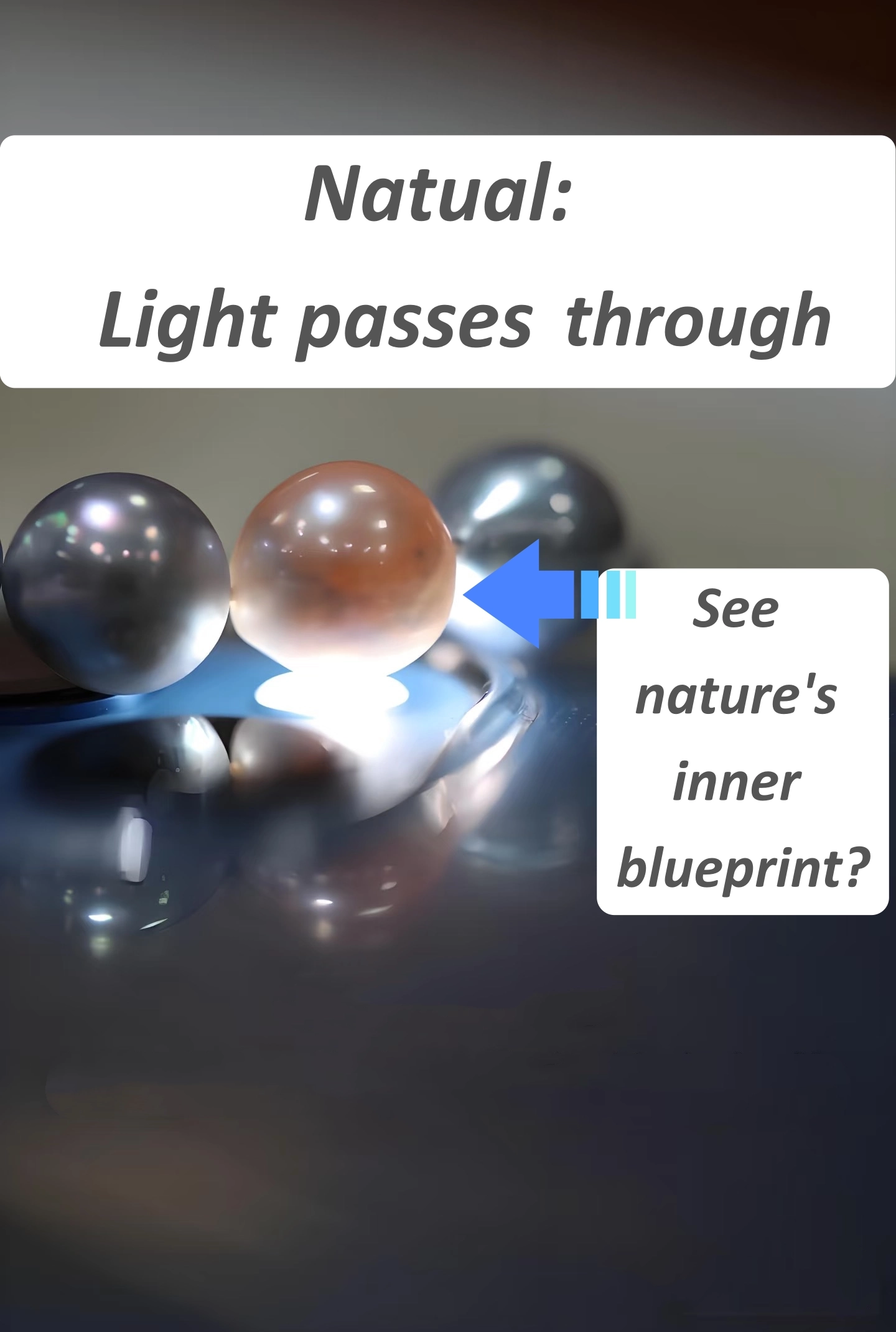
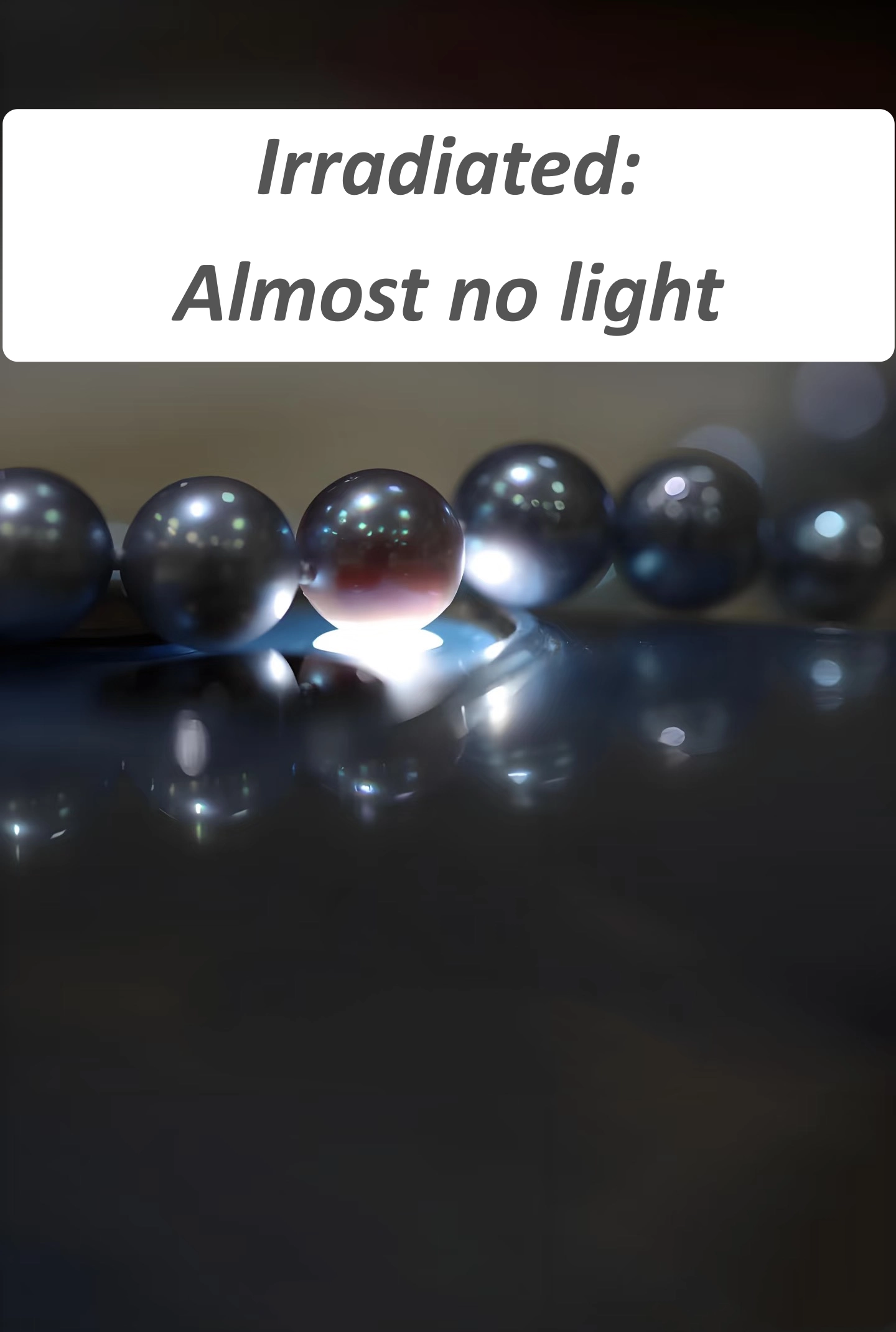
2. Flashlight Test for Irradiated Pearls
You can shine a phone flashlight through the pearl during inspection.
Natural grey pearls usually allow some light transmission, and you may even see uneven organic material distribution inside the pearl.
Irradiated grey pearls, however, tend to block light more strongly and appear darker and less translucent overall.
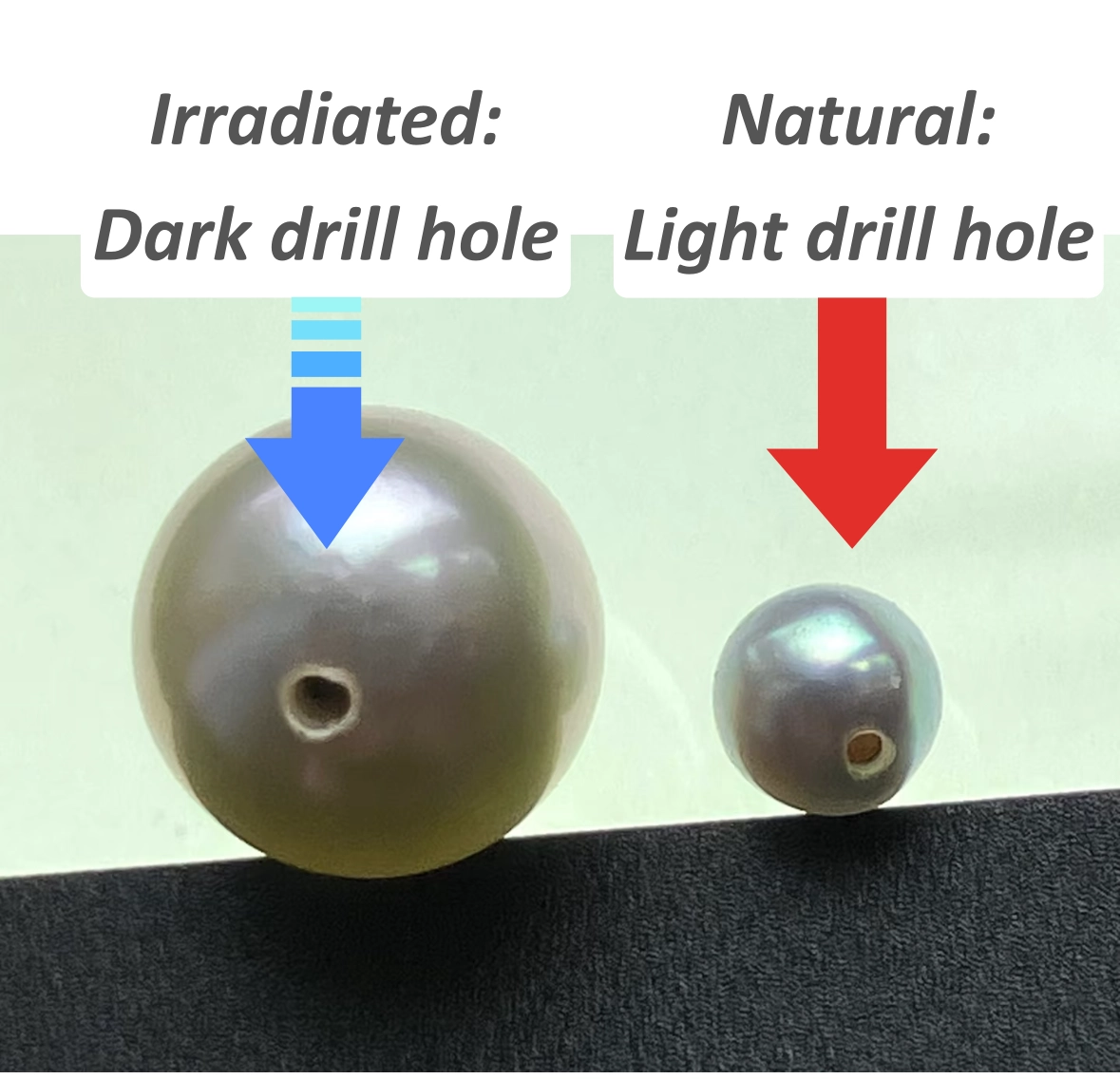
3. Drill Hole Signs of Pearl Irradiation
Carefully inspect the drill hole.
In irradiated pearls, the inside of the drill hole is often dark grey.
But in natural grey pearls — regardless of surface color — the drill hole area should usually remain close to white.
Final Thoughts & Our Grey Pearls
Not all grey pearls are naturally grey — and not all pearl treatments are bad.
Pearl irradiation is stable, widely used, and capable of producing beautiful silver-grey and blue-grey pearls at a much lower price than natural grey Akoya pearls.
But natural grey pearls still remain rarer, more complex in color, and generally more valuable.
I hope this blog helps you make informed decisions.
At Raffie Pearls, all the grey pearls are 100% natural in color. They didn’t undergo irradiation, dyeing, coating, or even “toning.” We offer rare, naturally-grey freshwater pearls with a more subtle blue overtone than Akoya, as well as genuine, natural silver-blue Akoya pearls. Choose with confidence, knowing exactly what you’re getting.