
If you are wondering what are keshi pearls, the short answer is simple:
They are pearls without nucleus, and contains 100% nacre.
But the real story is more interesting.
In today’s market, where most pearls are cultured with a bead nucleus, keshi pearls stand out because they contain no bead at all. Their organic shapes and solid nacre structure make them the closest alternative to natural wild pearls.
How They Form
Traditionally, keshi pearls appeared by accident during saltwater pearl cultivation. When a technician inserted a bead nucleus into an oyster, the oyster sometimes rejected the bead. Even after rejecting it, the oyster continued secreting nacre. Over time, a small pearl formed without a nucleus.
That pearl was called a keshi.
The word “keshi” was first used in Japan to describe small pearls formed in Akoya oysters from loose mantle tissue. Today, the meaning is broader. Both saltwater and freshwater mollusks can produce keshi pearls, and some are now intentionally cultured.
Although modern techniques allow more control, they remain irregular in shape and usually smaller in size. Most measure under 10 mm, and pieces over 20 mm are considered large.
Because they are made of 100% nacre, the thickness of nacre equals the entire size of the pearl.
Why They Are Closest to Wild Pearls
Natural wild pearls are almost extinct in commercial markets. Keshi, however, share two defining features with wild pearls:
- No nucleus
- Completely solid nacre
Their shapes form without structural restriction, which results in organic silhouettes and unpredictable curves. For many collectors, this makes them feel more alive than perfectly round pearls.
The Value of Keshi Pearls
Historically, saltwater keshi pearls were rare and unpredictable. Production could not be planned, and supply remained limited. At one point, high-quality saltwater keshi were priced by gram, sometimes reaching $50–$100 per gram, close to the price of gold.
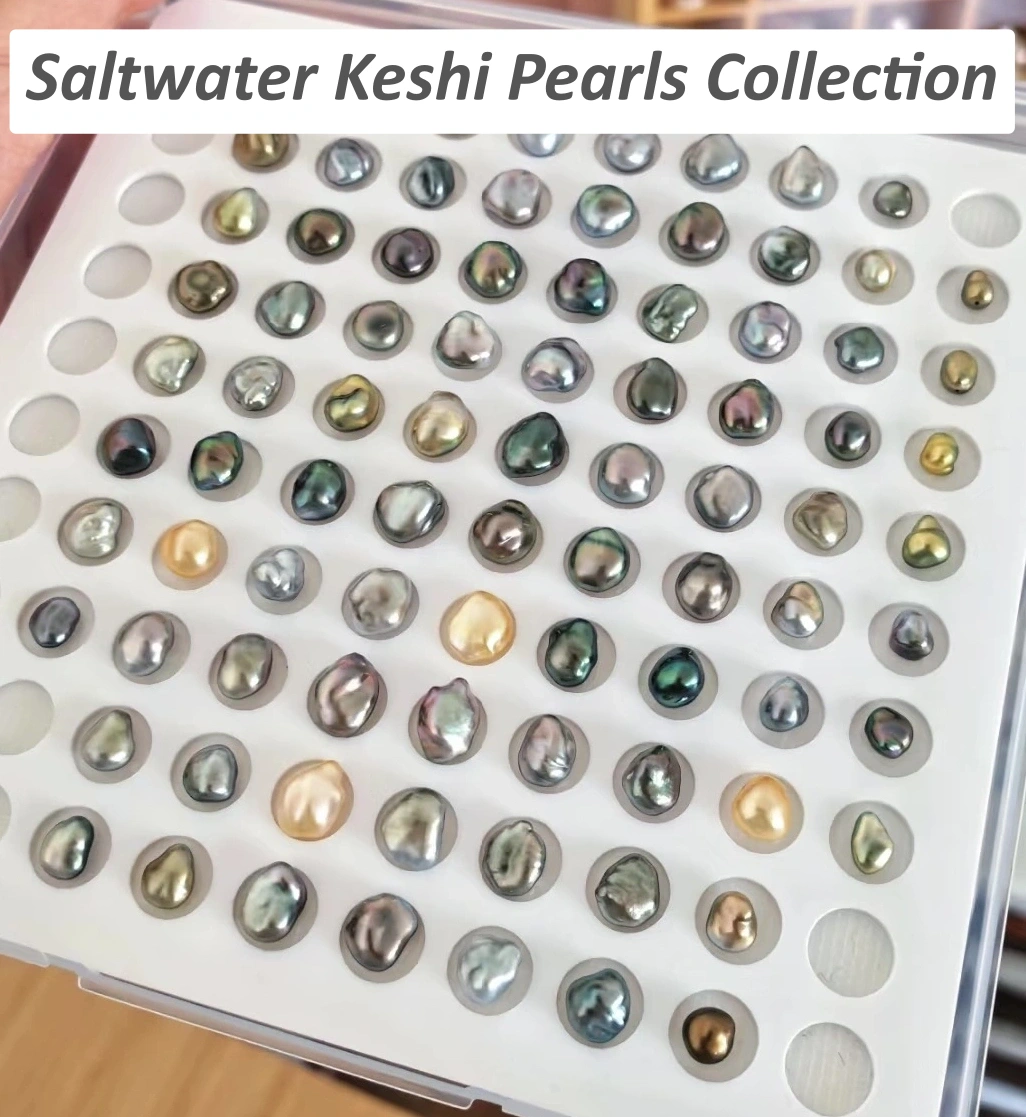

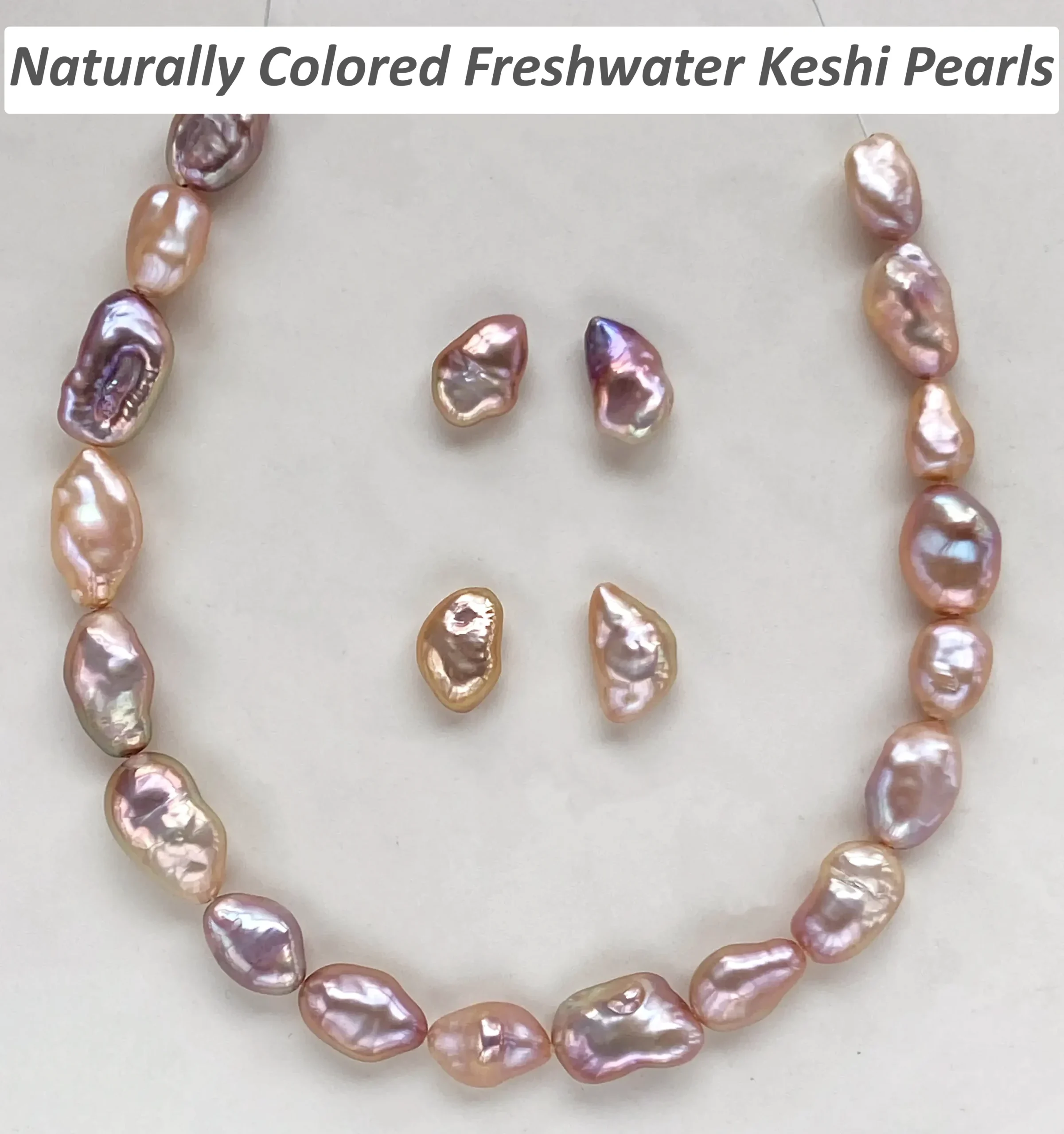
Modern cultivation methods have increased availability, especially for freshwater keshi. As a result, prices today are far more accessible.
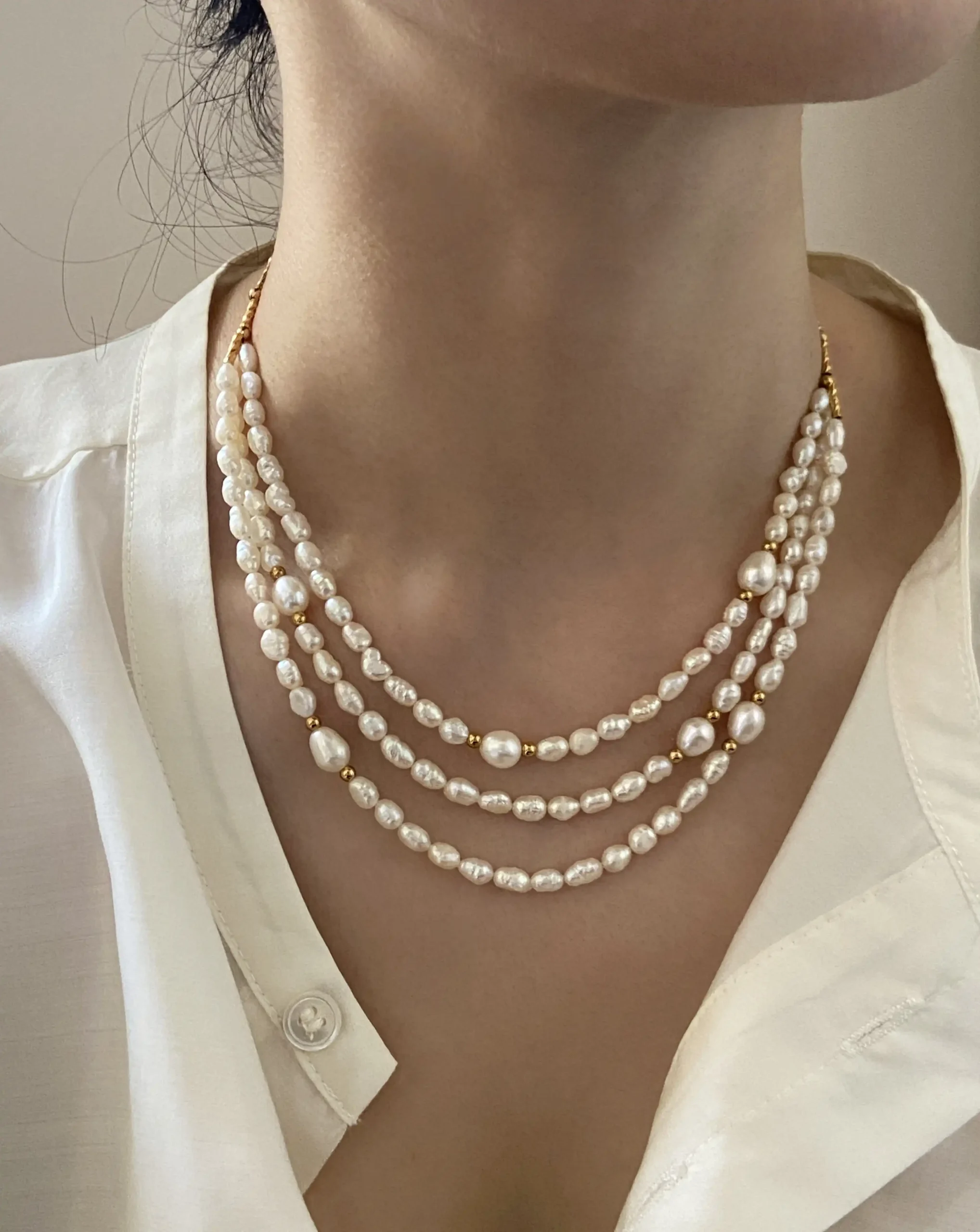


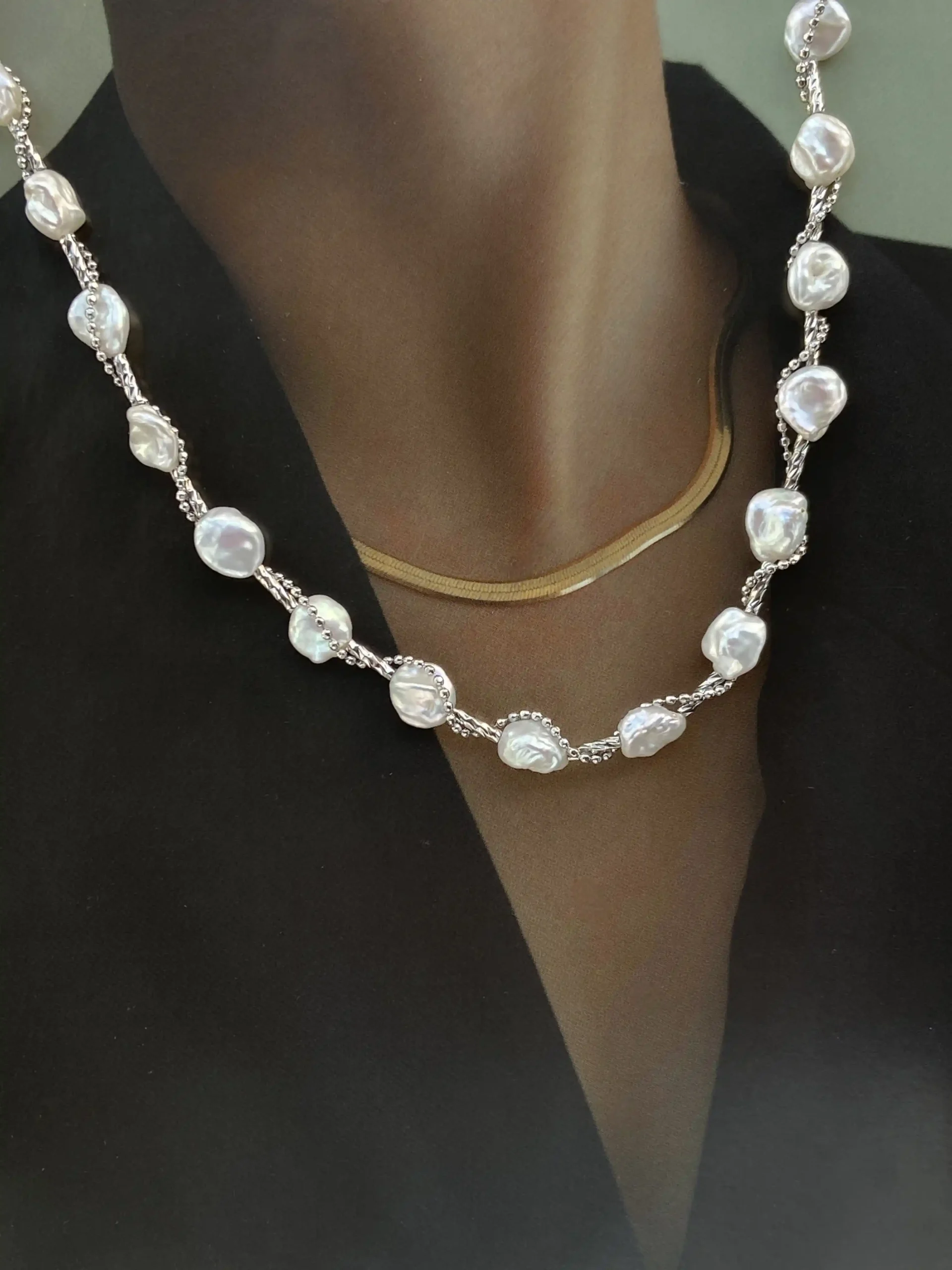
Like other pearls, their value depends on:
- Luster
- Color
- Surface quality
- Size
- Shape
Interestingly, the market currently favors more rounded keshi shapes. Rounder pieces often command higher prices than highly abstract forms. This preference may change over time as design trends evolve.
Keshi vs Baroque Pearls: Similarities
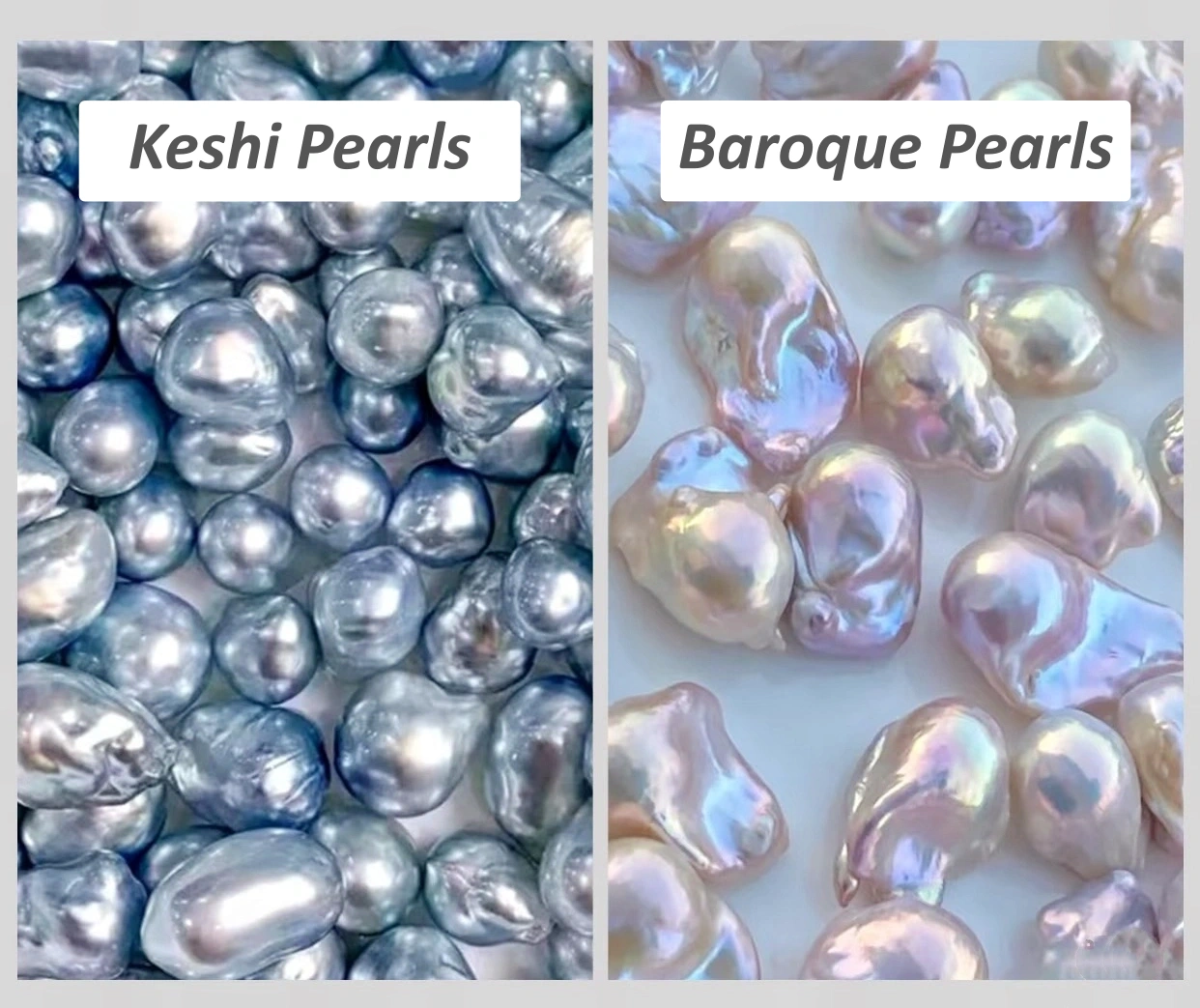
Many people know that both keshi pearls and baroque pearls have irregular shapes. However, there is another unexpected similarity.
During drilling, both types can occasionally produce an unpleasant odor. This happens because microorganisms may become trapped in the nacre layers while the mollusk secretes nacre. The smell resembles damp earth. It appears more frequently in saltwater pearls, especially keshi.
The odor usually fades after drilling, but in some cases it can take quite a long time to dissipate completely. Leaving the pearl in a well-ventilated place allows the smell to gradually air out. If it lingers, the drill hole can be gently cleaned with a very fine cotton thread or micro cotton swab inserted into the hole. After several rounds of careful cleaning and airing, the odor will usually become very faint or almost unnoticeable.
Keshi vs Baroque Pearls: Key Differences
The most important difference lies in structure.
1. Nucleus
Baroque pearls contain a nucleus.
Keshi do not.
A baroque pearl’s nacre thickness equals the total diameter minus the bead inside. In Akoya baroque pearls, that nacre layer can be relatively thin. In contrast, a keshi’s entire body is nacre.
2. Size
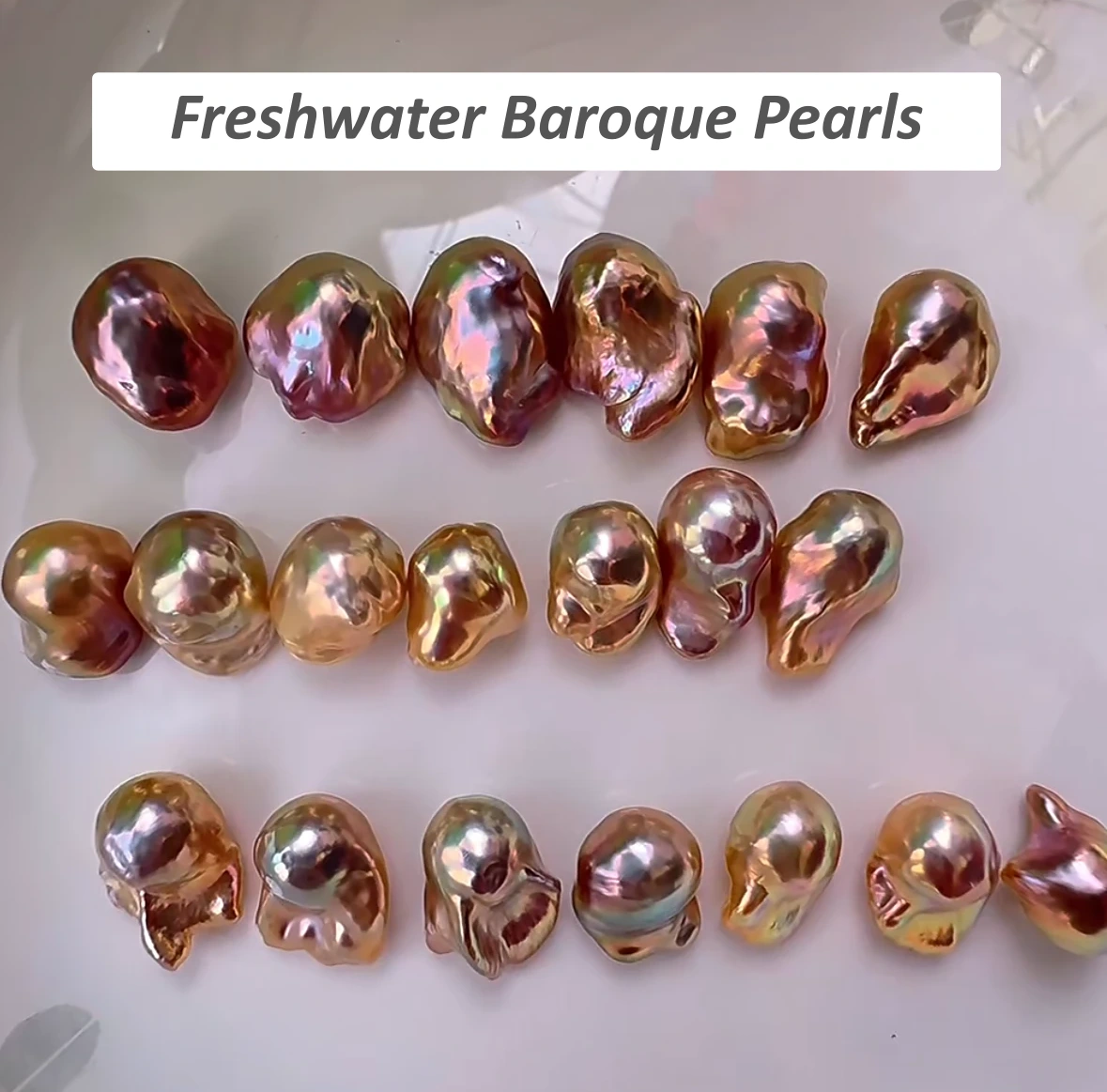
Baroque pearls range widely, from 1 cm up to 3–4 cm.
Keshi are typically smaller, and pieces above 2 cm are rare.
3. Price
When luster and size are comparable, keshi pearls often cost more because they are non-nucleated.
4. Luster and Color
Baroque pearls often display sharper, mirror-like reflections and stronger body color.
Keshi usually show softer, silkier glow and subtler tones.
Final Thoughts
So, what are keshi pearls?
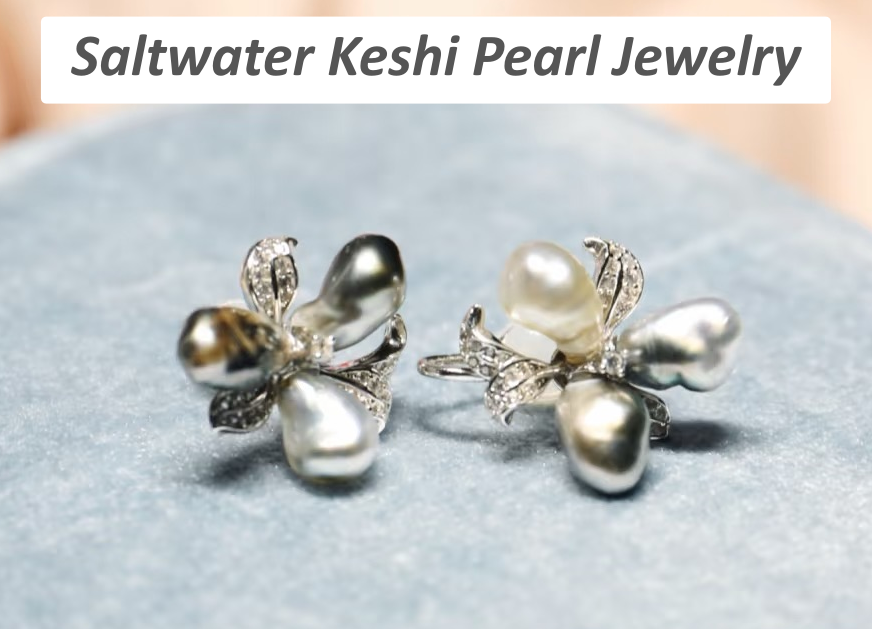
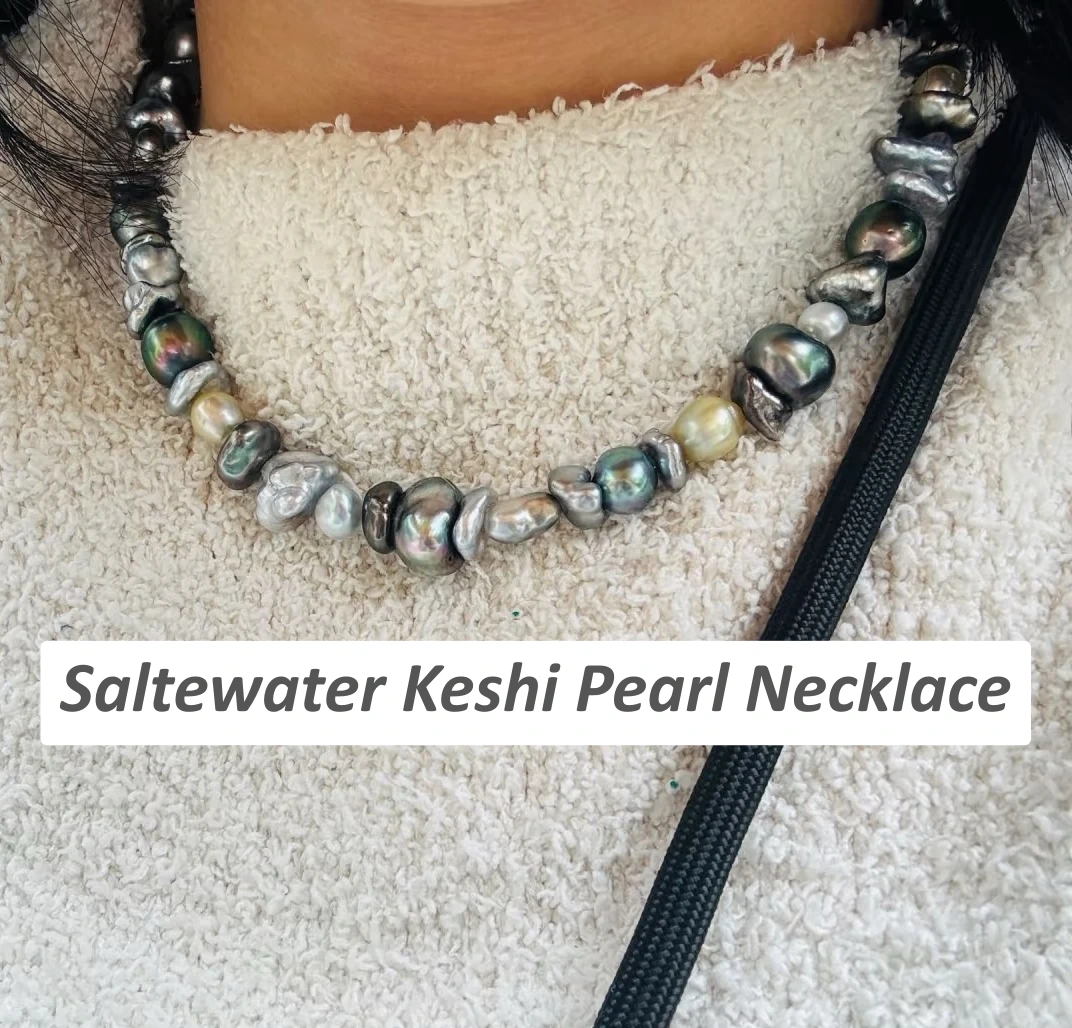
They are fully nacre pearls formed without a bead nucleus. They bridge the gap between natural history and modern cultivation. Their irregular beauty, structural purity, and evolving market position make them one of the most fascinating categories in today’s pearl world.
If you appreciate individuality over symmetry, they offer something that perfectly round pearls never can.
Thank you so much for the information! I love when people ask about my pearls and I can tell them that they’re not all the same and why. 💕
I’m so happy it helps! Let me know if you have any specific interested topic, and I’ll write about it.